A Prebiotic-Probiotic Pair Tackled Constipation and Lifted Mood in Mice Via the Gut-Brain Axis
Combining a human milk sugar with a well-studied probiotic strain eased constipation and lifted depressive-like behavior in mice, pointing to a single gut-brain axis mechanism that could one day inform treatment for both conditions at once.

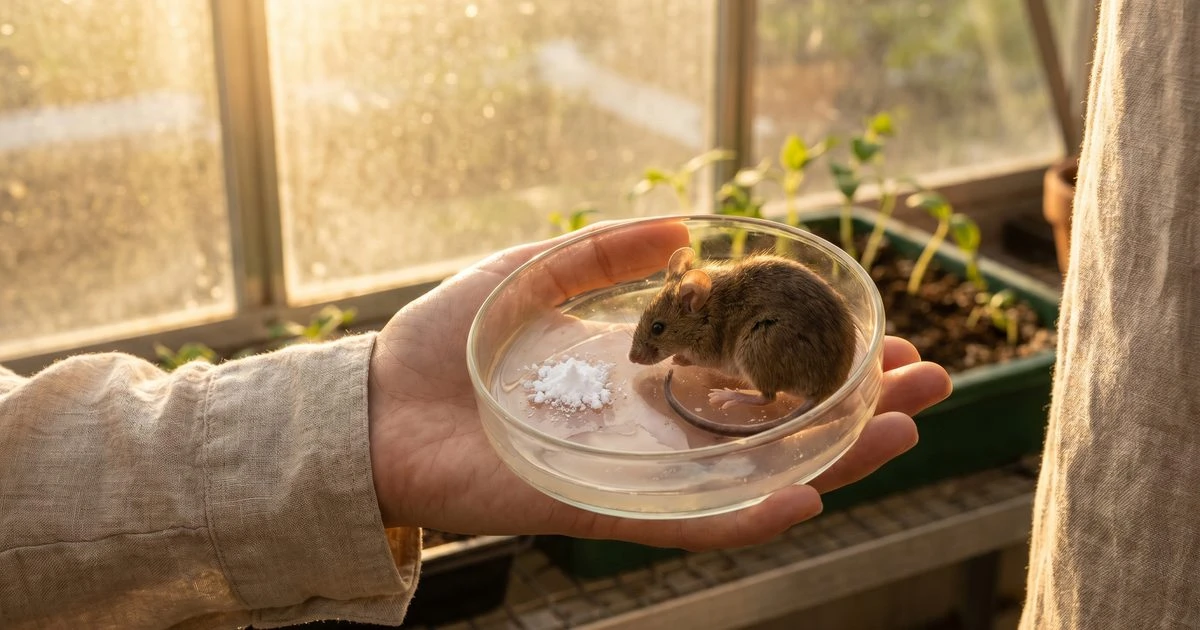
Constipation and depression share more biological real estate than most people realize, and preliminary research suggests a targeted prebiotic-probiotic combination may address both problems through the same pathway. A new study published in Food & Function by Tan Z and colleagues used a loperamide-constipated mouse model to test whether 2'-fucosyllactose (2'-FL), a carbohydrate naturally abundant in human breast milk, combined with the probiotic strain Bifidobacterium longum BB536, could ease gut dysfunction while also calming neuroinflammation. The results, while early and limited to animals, are specific enough to deserve attention.
2'-FL Combined With BB536 Shortened Defecation Time and Restored Gut Motility
The core outcome is concrete: mice treated with the 2'-FL plus BB536 combination showed significantly elevated fecal water content compared with untreated constipated controls, defecated faster, and had an enhanced intestinal transit rate. Those are the three standard measures of constipation severity in rodent models, and the combination moved all three in the right direction.
Mechanistically, the intervention raised levels of substance P and 5-hydroxytryptamine (5-HT, or serotonin) in the gut. Both molecules act as pro-motility signals in the gastrointestinal tract. At the same time, nitric oxide and vasoactive intestinal peptide (VIP) fell. Elevated nitric oxide and VIP are associated with relaxed smooth muscle and slowed transit, so reducing them is consistent with the faster defecation observed. The team also found upregulated mRNA and protein expression of AQP9, a water-channel protein called Aquaporin 9 that helps regulate fluid in the colon, and activation of the SCF/c-Kit signaling pathway, which governs the interstitial cells of Cajal, the gut's electrical pacemaker cells. Those two findings offer a plausible cellular story for why stool consistency improved.
For context, a randomized controlled trial in elderly adults has already shown that Bifidobacterium longum BB536 alone can partially improve chronic constipation and bowel movement frequency, which lends some biological plausibility to what the mouse data show.
Gut-Brain Axis Signals Linked the Colon to Depressive-Like Behavior
The more striking, and more speculative, result involves the brain. Constipated mice in the study displayed depressive-like behavior on standard behavioral tests, and the 2'-FL plus BB536 treatment reduced those behaviors. Histological analysis showed less tissue damage in the brain alongside the improvements in the colon, suggesting the two organs were responding in parallel.
At the molecular level, the combination suppressed TNF-alpha mRNA and protein expression in the brain, a sign of reduced neuroinflammation. Simultaneously, it promoted expression of SNAP-25 and PSD-95, two proteins essential for synaptic function: SNAP-25 is involved in neurotransmitter release, and PSD-95 anchors receptors at the postsynaptic density. Higher expression of both suggests the treatment was protecting synapse integrity rather than simply damping inflammation.
The gut-brain axis is a well-established bidirectional communication network linking gut microbiota to emotional and cognitive centers in the brain, and disruptions in that network are consistently linked to mood disorders. A separate line of research has found that 2'-fucosyllactose acts as a prebiotic that remodels gut microbiota and improves gut-brain signaling in diet-induced obese mice, which fits the mechanistic picture here. Growing evidence also points to Bifidobacterium strains as potential contributors to depression prevention by modulating the microbiota-gut-brain pathway.
Loperamide Mouse Model and What It Can and Cannot Show
The study used a loperamide-induced constipation model, which is a standard pharmacological approach for producing slow-transit constipation in rodents. Loperamide is an opioid receptor agonist that slows gut motility, and this model has been widely used to evaluate probiotic interventions on gut function and related biomarkers. It is a reproducible and well-characterized model, which strengthens the internal validity of the findings.
However, drug-induced constipation in mice is not a perfect proxy for the chronic functional constipation that most humans experience, which tends to involve a more complex mix of dietary, hormonal, psychological, and microbiome factors accumulated over years. The behavioral tests used to measure depressive-like behavior in rodents, such as forced swim or open-field tasks, are imperfect surrogates for human depression. The sample involved only mice, and no dose-ranging or long-term safety data in humans are reported in this work.
Gut Microbiota Diversity and Short-Chain Fatty Acid Production Improved
The intervention also shifted the microbiome. Relative abundance of Bacteroidetes increased, as did Lactobacillus and Akkermansia, a genus associated with gut barrier integrity and metabolic health. Short-chain fatty acids (SCFAs), microbial metabolites produced when bacteria ferment dietary fiber, were upregulated following supplementation. SCFAs serve as fuel for colonocytes and also send signals up the gut-brain axis, so their increase is mechanistically relevant to both the gut motility findings and the neuroinflammation data.
The microbiota shift is consistent with 2'-FL's known role as a prebiotic substrate that selectively feeds beneficial bacteria, and it reinforces the idea that the two ingredients are working synergistically: 2'-FL provides the fermentable substrate, while BB536 seeds or amplifies the population of bacteria best positioned to use it.
Open Questions Before This Translates to Human Use
This is early, investigational research. Current limitations in gut-brain axis science include predominantly correlational designs, small sample sizes, and a lack of large clinical trials, and this mouse study sits squarely within those constraints. The study does not establish causality between the microbiome changes and the behavioral improvements, only association within the same intervention. Whether the same dose and combination would be safe, tolerable, or effective in people with functional constipation or comorbid depression remains untested.
Both 2'-FL and BB536 have existing safety records in humans, with BB536 used in food products for decades. That means human trials are at least logistically feasible. The specific molecular targets identified here, particularly the AQP9 channel, the SCF/c-Kit pathway, and the synaptic proteins SNAP-25 and PSD-95, give researchers defined endpoints to look for if clinical work moves forward. For now, the finding that a single dietary intervention may address constipation and depressive-like behavior through a shared gut-brain mechanism is a hypothesis worth testing rigorously, not a clinical recommendation.
Evidence rating
INVESTIGATIONAL — 75/100
Caveats:
- All findings are from a mouse model; results have not been tested in humans and may not translate directly.
- No funding source was declared by the authors, so independent verification of this study's conclusions is pending.
- The combination was tested as a unit — it is unclear whether 2'-FL or BB536 alone would produce the same effects.
Mouse-only preclinical study using a loperamide-induced constipation model. Demonstrates mechanistic plausibility across gut and brain endpoints but cannot establish causation in humans, and the findings have not been independently replicated in a human population.
References
- Zhongmei Tan, Zihao Tian, Xiaolei Duan, et al. (2026). Alleviating effects of 2′-fucosyllactose combined with Bifidobacterium longum BB536 on loperamide-induced constipation and depressive-like behavior. Food & Function. https://doi.org/10.1039/d6fo00474a
- Tsutomu Takeda, Daisuke Asaoka, Shuko Nojiri, et al. (2022). Usefulness of Bifidobacterium longum BB536 in Elderly Individuals With Chronic Constipation: A Randomized Controlled Trial. American Journal of Gastroenterology. https://doi.org/10.14309/ajg.0000000000002028
- The Gut-Brain Axis: Influence of Microbiota on Mood and Mental Health – PMC – NIH. NIH. https://www.ncbi.nlm.nih.gov/pmc/articles/PMC6469458/
- Sunhye Lee, Michael Goodson, Wendie Vang, Karen Kalanetra, Daniela Barile, Helen Raybould (2020). 2′-Fucosyllactose Supplementation Improves Gut-Brain Signaling and Diet-Induced Obese Phenotype and Changes the Gut Microbiota in High Fat-Fed Mice. Nutrients. https://doi.org/10.3390/nu12041003
- Jiayu Li, Junyu Wang, Meiyu Wang, et al. (2023). Bifidobacterium: a probiotic for the prevention and treatment of depression. Frontiers in Microbiology. https://doi.org/10.3389/fmicb.2023.1174800
- Jin-Ju Jeong, Raja Ganesan, Yoo-Jeong Jin, et al. (2023). Multi-strain probiotics alleviate loperamide-induced constipation by adjusting the microbiome, serotonin, and short-chain fatty acids in rats. Frontiers in Microbiology. https://doi.org/10.3389/fmicb.2023.1174968
- Pegah Ataei, Hamidreza Kalantari, Tamara S. Bodnar, Raymond J. Turner (2026). The gut–brain connection: microbes’ influence on mental health and psychological disorders. Frontiers in Microbiomes. https://doi.org/10.3389/frmbi.2025.1701608