AI-Guided Nanodelivery Could Finally Make Psychobiotics Work at Scale
Billions of beneficial bacteria die before they ever reach your intestines. A new review argues that AI-guided nanodelivery systems could change that, unlocking personalized mental health treatments through the gut-brain axis.

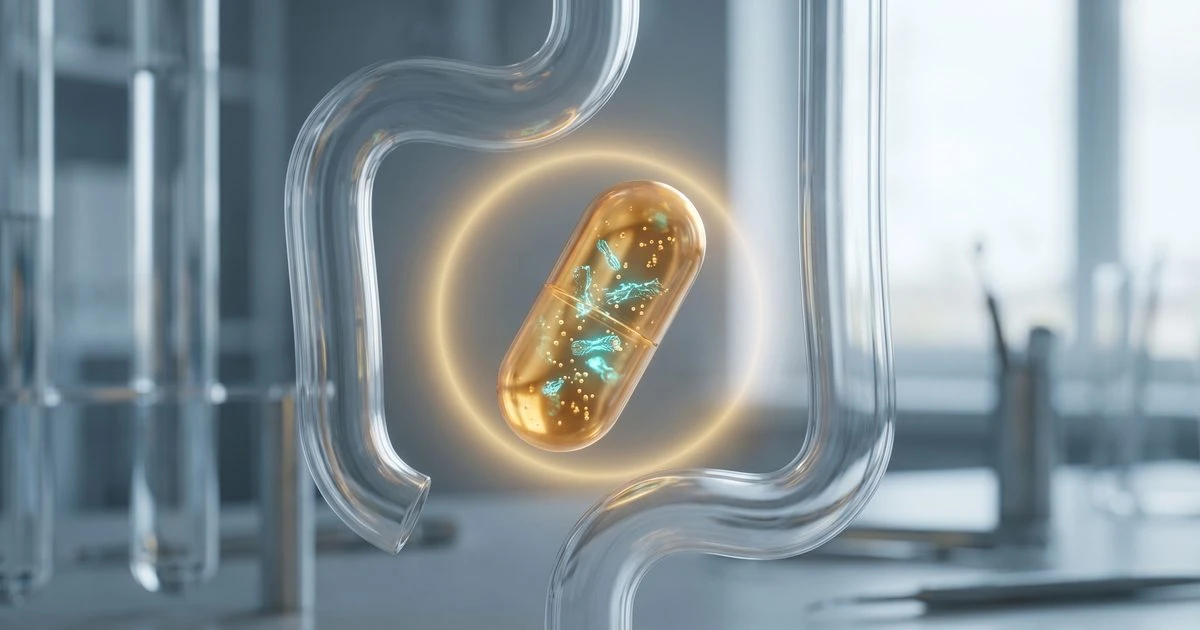
Swallow a probiotic capsule and a significant portion of its live bacteria may not survive the journey. Gastric acid, bile salts, and the sheer distance from mouth to colon conspire to inactivate many strains before they can colonize the intestinal lining. A review published in the Journal of Pharmaceutical Analysis by Huang, Gao, Hao, and colleagues proposes a two-part solution: engineered nanodelivery systems that shield bacteria in transit, guided by artificial intelligence that selects the right strains for the right patients from the start.
Psychobiotics and the Gut-Brain Signals They Carry
Psychobiotics are live microorganisms, or their metabolites, that influence mood and cognition through gut-brain communication via the enteric nervous system, vagus nerve, immune signaling, and short-chain fatty acids. The most studied strains come from the Lactobacillus and Bifidobacterium genera, both of which show potential for modulating the hypothalamic-pituitary-adrenal axis and reducing neuroinflammation. When that axis is dysregulated, it drives the cortisol dysregulation and inflammatory signaling implicated in depression and anxiety.
The gut-brain axis is bidirectional: the brain influences gut motility and microbial composition, while the gut microbiome shapes neuroactive metabolite production, including gamma-aminobutyric acid (GABA) and tryptophan precursors to serotonin. This makes the microbiome a plausible therapeutic target, and growing evidence from clinical trials links psychobiotics to reduced symptoms of depression, anxiety, and stress-related disorders. The challenge has always been delivery: getting live bacteria through a hostile gastrointestinal environment in sufficient numbers to make a measurable difference.
Why Oral Delivery of Live Bacteria Keeps Failing
The review is candid about the scale of the problem. Gastric acid inactivates many strains outright. Survivors face bile salts in the small intestine, then must compete with an established microbiome for colonization sites. Processing and storage further reduce viability: freeze-drying and spray-drying damage cell membranes, and temperature fluctuations during shipping degrade populations before patients ever open the package.
The field has responded with a succession of encapsulation strategies. Biofilm-inspired encapsulation, described in the paper as the fourth generation of probiotic delivery, mimics the protective matrix bacteria naturally secrete in colonies. Layer-by-layer self-assembly deposits alternating charged polymers around individual cells, creating a nanoscale shell that resists acid. Lipid coatings, hydrogels with tunable porosity, and pH-responsive nanosystems that release their payload only at target intestinal pH levels round out the toolkit. Flash nanoencapsulation (FNE), highlighted in the review, offers a potentially universal approach: it can coat multiple probiotic strains in a single-cell process efficiently enough to consider commercial scale. Prebiotic-based nanoencapsulation systems go a step further by co-encapsulating the bacteria with the fiber they need to proliferate, creating a synbiotic package in a single carrier.
Despite these advances, the review is explicit that most nanodelivery research remains at the laboratory stage. GMP-compliant scale-up pathways are largely absent, long-term safety data on nanomaterials in humans are thin, and the in vivo behavior of nanocarriers in mucus and biodistribution through tissues is complex enough that computational modeling struggles to keep pace with experiment.
How AI Identifies Which Strains to Deliver
Engineering better capsules solves only part of the problem. Psychobiotic therapy has also suffered from a strain selection problem: the literature contains hundreds of candidate bacteria with inconsistent effects across patients, partly because gut microbiome composition varies so widely between individuals. This is where AI tools for integrating multi-omic microbiome data become relevant.
The review describes machine learning and deep learning models that analyze genomic, metagenomic, metabolomic, and transcriptomic datasets simultaneously, identifying which bacterial genera are associated with specific metabolic pathways and mental health phenotypes. AI models can screen a strain's genome to predict whether it has the genetic machinery to synthesize neuroactive metabolites such as GABA or tryptophan derivatives, effectively pre-filtering candidates before any in vitro or animal work begins. High-throughput screening platforms integrated with AI can then run thousands of candidate strains against cell-based assays and feed the results back into the model, accelerating the discovery cycle.
On the clinical side, AI applied to pharmacomicrobiomics can stratify patients by their gut-brain axis dysregulation subtype using multi-omics profiles, then match them to the strain combination most likely to correct the specific imbalance. The review also describes AI frameworks that predict strain-drug interactions, flagging potential adverse reactions before they occur in trial participants. Digital twin technology, a computational model of an individual patient's microbiome, could in principle simulate how a given psychobiotic-fiber combination performs before a single capsule is prescribed.
Open Questions About Safety, Scale, and Standardization
The review surfaces a cluster of problems that enthusiasm for AI and nanotechnology should not paper over. Most are practical rather than theoretical. Standardized clinical datasets for training predictive models are scarce; different studies use different strain designations, different outcome measures, and different follow-up periods, making it hard to pool data into the large corpora machine learning requires. Challenges facing personalized psychobiotic development include regulatory ambiguity, the high cost of omics profiling, and the absence of validated biomarkers that would let clinicians confirm a psychobiotic is doing what the model predicted.
Long-term biosafety of the nanomaterials themselves is an open question. Polymeric shells, lipid nanoparticles, and hybrid hydrogel matrices have well-characterized short-term profiles in animal models, but chronic human exposure data at therapeutic doses do not yet exist. Ethical questions around AI applications to personal health data add another layer of complexity, particularly when patient stratification relies on gut microbiome sequences that are individually identifying.
What a Functional AI-Nanodelivery Pipeline Could Look Like
The review sketches an optimistic near-term trajectory: a patient's stool sample feeds a multi-omics analysis, an AI model identifies a dysregulation subtype and selects two or three psychobiotic strains with high predicted efficacy, and those strains are encapsulated in a pH-responsive nanocarrier tailored to release at the patient's colonization target site. Efficacy prediction algorithms incorporating strain metabolic efficiency and host characteristics would set realistic expectations and guide dose adjustments. The gut microbiome's documented influence on psychiatric conditions including depression and schizophrenia gives this pipeline a plausible clinical rationale.
That picture remains aspirational. The authors call explicitly for GMP manufacturing pathways, long-term safety studies, and standardized clinical data collection frameworks as prerequisites for translation. None of those are small asks. But the convergence of nanoencapsulation engineering and AI-driven strain selection described in this review represents a more coherent approach to psychobiotic therapy than the one-size-fits-all probiotic capsules currently on pharmacy shelves. For patients who cannot tolerate or do not respond to conventional antidepressants or anxiolytics, a credible alternative route through the gut-brain axis is worth the engineering effort.