Gut Microbes From Alzheimer’s Patients Shut Down Memory-Cell Growth in Rats
Published in the journal Brain in December 2023, this study transplanted gut bacteria from Alzheimer's patients into young, healthy rats and watched memory and new brain-cell growth decline, offering some of the clearest evidence yet that gut microbes can causally affect the brain, though it remains a single rat study, not a human treatment or diagnostic.

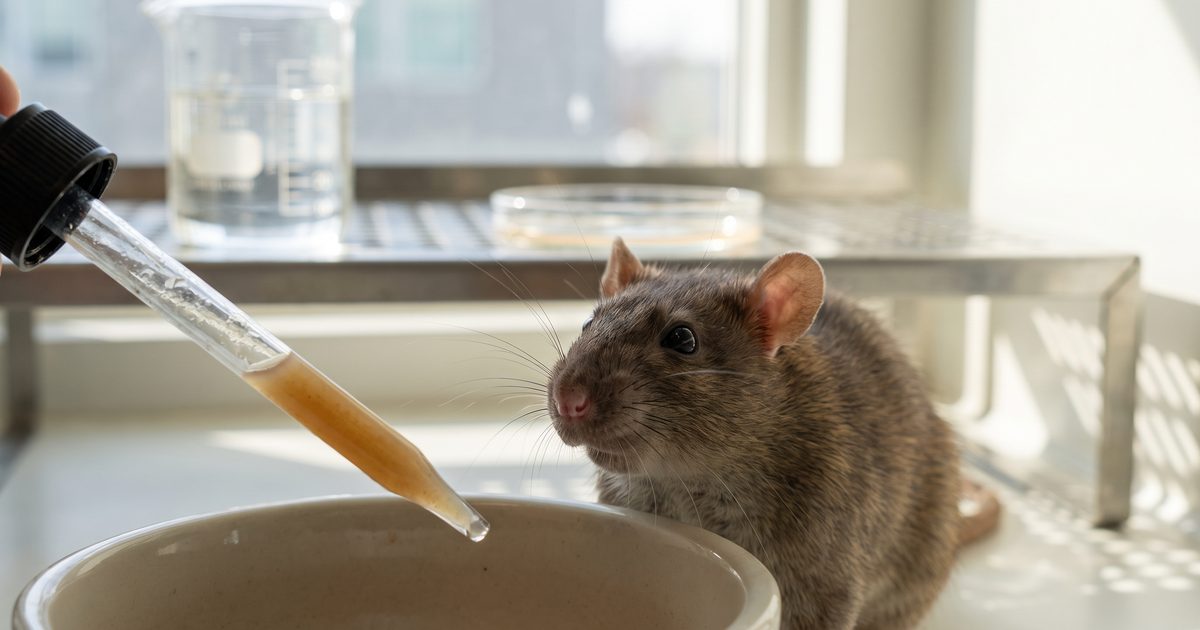
If you or someone in your family has ever wondered whether gut health could actually be part of the Alzheimer's story, and not just a loosely correlated buzzword, a study published in the journal Brain back in December 2023 offers one of the more direct answers yet. Researchers took gut bacteria from Alzheimer's patients and transplanted it into young, healthy rats, then watched memory performance and new brain-cell growth decline in those animals. This is not a new finding, it published nearly three years ago, but the experimental design (a causal transplant, not just an observed correlation) is unusual enough that it is still worth understanding on its own terms, and it has not been contradicted since.
Key takeaways:
- Rats that received gut microbiota transplanted from Alzheimer's patients performed worse on hippocampus-dependent memory tasks and grew fewer new hippocampal neurons than rats given microbiota from healthy donors.
- The size of the neuron-growth deficit in each rat tracked with how cognitively impaired that rat's specific human donor was, a dose-response-like pattern that strengthens the case for a causal link.
- This is a single rat study from December 2023 with a small donor pool (4 Alzheimer's patients, 4 healthy controls) and no human treatment or diagnostic implication; it has not yet been independently replicated by another lab.
Transplanted Alzheimer's Gut Microbiota Impaired Memory and Neurogenesis in Rats
The core finding is that gut bacteria alone, transplanted from Alzheimer's disease patients into microbiota-depleted young adult rats, was enough to impair the animals' memory and reduce hippocampal neurogenesis (the ongoing production of new neurons in the hippocampus, the brain region central to forming new memories). Researchers led by Stefanie Grabrucker, with senior authors Yvonne Nolan at University College Cork, Sandrine Thuret at King's College London, and Annamaria Cattaneo, published the results in Brain in December 2023. Rats that received Alzheimer's-patient microbiota underperformed on behavioral tasks that specifically depend on adult hippocampal neurogenesis, and post-mortem analysis of their brains showed measurably fewer newly generated hippocampal neurons than rats that received microbiota from healthy, age-matched donors.
Why a Gut-to-Brain Link Matters for Anyone Tracking Alzheimer's Risk
This matters to anyone researching Alzheimer's disease for themselves or a family member because it pushes the gut-brain axis from correlation into causation, at least in an animal model. Prior human research had already shown that people with symptomatic Alzheimer's have a different gut microbiome composition than cognitively healthy people, and separate NIH-funded work has found that microbiome changes can precede cognitive decline in people who go on to develop the disease. What this transplant study adds is a demonstration that the microbiome difference itself, not just something happening alongside it, can produce Alzheimer's-like effects on memory and brain-cell growth when moved into a different body. Adult hippocampal neurogenesis is already an area of intense interest in Alzheimer's research because it declines early in the disease and tracks with cognitive status in patients, so a treatment that transferred that specific deficit via gut bacteria is a meaningful data point for the field, not a fringe curiosity.
How the Transplant Experiment Was Designed
The researchers collected fecal samples from four people diagnosed with Alzheimer's disease and four age-matched healthy control donors. Each individual donor's sample was used to colonize four separate young adult rats whose own native gut microbiota had first been depleted with antibiotic pretreatment, a standard technique for cleanly establishing a donor's microbiome in a new host. That gave 16 rats receiving Alzheimer's-patient microbiota and 16 rats receiving healthy-donor microbiota, 32 rats total. After colonization, the rats underwent behavioral memory testing and, afterward, post-mortem examination of hippocampal tissue to count newly formed neurons. This design lets researchers isolate the effect of the microbiome itself, since the rats were the same age, species, and starting health status going in, with the only planned difference between groups being whose gut bacteria they received.
What This Does, and Does Not, Mean for a Person Worried About Alzheimer's
For a reader trying to translate this into something actionable, the honest answer is: not much, yet, in terms of anything to do differently today. This is a rat study, not a human treatment, a diagnostic test, or evidence that any commercially available probiotic, prebiotic, or fecal transplant product affects Alzheimer's risk or progression in people. What it does support is a causal, not merely correlated, role for the gut microbiome in Alzheimer's-related brain changes, at least in this animal model, which is scientifically significant because it opens the door to eventually testing whether reversing microbiome differences could protect neurogenesis in humans too. Nothing here should be read as grounds to self-treat, delay medical evaluation of memory symptoms, or assume a specific dietary or supplement intervention will change outcomes.
Small Sample, Single Study, No Independent Replication Yet
The clearest limitation is scale: this entire result rests on microbiota from just four Alzheimer's patients and four healthy controls, a donor pool that is standard for this type of gut-transplant design but still means the finding reflects a small, specific set of human gut microbiomes rather than a broad population. It is also, as of this writing, a single study; while it was peer-reviewed in Brain, a high-rigor neurology journal, it has not yet been independently replicated by another research group. And the design demonstrates that transplanted microbiota can transfer this particular deficit in rats, which is a different claim than showing what specific bacterial species or metabolites are responsible, or that reversing the transplant would reverse the effect.
What Comes Next
The logical next steps for this line of research are larger donor cohorts, replication by independent labs, and work to identify which specific bacterial taxa or metabolites drive the neurogenesis effect, none of which the December 2023 paper itself reports a timeline for. Longer term, the eventual goal implied by this kind of causal animal work is testing whether interventions that reshape the gut microbiome could protect hippocampal neurogenesis in humans at risk for Alzheimer's, but that remains a hypothesis this study raises rather than one it tests.
Common Questions
Is this a new study? No. It was published in the journal Brain in December 2023, roughly two and a half years before this article. The findings themselves have not changed; they simply have not yet been independently replicated by another lab.
Does this mean fecal transplants or probiotics can treat Alzheimer's? No. The study transplanted human gut microbiota into rats to test whether it could transfer a memory and neurogenesis deficit; it did not test any treatment in humans, and no approved probiotic or fecal-transplant therapy for Alzheimer's exists based on this work.
What is hippocampal neurogenesis and why does it matter here? It is the ongoing production of new neurons in the hippocampus, the brain region central to forming new memories. It is already known to decline early in Alzheimer's disease, and this study found that Alzheimer's-patient gut microbiota alone was enough to suppress it in previously healthy rats.
How many people's microbiota did this study actually test? Four Alzheimer's patients and four age-matched healthy controls, each donor's sample used to colonize four rats, for 32 rats total across both groups.
Evidence Rating
INVESTIGATIONAL — 78/100
Caveats
- Rat model, not a human treatment or diagnostic
- Small donor pool (4 Alzheimer’s patients + 4 healthy controls)
- Single study, not yet independently replicated by another lab
- Published December 2023, roughly 2.5 years before this article
Causal transfer experiment (Brain, December 2023) – fecal microbiota from 4 Alzheimer’s patients and 4 age-matched healthy controls transplanted into microbiota-depleted young adult rats (16 rats per donor group, 32 total). AD-microbiota recipients showed impaired hippocampus-dependent memory and fewer new hippocampal neurons; the neurogenesis deficit tracked with how cognitively impaired the human donor was.
References
- Beyond the brain: The gut microbiome and Alzheimer's disease. NIH. https://www.nia.nih.gov/news/beyond-brain-gut-microbiome-and-alzheimers-disease
- Changes in human microbiome precede Alzheimer's cognitive declines. NIH. https://www.nia.nih.gov/news/changes-human-microbiome-precede-alzheimers-cognitive-declines
- Yangling Mu, Fred H Gage (2011). Adult hippocampal neurogenesis and its role in Alzheimer's disease. Molecular Neurodegeneration. https://doi.org/10.1186/1750-1326-6-85


