Tooth Blackening and Sex Both Shaped Ancient Japanese Oral Bacteria, Study Finds
Centuries-old calcified plaque from Edo period Japan is telling a stranger story than expected: a medieval cosmetic practice involving iron compounds may have reshaped an archaeon's evolution. Early research is now untangling how culture, sex, and diet carved distinct signatures into the ancient oral microbiome.

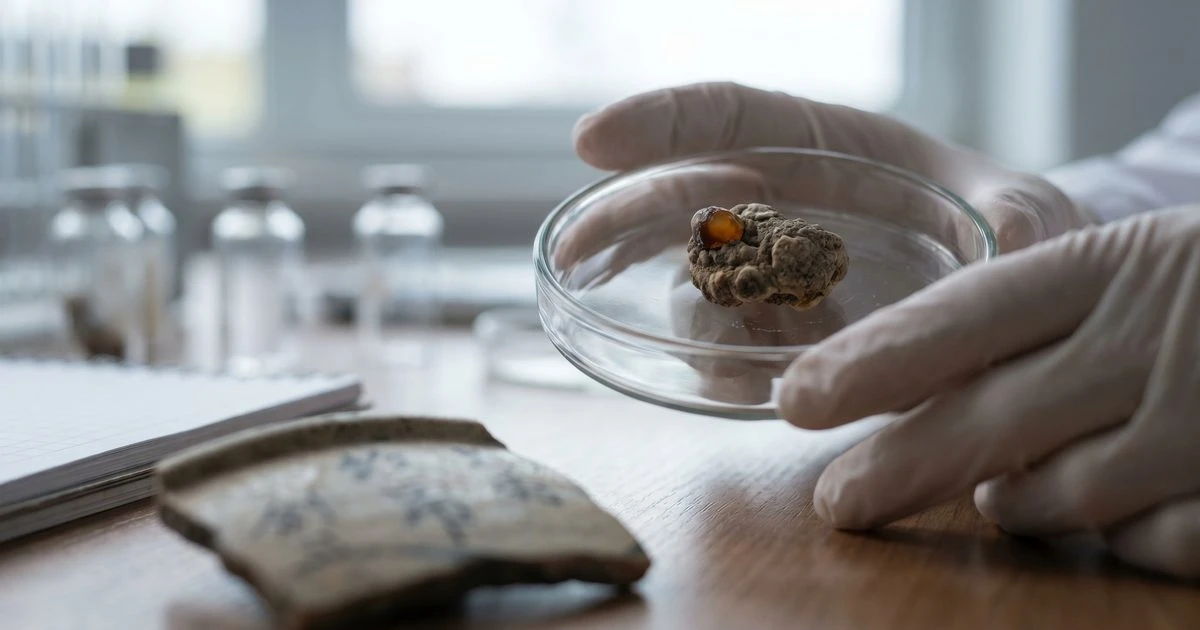
Dental calculus, the mineralized plaque that builds up on teeth, has become one of archaeology's most valuable time capsules. Locked inside it are microbes, diet traces, and host DNA that can survive for centuries. A new study by Kuriyama and colleagues, published in Scientific Reports, used calculus from 118 ancient Japanese individuals, primarily from the Edo period (17th to 19th centuries), alongside samples from 9 modern Japanese participants, to ask a pointed question: how much do culture and demography shape the oral microbiome over time? The short answer, from what is still early and preliminary research, is: more than previously appreciated.
Ancient and Modern Japanese Oral Microbiomes Diverged Sharply
The compositional gap between ancient and modern oral microbiomes is striking. Across 285 oral species identified in the combined dataset, the two groups separated cleanly in multivariate analysis. One taxon, Methanobrevibacter oralis, an archaeon associated with periodontitis, appeared frequently in ancient samples but was rarely detected in the modern Japanese participants. Moryella oralis (now cross-referenced as M. oralis throughout the literature) was also significantly more abundant in the ancient samples, consistent with earlier findings from the UK. Meanwhile, modern samples clustered toward higher abundances of the so-called Red Complex bacteria: Treponema denticola, Porphyromonas gingivalis, and Tannerella forsythia, all linked to periodontal disease. The modern cohort had a mean probing pocket depth of 5.2 mm, a clinical indicator of generalized periodontitis. As diet and hygiene practices shift toward Westernized patterns, the composition of oral microbial communities appears to follow.
Tooth Blackening Custom Left a Molecular Signature in an Archaeon
The most unexpected finding involves ohaguro, the traditional Japanese practice of blackening teeth using ferrous acetate and tannins. This cosmetic custom was practiced predominantly by married women of the Edo period, and its traces are visible on some skeletal remains. Every individual in the study whose teeth showed signs of ohaguro belonged to a single phylogenetic clade of M. oralis, designated clade B, which was also statistically associated with female host sex. The link does not appear random. Clade B carried two specific substitutions in the mvhB gene, which encodes a subunit of methyl viologen hydrogenase, an iron-requiring enzyme. The iron-rich oral environment created by ferrous acetate, the key ingredient in ohaguro lacquer, may have provided a selective advantage for this clade. Clade A, by contrast, was male-associated and carried 18 clade-specific genes, including one with a SpoVT/AbrB-like domain potentially involved in biofilm formation or stress response. Divergence time estimates, calibrated using the ages of the archaeological samples themselves, place the split between the two clades somewhere between 289 BCE and 366 CE. Cultural factors shaping oral microbiome evolution over historical timescales have rarely been demonstrated this concretely at the molecular level.
How the Team Reconstructed Microbiomes from 400-Year-Old Plaque
Ancient DNA work is notoriously prone to contamination, and the team took several steps to address this. Ancient samples were processed in dedicated clean-space facilities, separated entirely from the modern sample workflow. Shotgun sequencing reads were filtered against the Human Oral Microbiome Database (HOMD) to exclude soil-derived taxa, a genuine risk when working with skeletal remains. Dental calculus has been recognized as a durable long-term reservoir for oral microbial DNA, preserving microbial biomolecules alongside dietary debris, which makes it well-suited for this kind of cross-period comparison. Phylogenetic signals were confirmed using two independent approaches: reference-based strain analysis via StrainPhlAn and assembly-based metagenome-assembled genome (MAG) binning. Both converged on the same two M. oralis clades, lending credibility to the clade structure. The study also drew on publicly available dental calculus datasets from Jomon period Japan (roughly 1000 BCE), Edo period, modern Spanish, ancient Italian, and even Neanderthal samples, giving the analysis genuine temporal and geographic breadth.
Key Limitations That Keep This Preliminary
Several caveats deserve emphasis. The modern Japanese cohort is small, nine individuals, which limits what can be concluded about contemporary geographic variation. The statistical association between M. oralis clade B and female sex was affected by a substantial proportion of individuals with unknown sex in the ancient samples, leaving room for confounding. The recording of ohaguro traces was not systematic across all skeletal remains, so the claim about its relationship to clade B rests on a subset of observations. The HOMD reference database was built primarily from Western populations, which may cause the analysis to underestimate microbial diversity specific to ancient East Asian oral environments. Earlier ancient microbiome research has flagged similar gaps in non-European reference databases, a recurring challenge for the field. Additionally, the correlation between the first principal coordinate and the total number of detected species raises the possibility that some ancient-versus-modern differences reflect DNA preservation quality rather than genuine ecological change.
Starch Diets, Regional Structure, and What Comes Next
Beyond M. oralis, the study identified phylogenetic divergence between Jomon and Edo period samples for several other species, including Streptococcus sinensis, Eubacterium minutum, and a candidate nanobacterium designated TM7. Starch utilization system (SUS) gene abundance differed significantly between ancient and modern samples, a functional signature that may reflect Japan's Edo-era dietary patterns compared to more starch-heavy modern diets. Hints of geographic structuring also appeared: all 11 samples from one Tokyo site (Hitotsubashi High School) fell into a single M. oralis clade, and modest separation was visible between Mainland Japan and Okinawa samples, though these results did not always reach statistical significance with the current sample sizes. The authors call for larger cohorts across time periods and regions, as well as systematic recording of cultural practices on skeletal remains, to move these suggestive patterns toward firmer conclusions. Whether the two M. oralis clades persist in living Japanese populations remains unknown; the modern samples in this study rarely harbored the archaeon at all, leaving that question open for future surveys.
Evidence rating
INVESTIGATIONAL — 76/100
Caveats:
- This is an observational ancient-DNA study — it shows associations between cultural practices and microbial clades, not direct cause and effect.
- Only 9 modern Japanese individuals were included, limiting conclusions about present-day oral microbiome differences.
- Ohaguro traces were not systematically recorded for every sample, and a large proportion of individuals had unknown sex, which may affect the sex-clade association findings.
- The oral microbiome studied here is distinct from the gut microbiome and findings do not directly translate to digestive health.
- Funding was not disclosed by the authors.
Cross-sectional ancient metagenomics study analyzing dental calculus from 118 ancient and 9 modern Japanese individuals. Identifies associations between cultural practices, host demographics, and oral microbial clade structure, but cannot establish causation. Several findings are consistent with prior ancient-microbiome literature from other populations, though large-scale independent replication in Japanese cohorts has not been conducted.