Author: <span>Derrick Hayes</span>

Author: Derrick Hayes

Derrick Hayes is a health and science writer covering nutrition, performance, and healthy aging. He holds a bachelor’s degree in exercise science from the University of Texas at Austin and has written about fitness and applied health for more than a decade. His work translates research into practical guidance for everyday readers. At BiomeSci, he focuses on the applied side of microbiome science.
Emerging

Surprise Finding: A Blocked Gut Metabolite Still Activates a Key Receptor

Gut bacteria and the liver attach glycine to a tryptophan metabolite called IAA, a step normally thought to shut off its activity. A Penn State study found the resulting molecule, IAA-glycine, still switches on the aryl hydrocarbon receptor in human samples, based on the study's abstract and press coverage since the full paper was not obtained.


Investigational

Teens With Anorexia Show a Distinct Gut Microbiome, Study Finds

A cross-sectional preprint study of 61 adolescent girls in treatment for anorexia nervosa or atypical anorexia nervosa found gut microbiome differences from healthy peers that did not fully resolve even near full treatment goal weight. The findings are preliminary, not yet peer-reviewed, and do not show cause and effect.

Investigational

Tree-Leaf Flavonoid Eases Parkinson’s Symptoms in Mice via Gut Bacteria

A flavonoid extract from the leaves of Cyclocarya paliurus, a Chinese folk-medicine tree, protected dopamine neurons and improved motor function in mice with chemically induced Parkinson's disease, while reshaping gut bacteria and tryptophan metabolism. The gut-bacteria link is correlational, and the work is mouse-only.

Emerging

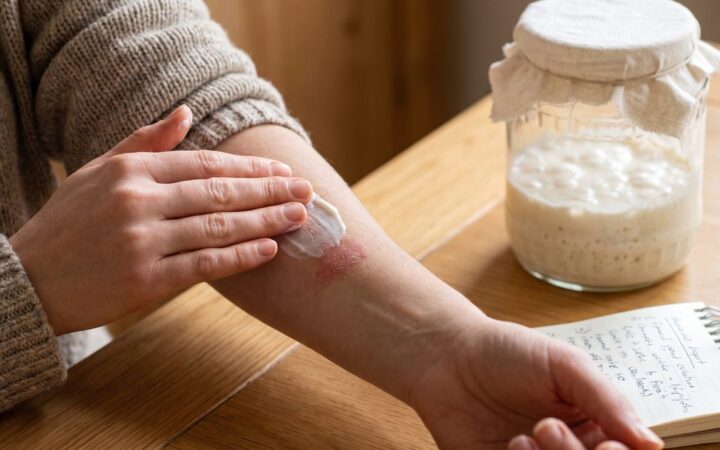
A vanishing skin bacterium may explain psoriasis flare-ups

A new Cell Reports study finds that Lactobacillus plantarum, a common skin bacterium, is depleted in psoriatic lesions across a 94-person human cohort. Its metabolite indole-3-lactic acid (ILA) restores a circadian clock protein, Bmal1, that activates Sirt3 to suppress ferroptosis, a form of cell death — and mouse experiments show removing either the metabolite or the clock gene erases the protective effect.