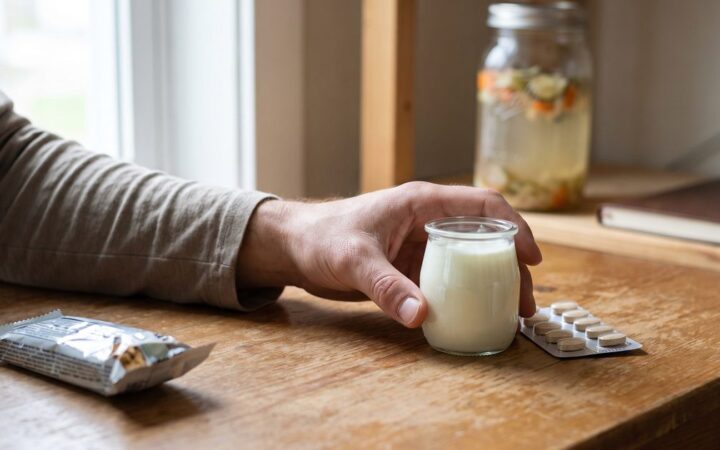
The bacteria living in breast tumors could change how we treat breast cancer
The breast was once considered a sterile environment. A growing body of research now suggests it harbors a distinct microbial community that may shape whether tumors grow, spread, and resist treatment.


The breast was once considered a sterile environment, but that assumption has not held up. A review published in iMeta by Jie Qiu et al. pulls together emerging evidence that microbes living in breast tissue, the gut, and even the mouth may influence whether breast cancer develops, how aggressively it behaves, and whether patients respond to therapy. No clinical tool based on this science exists yet, but the picture taking shape is striking.
Breast tumor tissue carries a distinct microbial signature
Proteobacteria is the dominant phylum found in breast tissue, with Firmicutes, Actinobacteria, and Bacteroidetes also present. What makes the cancer picture interesting is not just which microbes are there, but which ones are missing. Propionibacterium and Staphylococcus are depleted in tumor tissue compared with healthy breast tissue, and both show inverse associations with oncogenic immune features. Propionibacterium and Streptococcus also correlate positively with T-cell activation genes, suggesting that losing these bacteria may contribute to an immune environment that lets tumors grow unchecked. Meanwhile, Sphingobacterium multivorum, found within tumors, appears to do the opposite: it promotes recruitment of regulatory T cells, and higher levels of it are associated with reduced efficacy of anti-PD-1 immunotherapy. The microbiome reshapes the breast cancer immune and hormonal microenvironment in ways researchers are only beginning to map.
Gut and oral microbes reach far beyond the digestive tract
Breast cancer is not only shaped by what lives inside the tumor. The gut microbiome influences breast cancer through at least three distinct routes: immune modulation, metabolite production, and estrogen metabolism. Gut microbial dysbiosis, including an imbalanced Firmicutes-to-Bacteroidetes ratio, can promote tumorigenesis through chronic inflammation and toxic byproducts. Enterotoxigenic Bacteroides fragilis, for example, produces a toxin called BFT-1 that drives breast cancer cell stemness and chemoresistance through NOD1/NOTCH1 signaling. On the protective side, Faecalibacterium prausnitzii, which is depleted in breast cancer patients, suppresses tumor-promoting IL-6 secretion and JAK2/STAT3 signaling. Perhaps most surprisingly, Fusobacterium nucleatum, an oral bacterium, can colonize breast tumors by binding a sugar structure on tumor cells via its Fap2 lectin. Once there, it suppresses tumor-infiltrating T cells and is linked to accelerated growth and metastasis as well as resistance to taxane-based chemotherapy.
Microbial metabolites act as a parallel signaling network
The metabolites that gut bacteria produce are not passive bystanders. Secondary bile acids offer a striking illustration of how context matters: lithocholic acid appears to suppress tumor growth, while deoxycholic acid is procarcinogenic. Trimethylamine N-oxide, another gut-derived compound, can suppress triple-negative breast cancer by inducing a form of programmed cell death called pyroptosis and activating CD8+ T cells. Enterolactone, produced when gut bacteria process flaxseed lignans, suppresses tumor progression by downregulating CD38, an immunosuppressive protein. Butyrate, a short-chain fatty acid made by fermenting fiber, enhances cytotoxic CD8+ T-cell responses through epigenetic changes involving IL-12 signaling. Estrogen metabolism is another key axis: bacterial beta-glucuronidase enzymes in the gut deconjugate estrogens, sending them back into circulation and raising systemic estrogen levels. The same enzyme activity has been detected in nipple aspirate fluid, where it may drive local estrogen reactivation, promote cell proliferation, and contribute to resistance to endocrine therapies like tamoxifen.
How microbiota composition predicts therapy outcomes
Several lines of evidence now connect the microbial community to how patients tolerate and respond to treatment. In HER2-positive breast cancer, antibiotic-driven disruption of gut microbiota impairs trastuzumab's antitumor activity in preclinical models. Patients who do not respond to trastuzumab show lower gut microbial diversity and reduced abundance of commensal bacteria. For chemotherapy, lower baseline gut microbial alpha-diversity is associated with a higher risk of severe hematological toxicity, while enrichment of specific Firmicutes-related taxa such as Bacilli A and Paenibacillales predicts greater toxicity. Higher abundance of the phylum Synergistota is associated with reduced risk of severe neutropenia. On the immunotherapy side, enrichment of Akkermansia in the gut has been linked in other cancer contexts to improved immunotherapy response. The gut microbiota plays a dual role in breast cancer, acting both as a disease driver and a potential lever for treatment optimization.
Why the field still lacks clinical tools
Despite the volume of findings, a core breast microbiome profile has not been established, and subtype-specific microbial patterns are largely inconsistent across studies. The current evidence base is almost entirely observational. Methodological heterogeneity across sequencing techniques and study populations makes reliable meta-analyses difficult, which means causal relationships remain murky. No microbiota-based biomarker or intervention has been validated for routine clinical use. Probiotic and prebiotic supplementation, fecal microbiota transplantation, and dietary strategies all show preclinical promise, but face real barriers: safety concerns, interindividual variability in baseline microbiota, and the absence of adequately powered clinical trials. The field's next challenge is moving from association to mechanism, then from mechanism to a test or treatment that can be used at the bedside.
Where microbiome-breast cancer research goes next
The most credible near-term directions involve integrating mechanistic studies with prospective clinical data. Researchers need to establish whether specific microbial signatures can serve as predictive biomarkers for chemotherapy toxicity or immunotherapy response, and whether targeted microbiome interventions can improve outcomes without introducing new risks. Dietary modification is one of the more tractable starting points, given that what people eat shapes the gut microbiome rapidly and measurably. The connection between bacterial beta-glucuronidase activity and endocrine therapy resistance is another thread worth following, particularly for postmenopausal patients whose estrogen levels are otherwise low. The science is not ready to change clinical practice, but it is far enough along that ignoring the microbiome in breast cancer research would be a mistake.
Evidence rating
EMERGING — 71/100
Caveats:
- This is a narrative review, not a new clinical trial — it synthesizes existing studies rather than generating original data.
- Most mechanistic findings cited are from preclinical or observational studies; causal relationships in humans have not been established.
- No microbiota-based biomarker or clinical intervention for breast cancer has been validated for routine use.
- Funding was not disclosed by the authors.
- Subtype-specific microbial patterns remain inconsistent across the underlying studies reviewed.
Narrative review synthesizing preclinical and observational human studies on microbiota-breast cancer interactions across gut, oral, and intratumoral niches. Identifies specific named species and mechanisms but cannot establish causation; the underlying studies are heterogeneous and largely pre-clinical or observational. No findings have been validated in prospective clinical trials, and funding was not disclosed by the authors.
References
- Jie Qiu, Xiaojia Wang, Man Li, et al. (2026). The role of human microbiota in breast cancer pathogenesis and treatment. iMeta. https://doi.org/10.1002/imt2.70142
- Qianheng Wang, Furong Zhang, Yue Xin, et al. (2026). The human microbiome reshapes the breast cancer immune-metabolic-hormonal microenvironment. Frontiers in Immunology. https://doi.org/10.3389/fimmu.2026.1774211
- Yihong Zhao, Ye Zhao, Jingyi Shi, et al. (2025). The dual role of the gut microbiota in breast cancer: from pathogenic mechanisms to emerging therapeutic. Frontiers in Microbiology. https://doi.org/10.3389/fmicb.2025.1712240
- Jiaxin Wang, Dongyan Xu, Shiyao Hu, Beiwen Zheng, Yiding Chen, Tao Pan (2025). The Impact of Microbiome on Breast Cancer and Regulatory Strategies. Microorganisms. https://doi.org/10.3390/microorganisms14010075