Korean Fermented Soybean Paste Cuts Fat Buildup by Rewiring Gut Bacteria Signals
A fermented Korean staple may do more than flavor a bowl of stew. Early research suggests cheonggukjang reshapes gut bacteria in ways that could signal fat tissue to store less lipid.

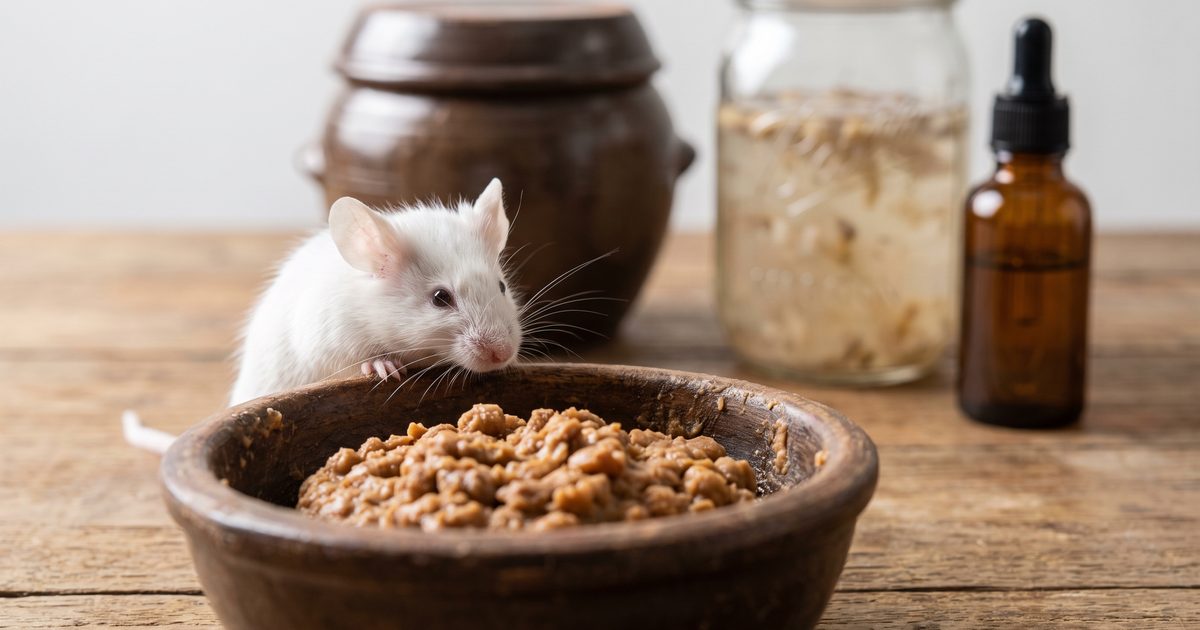
If you have been chasing the connection between your gut bacteria and stubborn metabolic issues like high triglycerides or cholesterol that won't budge, a new mouse study offers a specific and plausible mechanism worth understanding. Researchers found that cheonggukjang, a pungent Korean fermented soybean paste, appears to reduce fat accumulation not by working directly on fat cells, but by remodeling the gut microbial community in ways that change how fat tissue behaves at the molecular level. This is early, investigational research conducted in mice, so it is not a clinical recommendation, but the signaling pathway it describes is one that could matter to anyone managing obesity-related metabolic problems.
Key takeaways:
- Cheonggukjang supplementation in obese mice improved blood lipid markers, including lower triglycerides and higher HDL cholesterol, and reduced fat cell size in two types of fat tissue.
- The proposed mechanism runs through the gut: CGJ appeared to increase bacteria that produce short-chain fatty acids, which then activated specific receptors (Gpr41 and Gpr109a) in white adipose tissue.
- This gut microbiota to SCFA to adipose GPCR pathway is reported here for the first time and needs replication, including in humans.
- This is a mouse study; its findings should be treated as hypothesis-generating, not as proof that eating CGJ will improve your lipid panel.
Cheonggukjang reduced blood lipids and fat cell size in obese mice
A study published in Foods found that obese mice fed a diet containing 30% cheonggukjang (CGJ) showed significant improvements in lipid metabolism compared to mice kept on a high-fat, high-cholesterol diet alone. Serum triglycerides (TG, fats circulating in the blood), total cholesterol (TC), and apolipoprotein B (ApoB, a protein that carries harmful LDL particles) all fell, while HDL-C (the so-called good cholesterol) rose. In the fat tissue itself, both adipocyte (fat cell) size and number decreased noticeably in epididymal and subcutaneous fat depots. The mice also showed less hepatic lipid accumulation, meaning fat was building up less in the liver as well. Body weight gain was only slightly lower, suggesting the lipid benefits were not simply a product of the animals eating less.
Why this matters for people managing obesity-related metabolic disorders
For someone dealing with dyslipidemia (abnormal blood fat levels) or metabolic syndrome, this pathway is worth tracking because it points to the gut microbiome as a lever for fat tissue behavior. Research on gut microbiota SCFAs in obesity has established that the microbial community and the short-chain fatty acids it produces are central mediators of how the body handles fat. Separately, GPCRs expressed in human adipose tissue are increasingly recognized as altered in obesity and as potential therapeutic targets. The CGJ study proposes that a fermented food can nudge both nodes of this system simultaneously, which, if it holds up in human trials, would be a meaningful finding for conditions like type 2 diabetes, cardiovascular disease risk, and non-alcoholic fatty liver disease.
How the gut microbiota to SCFA to fat receptor axis works
The proposed mechanism has three linked steps. First, CGJ administration reversed the gut microbial dysbiosis (an imbalance in the community of gut bacteria) caused by the high-fat diet, increasing the abundance of bacterial genera associated with producing short-chain fatty acids (SCFAs: small molecules like acetate, propionate, and butyrate made when gut bacteria ferment certain fibers and proteins). Second, colonic SCFA levels measurably increased after CGJ treatment. Third, and most novel, the expression of two G-protein-coupled receptors (GPCRs, a class of cell-surface proteins that receive chemical signals and translate them into cellular action), specifically Gpr41 and Gpr109a, was upregulated in white adipose tissue. These receptors are known to respond to SCFAs. The mRNA levels of both receptors correlated strongly with systemic lipid indicators and with genes controlling lipid metabolism inside fat tissue, suggesting the receptors are not passive bystanders but active participants in the improved metabolic picture. SCFAs are well-documented mediators of metabolic health, and GPCRs on adipocytes directly regulate the balance between fat storage and fat breakdown, so the biological logic here is grounded in established science even if this specific axis is new.
What this could mean if you are managing cholesterol or metabolic syndrome
The practical translation is cautious but directionally interesting. If you are working with a doctor on high triglycerides, low HDL, or fatty liver, the idea that a fermented food could shift gut bacteria toward more SCFA-producing species, and that those SCFAs could then signal fat tissue to behave less like a lipid warehouse, is a mechanism worth asking about. Cheonggukjang is already a traditional food in Korea with a long safety record in culinary quantities. However, the dose in this study (30% of total diet) was far higher than typical dietary consumption, and the intervention was in mice, not humans. No one should treat this as evidence to self-prescribe CGJ for a cholesterol problem. The finding is best understood as identifying a pathway that deserves human trial investigation.
Key limitations: mice, dose, and a pathway still needing replication
The authors themselves note this is the first study to provide evidence for the gut microbiota to SCFA to adipose GPCR axis, which means it has not yet been replicated. Every limitation that applies to mouse metabolic research applies here: mice are not people, a high-fat diet in a controlled lab setting is not human dietary complexity, and 30% CGJ by diet weight is not a realistic human intake. Large human studies on SCFAs and obesity have found that the precise role of SCFAs can vary substantially depending on gut microbiota composition, lifestyle, and diet, which means even a validated mechanism in mice may not translate uniformly to human populations. The correlation between Gpr41/Gpr109a expression and lipid markers is suggestive but correlational; the study does not prove the receptors are causing the improvement.
What researchers need to do next
The immediate next step is mechanistic confirmation: ideally, receptor knockout experiments that test whether blocking Gpr41 or Gpr109a abolishes CGJ's lipid benefits in mice, which would move the finding from correlation to causation. Beyond that, human trials are necessary, starting with biomarker studies to confirm that CGJ consumption at realistic dietary doses shifts gut microbiota toward SCFA-producing genera and raises colonic SCFA levels in people. The timeline for that kind of evidence is measured in years, not months.
Common Questions
What is cheonggukjang and how is it different from other fermented soy foods? Cheonggukjang is a Korean fermented soybean paste made through a short fermentation process, typically two to three days, distinct from longer-aged pastes like doenjang or Japanese miso. It has a stronger aroma and retains live bacteria at higher levels, which is thought to contribute to its documented health effects.
What are SCFAs and why do they matter for fat metabolism? Short-chain fatty acids are small molecules, mainly acetate, propionate, and butyrate, produced when gut bacteria break down certain dietary fibers and proteins. Gut microbiota produce SCFAs that influence appetite, energy expenditure, and glucose metabolism, and they can bind to receptors on fat cells to influence how much lipid those cells store or release.
Does this mean I should start eating cheonggukjang to lower my cholesterol? Not based on this research. The study was conducted in mice at a very high dose and described a pathway that has not yet been confirmed in humans. It is an interesting hypothesis, not a clinical recommendation. If you are managing dyslipidemia, any dietary change is worth discussing with your doctor.
What are Gpr41 and Gpr109a? Both are G-protein-coupled receptors, a class of proteins embedded in cell membranes that detect chemical signals and trigger responses inside the cell. Gpr41 and Gpr109a are both known to be activated by short-chain fatty acids, and GPCRs in adipose tissue broadly regulate both inflammation and fat storage and breakdown processes. This study found their expression in white adipose tissue increased after cheonggukjang supplementation and correlated with improved lipid markers.
Evidence Rating
INVESTIGATIONAL — 75/100
Caveats
- This study was conducted entirely in mice; whether these effects translate to humans is unknown.
- Correlation between GPCR expression and lipid markers does not establish causation — the proposed gut microbiota–SCFA–adipose GPCR axis is mechanistically plausible but not yet experimentally proven as a causal chain.
- The authors state this is the first study to investigate this specific mechanism, meaning findings have not been independently replicated.
- Funding was not disclosed in the article.
Controlled animal study using high-fat/high-cholesterol diet-induced obese mice (n not specified in abstract). Findings show associations between cheonggukjang supplementation, gut microbiota shifts, SCFA elevation, and adipose GPCR upregulation, but the causal chain between these variables is inferred from correlations rather than demonstrated through direct intervention at each mechanistic step. Authors identify this as the first study of this specific axis; independent replication has not yet been reported.
References
- Su-Bin Lee, Do-Youn Jeong, Youngmi Lee, Ok-Kyung Kim, Anna Han (2026). Cheonggukjang Attenuates Lipid Dysmetabolism by Modulating Gut Microbiota-Derived SCFA Production and G-Protein-Coupled Receptor Levels in White Adipose Tissue. Foods. https://doi.org/10.3390/foods15152653
- Xuan LI, Yuuki SHIMIZU, Ikuo KIMURA (2017). Gut microbial metabolite short-chain fatty acids and obesity. Bioscience of Microbiota, Food and Health. https://doi.org/10.12938/bmfh.17-010
- Saeed Al Mahri, Meshail Okla, Mamoon Rashid, et al. (2023). Profiling of G-Protein Coupled Receptors in Adipose Tissue and Differentiating Adipocytes Offers a Translational Resource for Obesity/Metabolic Research. Cells. https://doi.org/10.3390/cells12030377
- Short chain fatty acids in human gut and metabolic health. link.springer.com. https://link.springer.com/article/10.1007/s00394-020-02290-w
- Davide Malfacini, Alexander Pfeifer (2023). GPCR in Adipose Tissue Function—Focus on Lipolysis. Biomedicines. https://doi.org/10.3390/biomedicines11020588
- Gut microbiota and fecal short chain fatty acids differ with adiposity and country of origin: the METS-microbiome study. NIH. https://www.ncbi.nlm.nih.gov/pmc/articles/PMC10444535/
- Sonia Facchin, Luisa Bertin, Erica Bonazzi, et al. (2024). Short-Chain Fatty Acids and Human Health: From Metabolic Pathways to Current Therapeutic Implications. Life. https://doi.org/10.3390/life14050559
- Elaine M. Duncan, Luca Vita, Bethany Dibnah, Brian D. Hudson (2023). Metabolite-sensing GPCRs controlling interactions between adipose tissue and inflammation. Frontiers in Endocrinology. https://doi.org/10.3389/fendo.2023.1197102


