The Right Diet Triples Survival in a Mouse Model of a Deadly Bowel Disease
A new mouse study finds that diet can triple survival in a model of Hirschsprung disease, apparently by reshaping gut bacteria and boosting a byproduct called butyrate. Researchers call it the first evidence diet might help prevent the disease's deadliest complication.

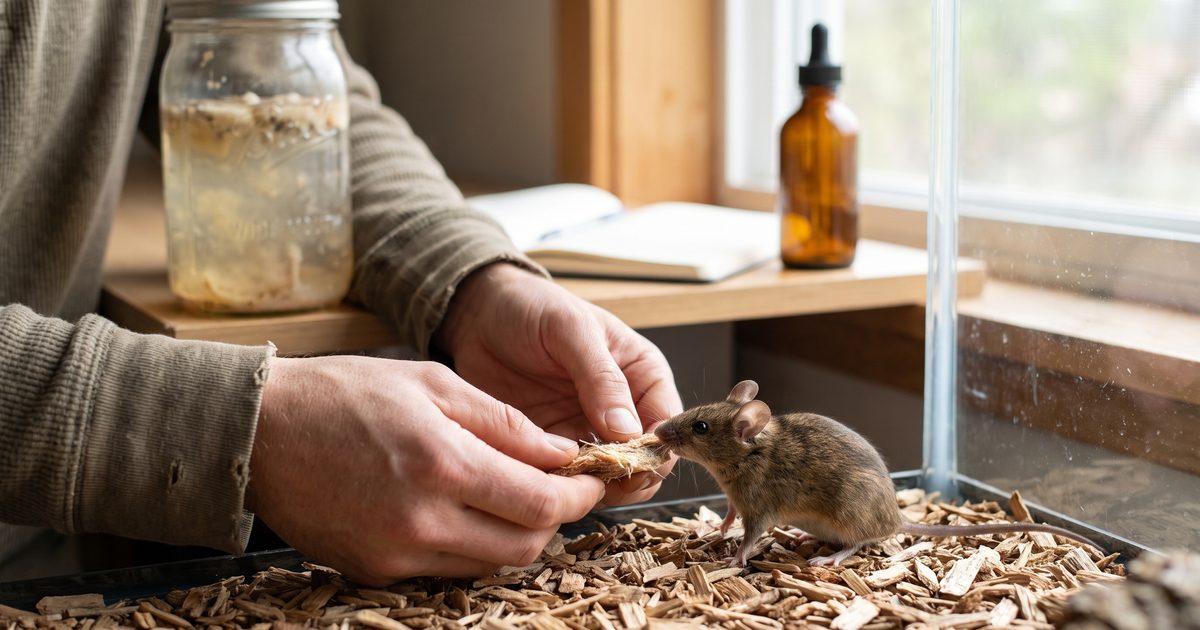
If you or someone you love has ever wondered how much gut bacteria really matter for a bowel disease, a new mouse study adds a striking data point. In mice bred to model Hirschsprung disease, a serious congenital bowel disorder, simply changing what the animals ate tripled how long the sickest ones survived. The effect wasn't found by testing a new drug; it turned up almost by accident, and tracing it back led researchers all the way down to the oxygen level inside individual gut cells and a bacterial byproduct called butyrate.
Key takeaways:
- A specific diet tripled median survival in mice modeling Hirschsprung disease, a rare congenital condition in which nerve cells are missing from part of the large intestine.
- The protective diet raised gut levels of butyrate, a bacterial byproduct, and shifted the colon's oxygen balance in ways that curbed a harmful bacterial group called Enterobacteriaceae.
- Blocking those bacteria directly, with a compound called tungstate, also improved survival, supporting a direct role for gut microbes rather than diet alone.
- This is mouse-model evidence only; the study's own authors call it the first suggestion that diet, beyond breastfeeding, might help prevent this disease's deadliest complication in people.
Diet Change Tripled Survival in Hirschsprung Disease Mice
Mice bred to model Hirschsprung disease (HSCR), a congenital condition in which the nerve cells that control bowel movement are missing from the lower intestine, lived roughly three times longer on a protective diet than on a detrimental one, according to the study published in Gastroenterology. The research team, led by Naomi Tjaden and Megan Liou with senior author Robert Heuckeroth of Children's Hospital of Philadelphia, made the discovery while studying a mouse strain called Piebald lethal (sl/sl), used in the lab to model HSCR. The authors describe the survival gap as large enough that diet alone determined whether many of the mice lived or died.
Hirschsprung-Associated Enterocolitis Threatens Infant Survival
Hirschsprung disease affects about 1 in 5,000 newborns, according to the National Institute of Diabetes and Digestive and Kidney Diseases, and is treated by surgically removing the affected bowel segment. Its most dangerous complication, enterocolitis (inflammation of the intestine), can strike before or after that surgery and is, in the words of one comprehensive review of the condition, "the main cause of morbidity and mortality" in Hirschsprung disease, which is why researchers have long looked for ways to reduce its risk. Heuckeroth pointed to a broader parallel: "Our findings suggest unexpected similarities between mechanisms underlying inflammatory bowel disease (IBD) and Hirschsprung's disease."
How Scientists Tested Diet, Microbes, and Mouse Survival
To find out why diet mattered, researchers ran the sl/sl mice on each diet through a battery of tests: they analyzed the chemical makeup of the diets and the mice's stool (metabolomics), sequenced gut bacteria using 16S rDNA sequencing (a method that identifies bacterial species by a shared gene), cultured bacteria on a growth medium that favors certain gut microbes (MacConkey agar), examined colon tissue under light and electron microscopes, measured which genes the colon lining was actively using (RNA sequencing), tested colon-lining oxygen levels with a chemical stain (pimonidazole), and checked how easily a marker molecule leaked through the gut wall (intestinal permeability). They then tested cause and effect directly, using antibiotics or a compound called tungstate, which selectively blocks a type of bacterial respiration, to see whether removing or disabling gut microbes changed survival the way diet did.
What This Means for Hirschsprung and IBD Patients
The clearest pattern in the data: mice on the protective diet kept their colon lining in a low-oxygen state (hypoxia), supported their mitochondria (the structures that generate a cell's energy), produced more antimicrobial peptides (natural germ-fighting proteins) in the upper colon, and maintained a tighter gut barrier, alongside lower levels of Enterobacteriaceae, a bacterial family linked to inflammation when it overgrows. The protective diet also raised fecal butyrate, a byproduct that gut bacteria produce by fermenting fiber and resistant starch, along with other metabolites the authors say may help explain the effect. Because directly blocking Enterobacteriaceae's anaerobic respiration with tungstate also extended survival, the microbiome itself, not diet in isolation, appears to be doing much of the protective work. For readers managing IBD or a family member's Hirschsprung disease, the honest takeaway is that this is a mechanism worth watching, not a diet to adopt: the paper does not name a specific human diet, and its authors frame the work as the first evidence, in their words, that "dietary interventions (other than breastfeeding) might prevent Hirschsprung disease-associated enterocolitis," not proof that any particular food or supplement does.
What This Mouse Study Doesn't Yet Show
This is a mouse-model study, and the sources available for this article, the published abstract and a Children's Hospital of Philadelphia press release, do not specify exactly what made one diet "protective" and the other "detrimental," and they give survival as roughly tripled rather than an exact number of days. The full peer-reviewed paper was not accessible while writing this piece, so any detail beyond what the abstract and press release state, such as dose-response data or a breakdown by sex or age, isn't yet available here. Whether the same mechanism holds in people with Hirschsprung disease has also not been tested.
What's Next for Diet-Based Hirschsprung Research
The authors call this the first evidence, to their knowledge, that diet (beyond breastfeeding in infancy) might help prevent Hirschsprung-associated enterocolitis. The logical next steps are identifying exactly which dietary components beyond fiber and resistant starch drive the effect, confirming the finding in other Hirschsprung models, and only then considering whether any version of this could be tested in infants with the disease.
Common Questions
Does diet cause Hirschsprung disease? No. Hirschsprung disease is a congenital condition caused by missing nerve cells in the bowel, present from birth. This study looked at whether diet affects a complication of the disease, enterocolitis, not the underlying nerve defect.
What is Hirschsprung-associated enterocolitis? It's intestinal inflammation that can develop before or after surgery for Hirschsprung disease and is considered the disease's most dangerous complication.
Does this mean a specific diet can protect people with Hirschsprung disease? Not yet. The tripled survival was observed in a mouse model, and the study's authors describe it as the first evidence that diet might help, not a tested human treatment.
Why does butyrate matter in this study? Butyrate is a byproduct gut bacteria make by fermenting fiber and resistant starch, and the protective diet raised its levels alongside other changes linked to longer survival. The study doesn't establish butyrate alone as the cause.
Evidence Rating
INVESTIGATIONAL — 78/100
Caveats
- Full text was not obtained; summary based on the published abstract and a EurekAlert/CHOP press release.
- Mouse model; human translational relevance unconfirmed.
Peer-reviewed mouse model (Gastroenterology); diet-driven gut microbes tripled median survival in a Hirschsprung disease model; press coverage confirms.
References
- Naomi E. Butler Tjaden, Megan J. Liou, Sophie E. Sax, et al. (2026). Dietary modulation of intestinal microbes prolongs survival in a Hirschsprung disease mouse model. Gastroenterology. https://doi.org/10.1053/j.gastro.2026.09.007
- Definition & Facts for Hirschsprung Disease (NIDDK). NIH. https://www.niddk.nih.gov/health-information/digestive-diseases/hirschsprung-disease/definition-facts
- Hirschsprung-associated enterocolitis: a comprehensive review. NIH. https://pmc.ncbi.nlm.nih.gov/articles/PMC11474670/
- Naschla Gasaly, Marcela A. Hermoso, Martín Gotteland (2021). Butyrate and the Fine-Tuning of Colonic Homeostasis: Implication for Inflammatory Bowel Diseases. International Journal of Molecular Sciences. https://doi.org/10.3390/ijms22063061


