Popular Zero-Calorie Sweetener Erythritol Made Colitis Worse in Mice
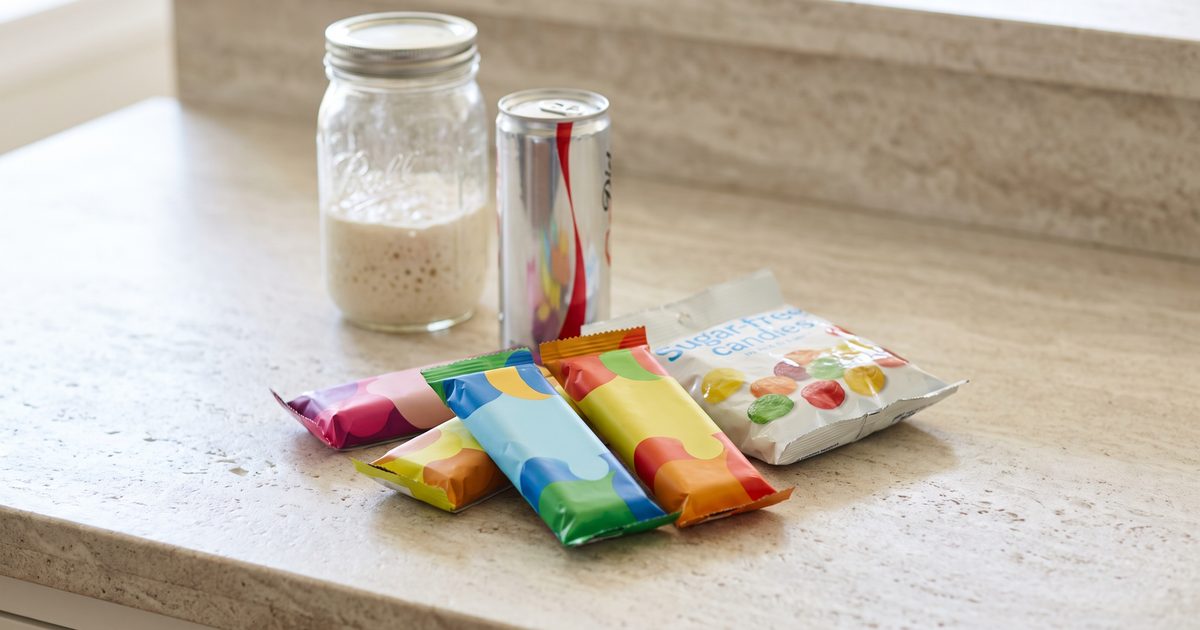
Erythritol is everywhere in 'healthy' snacks and diet sodas, but new research suggests it may make inflammatory bowel conditions worse, at least in mice. The findings add to a growing case for scrutinizing sweeteners that were once considered completely benign.

If you have been reaching for erythritol-sweetened foods as a supposedly gut-friendly alternative to sugar, a new study published in the journal Microorganisms gives you reason to pause. Researchers found that erythritol, a four-carbon sugar alcohol used widely in low-calorie and keto products, significantly worsened colitis in a standard mouse model, disrupted gut bacterial communities, damaged the intestinal lining, and shifted metabolic pathways in ways that could affect mood. This is early, investigational research, conducted in animals, not humans. But the mechanisms it uncovers are specific enough to be worth understanding.
Key takeaways:
- In mice with chemically induced colitis, erythritol caused more severe weight loss, higher disease scores, and delayed recovery compared to mice with colitis alone.
- Erythritol disrupted the gut microbiome, reduced protective goblet cells, and impaired the gut barrier protein occludin.
- Tryptophan metabolism, a key pathway linking the gut to brain chemistry and mood, was significantly altered.
- This is mouse research; no causal conclusions can be drawn for humans yet, and results require replication in clinical studies.
Erythritol aggravated chemically induced colitis in mice
The core finding of this study from Liu and colleagues is that erythritol made an existing inflammatory condition meaningfully worse. Mice given dextran sulfate sodium (DSS), a chemical that strips the colon lining and triggers colitis resembling human ulcerative colitis, fared significantly worse when erythritol was added to their regimen. Compared to DSS-only animals, the erythritol-plus-DSS group lost more body weight, scored higher on the Disease Activity Index (a composite measure of stool consistency, blood, and weight loss), and recovered more slowly once DSS was withdrawn. Colon length, a rough proxy for inflammation severity, was also shorter in the erythritol group.
The intestinal damage visible under a microscope was more extensive too: histopathological analysis showed pronounced crypt destruction (the crypt is the tubular gland that lines the colon and renews its surface cells), more inflammatory cell infiltration, and mucosal edema. Goblet cells, which produce the mucus that protects the gut lining, were reduced in DSS mice and reduced further with erythritol. The barrier protein occludin was also decreased, meaning the tight junctions holding gut lining cells together were weakening.
IBD patients were already eating more NNS-containing ultra-processed foods
Before conducting the mouse experiments, the research team surveyed 85 IBD patients (35 with ulcerative colitis, 50 with Crohn's disease) and 99 healthy controls at a hospital in Sichuan, China, using a food frequency questionnaire. Patients with active IBD consumed a significantly higher proportion of NNS-containing ultra-processed food categories relative to total ultra-processed food intake compared to healthy controls. Crohn's disease patients also showed notably lower insoluble dietary fiber intake than controls.
The questionnaire cannot tell us whether the sweeteners caused or worsened IBD, or whether people with IBD simply gravitate toward low-sugar products. It also could not quantify exactly how much erythritol individuals were consuming. But the association adds human-context texture to the mouse experiments: these are not purely hypothetical exposures.
How the researchers modeled colitis and measured the damage
The DSS-induced colitis model, widely used in IBD research for its reproducibility and its ability to mimic key features of human ulcerative colitis, was the backbone of the experimental design. Mice were divided into four groups: control, erythritol alone, DSS alone, and erythritol plus DSS. The team then deployed an unusually broad toolkit: histological staining for tissue damage, immunofluorescence for barrier proteins, RT-qPCR for inflammatory cytokine gene expression, 16S rRNA sequencing of gut bacteria, RNA sequencing of colon tissue, untargeted metabolomics of colon contents, and behavioral testing.
RNA sequencing revealed 158 upregulated and 275 downregulated genes in erythritol-plus-DSS mice compared to DSS-only mice. Gene set enrichment analysis pointed to significant enrichment of the ferroptosis pathway, ferroptosis being a form of programmed cell death driven by iron-dependent lipid peroxidation that is increasingly implicated in IBD. Markers supporting ferroptosis, including elevated 4-HNE and ACSL4, and decreased ferritin subunits FTH and FTL, were all shifted in the expected direction. Inflammation was also amplified: colonic TNF-alpha mRNA expression was higher in erythritol-plus-DSS mice.
What erythritol did to the gut microbiome and tryptophan metabolism
16S rRNA sequencing of cecal samples showed that erythritol shifted the microbial community in DSS-treated mice in several specific ways. Alpha diversity (a measure of bacterial richness within a sample) increased, but the composition moved toward a more pro-inflammatory structure. Firmicutes bacteria fell; Bacteroidota and Verrucomicrobiota rose. At the genus level, protective bacteria including Dubosiella and Ligilactobacillus decreased, while Akkermansia increased. Alistipes sp. CHKCI003, a bacterium associated in prior research with depressive symptoms and stress exposure, was enriched in the erythritol-plus-DSS group.
The metabolomics data showed a parallel disruption in tryptophan metabolism. L-tryptophan levels fell in the colonic contents of erythritol-plus-DSS mice, while kynurenine (the main downstream product when tryptophan is shunted away from serotonin production) and the kynurenine-to-L-tryptophan ratio both rose. This matters because more than 90% of ingested tryptophan is metabolized via the kynurenine pathway, and imbalances in this pathway are linked to both IBD severity and neuropsychiatric symptoms including depression. L-tryptophan levels were significantly negatively correlated with the abundance of Alistipes sp. CHKCI003.
Behaviorally, erythritol-plus-DSS mice did not show measurable differences in anxiety on the Elevated Plus Maze or Open Field Test compared to DSS-only mice, but they did show selectively increased immobility time in the Tail Suspension Test (a standard rodent assay for depression-like behavior) and reduced total travel distance in the Open Field Test. The researchers are appropriately cautious: whether the TST result represents a meaningful aggravation of depression-like behavior requires further investigation.
What this means if you have IBD or suspect gut issues
Erythritol is not sugar, but this study makes clear it is not inert either. If you have IBD, whether ulcerative colitis or Crohn's disease, or a condition like IBS where gut barrier integrity is already a concern, this research adds to a pattern worth discussing with your gastroenterologist. It does not prove that erythritol will worsen your condition; the doses used in mice may not translate directly to human consumption amounts, and some earlier research has pointed in the opposite direction, with erythritol showing anti-inflammatory effects in high-fat-diet mouse models. The discrepancy likely reflects the fact that context matters enormously: a gut already under inflammatory siege responds differently than a healthy one.
Erythritol has also drawn attention from cardiovascular researchers. The NIH has flagged associations between higher blood erythritol levels and increased cardiovascular event risk, though that research, like this study, stops short of establishing causation. Taken together, the picture emerging for erythritol is more complicated than its "safe and natural" reputation suggests.
Limitations and what comes next
The most important caveat is the one that applies to all mouse research: mice are not humans, and DSS-induced colitis is a useful model but an imperfect one, with acknowledged differences from human IBD in terms of immune architecture and disease course. The FFQ survey cannot establish that erythritol consumption caused worse IBD outcomes in the patient group. The ferroptosis and Alistipes-tryptophan-behavior chain is a correlation, not a proven mechanism: the study authors explicitly call for functional validation using ferroptosis inhibitors and targeted microbiome manipulation to confirm causality.
What comes next, the researchers suggest, is mechanistic follow-up: identifying exactly how erythritol engages ferroptosis pathways in the inflamed colon, whether germ-free mouse models can isolate the microbiome-specific contribution, and whether any of these metabolic signals are detectable in IBD patients who consume erythritol regularly.
Common Questions
Is erythritol safe for people with IBD? No clinical guidance currently advises IBD patients to avoid erythritol, and this study is in mice rather than humans. That said, the mechanisms identified here, including gut barrier damage and microbiome disruption, are directly relevant to IBD, and it is a reasonable question to raise with your gastroenterologist.
Does erythritol cause depression? This study found that erythritol-plus-DSS mice showed increased immobility in the Tail Suspension Test and disrupted tryptophan metabolism, both loosely associated with depressive-like states in rodents. The researchers themselves say this requires further investigation and no causal claim for humans can be made.
What sweeteners are safer for a gut condition? The research does not answer that question directly, and no sweetener has been proven safe for IBD at a mechanistic level. The broader literature on non-nutritive sweeteners and gut health is still evolving; the safest approach remains discussing your specific diet with a gastroenterologist or registered dietitian familiar with IBD.
Evidence Rating
INVESTIGATIONAL — 75/100
Caveats
- All colitis and behavioral findings come from a mouse model (DSS-induced colitis); results may not translate directly to humans.
- The human component is a food frequency questionnaire showing association only — it cannot establish that erythritol causes IBD or worsens outcomes in people.
- The correlation between Alistipes sp. CHKCI003, tryptophan levels, and behavior does not confirm a causal chain; mechanistic validation is still needed.
- Ferroptosis findings are observational; no inhibitor experiments were performed to confirm causality.
- Funding was not disclosed by the authors.
This study combines a cross-sectional food frequency questionnaire in IBD patients with a DSS-induced murine colitis model, 16S rRNA sequencing, transcriptomics, and untargeted metabolomics. The human data show association only and cannot establish causation; the mechanistic findings are limited to animal and in vitro endpoints and have not been replicated in an independent cohort or model. Proposed causal links between Alistipes sp. CHKCI003 enrichment, tryptophan-kynurenine pathway disruption, ferroptosis, and behavioral change remain correlational and require functional validation.
References
- Yingying Liu, Tian He, Wenle Liu, et al. (2026). Erythritol Exacerbates DSS-Induced Colitis and Influences Behavioral Responses in Mice Through Gut Microbiota and Metabolic Alterations. Microorganisms. https://doi.org/10.3390/microorganisms14081696
- Derrick D Eichele, Kusum K Kharbanda (2017). Dextran sodium sulfate colitis murine model: An indispensable tool for advancing our understanding of inflammatory bowel diseases pathogenesis. World Journal of Gastroenterology. https://doi.org/10.3748/wjg.v23.i33.6016
- Rena Kawano, Takuro Okamura, Yoshitaka Hashimoto, et al. (2021). Erythritol Ameliorates Small Intestinal Inflammation Induced by High-Fat Diets and Improves Glucose Tolerance. International Journal of Molecular Sciences. https://doi.org/10.3390/ijms22115558
- Erythritol and cardiovascular events | National Institutes of Health (NIH). NIH. https://www.nih.gov/news-events/nih-research-matters/erythritol-cardiovascular-events
- Chunhua Yang, Didier Merlin (2024). Unveiling Colitis: A Journey through the Dextran Sodium Sulfate-induced Model. Inflammatory Bowel Diseases. https://doi.org/10.1093/ibd/izad312