The Extraction Method Makes or Breaks Kidney Bean Fiber as a Prebiotic for Aging Guts
The same humble white kidney bean can yield dramatically different gut-health effects depending entirely on how its fiber is extracted. Early research suggests the extraction chemistry may matter as much as the ingredient itself.

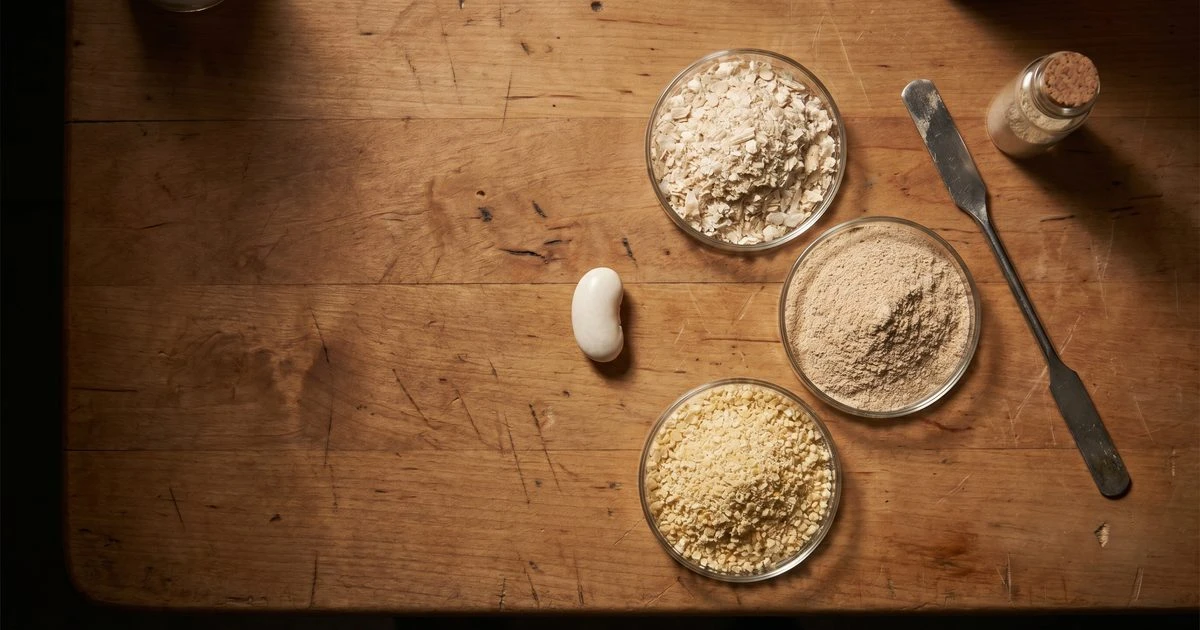
A white kidney bean sitting on a lab bench looks like a single ingredient, but processed three different ways, it yields polysaccharides with strikingly different molecular structures and radically different effects on the aging gut microbiome. That is the central finding of a new study published in Food Chemistry: X by Hu and colleagues, who compared acid-, enzyme-, and chelating agent-based extraction methods to determine which produces the most promising prebiotic fiber for elderly people.
How Extraction Chemistry Reshapes Kidney Bean Polysaccharide Structure
The research team isolated polysaccharides from white kidney bean episperm (the seed coat) using three ultrasound-assisted techniques: acid extraction (AEP), enzymatic extraction with cellulase (EEP), and chelating agent extraction with ammonium oxalate (CEP). Each method pulled out a chemically distinct product.
AEP and CEP were dominated by xylose and arabinose, pointing to arabinoxylan or arabinogalactan structures, while EEP was dominated by glucose followed by xylose. Molecular weights also diverged sharply: AEP and EEP came out at 82.5 kDa and 77.4 kDa respectively, while CEP was considerably lighter at 36.4 kDa. CEP also formed the most compact molecular conformation of the three, a property the researchers suggest promotes bacterial adhesion and speeds fermentation. This connects to earlier work on white kidney bean cotyledon polysaccharides, which showed that acidic and alkaline extractions tend to produce fractions most supportive of beneficial microbial growth in aging microbiota.
Surface imaging under electron microscopy reinforced the differences: the acid-extracted AEP had an evenly distributed porous structure, EEP showed heterogeneous morphology, and CEP displayed a compact lamellar arrangement, all distinct from the smooth surface of the commercially available sunflower pectic polysaccharide used as a comparison control.
Elderly Gut Microbiota Responds Differently to Each Fraction
To test prebiotic potential, the team conducted in vitro fermentation using pooled fecal samples from healthy adults aged 65 to 70, collecting samples at 0, 12, 24, and 36 hours. In vitro fermentation systems like this one are a standard screening tool for gut microbiota research: they allow researchers to probe mechanisms and compare interventions without the ethical and logistical complexity of clinical trials, though they cannot replicate every nuance of the living gut.
The control fermentation (without added polysaccharides) was dominated by Klebsiella, an opportunistic pathogen, at 27.46% relative abundance by 36 hours. All three kidney bean fractions suppressed Klebsiella dramatically: AEP reduced it to just 0.14% at the same time point. Each fraction also shifted the microbiota in a direction consistent with better gut health, though in somewhat different ways. AEP and EEP significantly increased relative abundance of Bifidobacterium, a genus consistently associated with healthy aging outcomes in the gut microbiome. CEP, with its lower molecular weight and compact structure, specifically enriched Clostridium_T, a recognized butyric acid producer.
Short-Chain Fatty Acid Production Reveals Prebiotic Strength
Short-chain fatty acids (SCFAs) are the metabolites that translate gut bacterial activity into tangible health effects: acetic and butyric acids, for instance, nourish colonocytes and modulate inflammation. Acetic acid accumulated rapidly in all three kidney bean fermentation groups. Butyric acid showed the most striking results in AEP and CEP, reaching 6.49 and 6.14 mmol/L respectively at 36 hours, linked to xylose utilization and the growth of Bifidobacteria and Clostridium_T.
All three kidney bean fractions also produced much less branched-chain SCFAs, specifically isobutyric and isovaleric acids, than the control. Branched SCFAs are produced through protein fermentation rather than carbohydrate fermentation, so their suppression signals that the polysaccharides kept the gut microbiota busy with carbohydrate metabolism throughout the fermentation window. The resulting higher ratio of total SCFAs to branched SCFAs in AEP, EEP, and CEP groups indicates stronger prebiotic potential overall.
CEP's lower molecular weight appears to explain its particularly rapid monosaccharide utilization: its glucose, arabinose, galactose, and galacturonic acid fractions reached up to 96.54% degradation across the fermentation period. AEP's higher xylose content provided a slower-burning but ultimately large carbohydrate release, with 81.30% xylose degradation at 36 hours.
Limitations That Keep This Finding Preliminary
Several constraints temper these results. The fermentation experiment used pooled fecal samples from a small group of elderly donors, which limits statistical power and cannot capture the substantial variability in gut microbiome composition that accumulates with aging. The in vitro model, while informative, cannot replicate the continuous peristalsis, immune interactions, and organ-level crosstalk of a living gut. Microbial identification relied on 16S rRNA sequencing, which has limited resolution for distinguishing closely related species; whole-genome metagenomic sequencing would sharpen those profiles.
The authors explicitly recommend in vivo studies as the necessary next step before any of these extraction-dependent differences can be translated into dietary recommendations or functional food formulations.
What These Results Mean for Functional Food Development
Kidney beans (Phaseolus vulgaris L.) contain 15 to 35% non-digestible polysaccharides and represent a comparatively low-cost raw material for prebiotic development, which makes extraction optimization an economically meaningful question. Beyond simple gut health, white kidney bean polysaccharides have also shown potential to alleviate cognitive impairment in aging animal models, adding a broader motivation for developing these fractions effectively.
For product developers, the practical implication of this study is that switching extraction solvents is not a minor processing decision: it produces a fundamentally different ingredient with different microbial targets. Rigorous randomized controlled trials in older adults will ultimately be needed to confirm whether these in vitro advantages translate to measurable health outcomes in people. For now, the study offers a clear proof of concept: a cheap, widely grown legume can be tuned, at the extraction stage, to preferentially feed the microbial populations most depleted by aging.
Evidence rating
INVESTIGATIONAL — 75/100
Caveats:
- This was an in vitro fermentation study using fecal samples from a small number of elderly donors — results have not been tested in living humans.
- Ex vivo fermentation cannot replicate the full complexity of the gut environment, including gut transit, immune interactions, and host metabolism.
- No funding source was disclosed by the authors.
- Independent replication in human clinical trials is needed before any prebiotic recommendations can be made.
In vitro fermentation study using pooled fecal inoculum from a small number of healthy elderly individuals (65–70 years). Demonstrates associations between polysaccharide extraction method, structural properties, and shifts in microbial composition and short-chain fatty acid output, but cannot establish causation in a living system. Not yet replicated in an independent population or in vivo setting.
References
- Yimei Hu, Xinyang Li, Caiping Duan, et al. (2026). Extraction method shapes the structure and fermentation behavior of white kidney bean episperm polysaccharides in gut microbiota of the elderly. Food Chemistry: X. https://doi.org/10.1016/j.fochx.2026.104079
- Chunli Kong, Yimei Hu, Jiachen Song, Xinyang Li, Bei Wang, Paul de Vos (2026). Extraction-Dependent Structural Diversity of White Kidney Bean Cotyledon Polysaccharides Determines Their Effects on Ex Vivo Fermentation of the Elderly Gut Microbiota. Nutrients. https://doi.org/10.3390/nu18040591
- Julia Isenring, Lea Bircher, Annelies Geirnaert, Christophe Lacroix (2023). In vitro human gut microbiota fermentation models: opportunities, challenges, and pitfalls. Microbiome Research Reports. https://doi.org/10.20517/mrr.2022.15
- Gut microbiome pattern reflects healthy ageing and predicts survival in humans. Nature. https://www.nature.com/articles/s42255-021-00348-0
- Microbial Influences on Aging: Insights from the Gut Microbiome. frontiersin.org. https://www.frontiersin.org/articles/10.3389/fmicb.2023.1165270/full
- White Kidney Bean Episperm Polysaccharides Improve Cognitive Impairment in D-Galactose-Induced Aging Mice via Modulation of Oxidative Stress, Neuroinflammation, and the Gut-Brain Axis. mdpi.com. https://www.mdpi.com/2072-6643/15/22/4791
- Kai Zhuang, Huanhuan Luo, Muhuang Zeng, Sze Chun Leo CHAN, Meiting Gong, Yunhan Wang (2025). Effects of probiotics, prebiotics, and synbiotics on gut microbiota in older adults: a systematic review and meta-analysis of randomized controlled trials. Nutrition Journal. https://doi.org/10.1186/s12937-025-01218-1