This Gut Bacterium Is Linked to Slower Biological Aging, Hawaii Study Finds
Researchers in Hawaii compared gut bacteria to a DNA-based biological aging clock in 123 adults and found two species that tracked with faster or slower aging, though the link explains only a small slice of the picture.

If you've wondered whether your gut bacteria have anything to do with how fast you're actually aging, not just how many birthdays you've had, a new study from the University of Hawaii offers an early answer. Researchers compared the gut bacteria of 123 adults to a blood-based measure of biological aging speed, and found two specific bacteria species that tracked with whether someone was aging faster or slower than their calendar age would suggest.
Key Takeaways
- Researchers compared gut bacteria composition to DunedinPACE, a DNA-methylation-based measure of biological aging speed, in 123 adults.
- Gut microbiome composition explained about 15% of the variation in biological aging pace, independent of chronological age.
- Bifidobacterium adolescentis tracked with slower aging; Succinivibrio dextrinosolvens tracked with faster aging.
- This is a cross-sectional, observational study; it cannot show that these bacteria cause faster or slower aging, and the specific species findings need replication in larger groups.
Gut Bacteria Composition Tracked With Biological Aging Pace
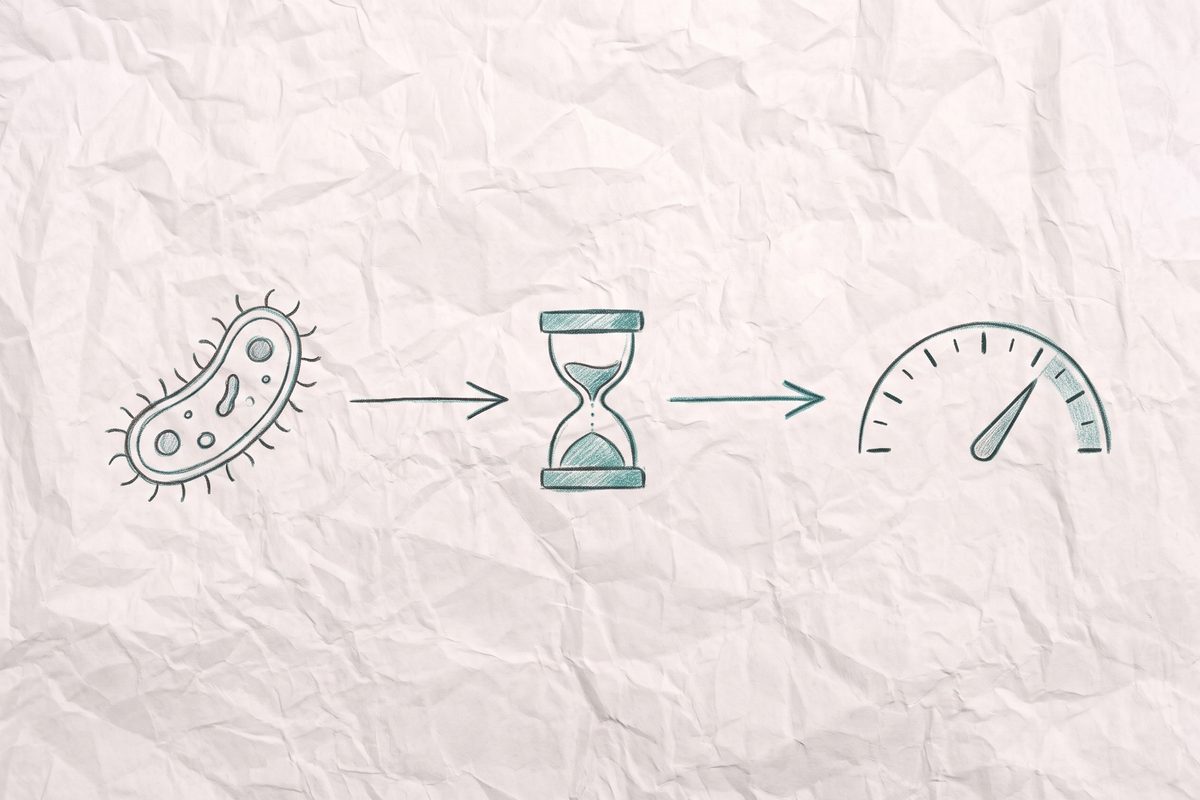
Researchers at the University of Hawaii at Manoa, led by scientists including Kunihiro, Yamamoto, Juarez, and Maunakea, collected paired stool and blood samples from 123 adults and compared gut bacteria composition against DunedinPACE, a DNA-methylation biomarker (a blood test that reads chemical marks on DNA to estimate how fast a person's body is aging biologically, as opposed to counting years since birth). Gut microbiome composition explained roughly 15% of the variation in DunedinPACE scores, independent of a person's actual chronological age, according to University of Hawaii News coverage of the study, published in Scientific Reports in July 2026.
Why This Matters for Anyone Curious About Their Own Aging Pace
Chronological age, the number of years since birth, and biological age, how much wear and tear the body has actually accumulated, are not the same thing, and a growing body of research suggests biological age tracks more closely with future health risk. For a reader interested in longevity, healthy aging, or simply understanding what's within their control, a finding that gut bacteria composition explains part of that biological-aging gap adds gut health to the list of factors, alongside diet, exercise, and sleep, that researchers think may influence how fast the body ages.
Two Specific Bacteria Stood Out in the Analysis
Among the many bacteria species analyzed, two showed a clear pattern. Higher levels of Bifidobacterium adolescentis, a bacterium already studied for other beneficial roles in gut health, tracked with a slower DunedinPACE score, meaning slower biological aging. Higher levels of Succinivibrio dextrinosolvens tracked with a faster DunedinPACE score, meaning faster biological aging. The study does not establish what either bacterium is actually doing biologically to produce these associations; it identifies the statistical pattern, not the mechanism behind it.
What This Could Mean for Your Own Gut and Aging
This study does not point to a specific probiotic, supplement, or diet change proven to slow biological aging. Bifidobacterium adolescentis is not marketed as a targeted anti-aging probiotic, and taking one would not be based on evidence from this study, which is observational, not an intervention trial. What the finding does support is a broader research direction worth watching: that a person's gut bacteria may be one modifiable piece of the biological-aging puzzle, alongside better-established factors like diet quality, physical activity, and sleep.
Why This Is Association, Not Proof of Cause

This is a cross-sectional study, meaning gut bacteria and biological aging pace were both measured at a single point in time in the same 123 people, which cannot show whether the bacteria influence aging pace, aging-related body changes influence which bacteria thrive, or some third factor drives both. The authors themselves note that species-level findings like these often fail to replicate when tested in larger, independent cohorts, a common problem in microbiome research given the enormous number of bacterial species that could show a chance association in a sample this size. It's also worth keeping the 15% figure in perspective: the gut microbiome explained roughly 15% of the variation in biological aging pace, meaning about 85% of what determines how fast someone ages biologically remains unexplained by gut bacteria in this dataset.
What Comes Next for This Research
The logical next step is replicating these two specific bacterial associations in a larger, independent group of people, and eventually testing whether deliberately shifting gut bacteria composition, through diet, probiotics, or other means, changes a person's DunedinPACE trajectory over time. Additional coverage of the study frames this as an early but promising direction for aging research rather than a finished picture.
Common Questions
Should I take a Bifidobacterium adolescentis probiotic to slow aging? This study doesn't provide evidence to support that; it found an association in an observational sample, not a tested intervention, and Bifidobacterium adolescentis is not currently validated as an anti-aging supplement.
What is DunedinPACE? It's a DNA-methylation blood test that estimates how fast a person's body is biologically aging, based on chemical markers on their DNA, developed separately from this gut bacteria study.
Does this mean my gut bacteria determine how fast I age? No. Gut microbiome composition explained only about 15% of the variation in biological aging pace in this study; the majority of what determines aging speed remains outside what gut bacteria alone can explain.
How reliable are these specific bacteria findings? The researchers themselves caution that findings at the individual-species level, like the two bacteria highlighted here, often don't replicate in larger studies, so these specific results should be considered preliminary until confirmed elsewhere.
Evidence Rating
EMERGING — 71/100
Caveats
- Cross-sectional/observational – cannot establish causation
- Modest sample size (n=123); authors note species-level findings often fail to replicate in larger cohorts
- Gut microbiome explains only ~15% of biological-aging variation; 85% remains unexplained
This is a cross-sectional observational study in 123 adults linking gut bacteria to a biological-aging clock; it shows association, not causation, and the specific bacterial findings await replication in larger cohorts.
References
- (2026). Hawaii Researchers Link Specific Gut Bacteria to the Pace of Biological Aging Without … https://www.medicaldaily.com/gut-bacteria-biological-aging-dunedinpace-hawaii-study-476854
- Daniel W Belsky, Avshalom Caspi, David L Corcoran, et al. (2022). DunedinPACE, a DNA methylation biomarker of the pace of aging. eLife. https://doi.org/10.7554/elife.73420
- Gut bacteria and biological aging. hawaii.edu. https://www.hawaii.edu/news/2026/07/22/gut-bacteria-biological-aging/
- T. Leser, A. Baker (2017). Bifidobacterium adolescentis – a beneficial microbe. Beneficial Microbes. https://doi.org/10.1163/18762891-20230030