Gallstones May Start in Your Gut: How Bacteria Drive Stone Formation
Gallstones affect millions of adults worldwide, but their roots may lie somewhere unexpected: the gut microbiome. A new review maps exactly how bacterial imbalances tip the body toward stone formation.

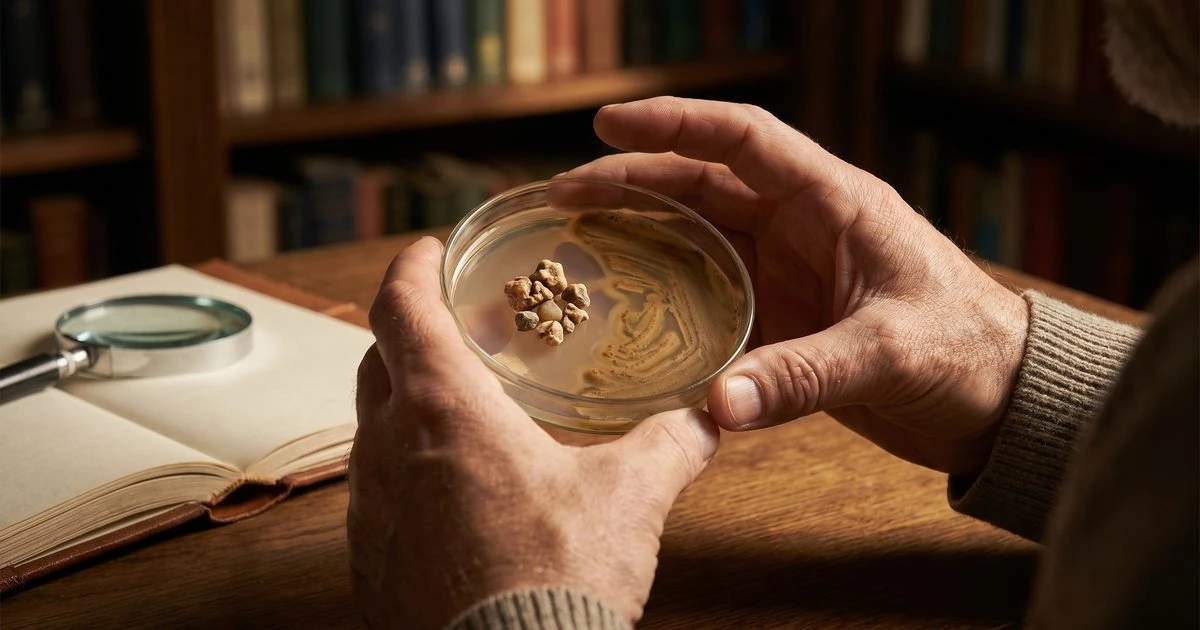
Gallstones have long been blamed on diet, genetics, and sluggish gallbladder function, but a growing body of evidence points to a less obvious culprit: the trillions of microbes living in the gut. A review by Sunder Goyal and Snigdha Goyal, published in the Haryana Journal of Surgery, consolidates recent research showing that intestinal bacteria shape bile acid chemistry, cholesterol regulation, and inflammatory tone in ways that can directly seed stone formation. The picture that emerges suggests gallstone disease is not merely a plumbing problem but a microbial one.
How Gut Dysbiosis Disrupts Bile Acid Chemistry
The central mechanism links gut bacteria to bile acid (BA) metabolism and the enterohepatic circulation, the loop through which bile acids are synthesized in the liver, secreted into the intestine, modified by bacteria, and reabsorbed. When microbial communities are balanced, this cycle hums along and keeps cholesterol in solution inside the gallbladder. When they are not, the consequences can be stone-forming.
Gallstone patients consistently show elevated levels of bile salt hydrolase (BSH)-producing bacteria, including Bacteroides, Enterococcus, Bifidobacterium, and Lactobacillaceae. As research into bile acid dysregulation driven by gut microbiota has shown, an overabundance of BSH activity shifts the bile acid pool toward more hydrophobic species. Hydrophobic bile acids are less soluble, making them more prone to crystallizing into stones. Separately, gallstone-prone microbiota ramp up 7-alpha-dehydroxylation bacteria, which produce secondary bile acids in larger quantities, further suppressing the liver's own bile acid synthesis and nudging cholesterol absorption in the intestine upward. The liver ends up overloaded with cholesterol it cannot adequately secrete in stable form.
Specific Bacterial Signatures in Gallstone Patients
Gallstone disease affects roughly 10 to 15 percent of the adult population in the United States, with nearly 750,000 gallbladder removals performed each year and direct and indirect costs estimated at $6.5 billion. That scale makes identifying reliable microbial markers all the more pressing.
The review identifies a consistent pattern: beneficial genera are depleted while potentially harmful ones expand. Achromobacter, Faecalibacterium, and Lachnospira were significantly reduced in gallstone patients. Enterococcus was significantly increased. Prevotella and Proteobacteria emerged as potential biomarkers for dysbiosis in this population, while enrichment of Desulfovibrionales, linked to increased secondary bile acid production and enhanced bile acid hydrophobicity, appears to actively promote biliary cholesterol secretion. Beyond the gut itself, the oral microbiome enters the picture: pathogenic oral bacteria can affect gallbladder motility and mucin gene expression, and Helicobacter pylori infection contributes both to stone formation and to complications like cholecystitis.
Biofilm Formation and Recurrence Risk
One underappreciated aspect of microbial gallstone pathogenesis is biofilm. Bacteria such as Clostridium, Bifidobacterium, Peptostreptococcus, Bacteroides, Eubacterium, and Escherichia coli are involved in bile acid oxidation and epimerization inside the biliary tract. When these organisms form biofilms on gallbladder walls or within bile ducts, the review argues, they create a scaffold for stone nucleation and a protected niche that resists clearance. Biofilm formation appears pivotal not just in initial stone development but in recurrence after treatment, which helps explain why gallstones come back in a meaningful proportion of patients who do not undergo cholecystectomy.
The inflammatory dimension compounds this. Microbial imbalances increase inflammatory signaling in the biliary epithelium, raising susceptibility to stone formation independently of bile acid chemistry. Hydrophobic bile acids are themselves inflammatory, so the two pathways reinforce each other.
Open Questions: Causality, Lifestyle, and Diagnostics
The review is a synthesis of existing literature rather than a new clinical trial, and its authors are candid about the field's limits. Obtaining bile samples in clinical practice is difficult, which constrains direct microbiota studies of the biliary compartment. Study populations vary widely, and lifestyle factors including diet, physical activity, and medication use are potential confounders that are hard to disentangle from microbial signals. Mendelian randomization approaches, which use genetic variants as proxies for microbial exposures, offer one path toward establishing causality rather than correlation, but this work is still early. Whether microbiota profiling can serve as a practical early diagnostic marker for gallstone risk remains an open question.
The tier of evidence here is emerging. The associations between specific microbial taxa and gallstone disease are consistent across multiple studies, but definitive proof that correcting dysbiosis prevents or reverses stones in humans is not yet in hand.
Microbiota-Targeted Therapies and What Comes Next
Despite the caveats, the mechanistic clarity accumulating in this field is opening concrete therapeutic leads. The review points to fecal microbiota transplantation (FMT) as a candidate intervention, alongside microbiota-targeted strategies such as probiotics, dietary adjustments, and microbial metabolite supplementation that researchers are beginning to test for gallstone prevention. Multi-omics technologies including 16S rRNA sequencing, metagenomics, and metabolomics are making it possible to map microbial communities and their chemical outputs at a resolution that earlier methods could not achieve, which should accelerate the identification of actionable targets.
Cholecystectomy, the standard surgical removal of the gallbladder, itself alters bile acid physiology and the gut microbiome in lasting ways, raising the possibility that the post-surgical microbiome deserves as much clinical attention as the operation itself. For a condition costing billions of dollars and affecting one in eight or nine adults, understanding the microbial dimension is no longer optional science.
Evidence rating
EMERGING — 80/100
Caveats:
- This is a narrative review synthesizing existing studies, not a new clinical trial — it cannot establish causation on its own.
- The underlying studies vary widely in population size and design, and many findings have not yet been independently replicated at scale.
- High variability in study populations and potential confounding by diet, lifestyle, and geography limit how broadly these findings can be applied.
- No funding source was disclosed for this review.
Narrative review consolidating observational, mechanistic, and some interventional human studies on gut microbiota and gallstone pathogenesis. The review identifies named bacterial taxa and mechanistic pathways but cannot itself establish causation; the underlying studies vary substantially in design and sample size, and independent large-scale replication of key findings remains limited.
References
- Sunder Goyal, Snigdha Goyal (2026). The Role of Gut Flora in the Formation of Gallstones. Haryana Journal of Surgery. https://doi.org/10.4103/hjs.hjs_1_26
- Chongfei Huang, Weijun Xiao, Jinyu Zhao, et al. (2026). Gut Microbiome Dysbiosis Promotes Gallstone Formation via Bile Acid Metabolic Disorder: A Multiomics Study. The FASEB Journal. https://doi.org/10.1096/fj.202503254rrrrrr
- Mila Pak, Glenda Lindseth (2016). Risk Factors for Cholelithiasis. Gastroenterology Nursing. https://doi.org/10.1097/sga.0000000000000235
- Hai Hu, Wentao Shao, Qian Liu, et al. (2022). Gut microbiota promotes cholesterol gallstone formation by modulating bile acid composition and biliary cholesterol secretion. Nature Communications. https://doi.org/10.1038/s41467-021-27758-8
- Wei Li, Ao Ren, Qiong Qin, et al. (2023). Causal associations between human gut microbiota and cholelithiasis: a mendelian randomization study. Frontiers in Cellular and Infection Microbiology. https://doi.org/10.3389/fcimb.2023.1169119
- Ludong Tan, Feng Jia, Yahui Liu (2025). Advances in research on the role of gut microbiota in the pathogenesis and precision management of gallstone disease. Frontiers in Medicine. https://doi.org/10.3389/fmed.2025.1535355
- Ludong Tan, Feng Jia, Yahui Liu (2025). Advances in research on the role of gut microbiota in the pathogenesis and precision management of gallstone disease. Frontiers in Medicine. https://doi.org/10.3389/fmed.2025.1535355

