Gut Bacteria Help a Herbal Capsule Ease Plaque in Mice
In mice bred to develop severe atherosclerosis, a traditional Chinese herbal capsule called Furong Tongmai reduced artery plaque and cholesterol, and a fecal transplant experiment suggests reshaped gut bacteria are part of why. It is early, animal-only evidence, but it maps a specific gut bacteria to inflammation to artery wall pathway worth watching.

If you have ever wondered whether your gut bacteria have anything to do with your risk of heart disease, a new mouse study adds a striking, if early, piece of evidence: they might. Researchers found that a traditional Chinese herbal capsule called Furong Tongmai (FRTM) slowed the buildup of artery-clogging plaque in mice bred to develop severe atherosclerosis (the hardening and narrowing of arteries from fatty deposits), and the effect appears to run partly through the gut microbiome, not just through the bloodstream. This is animal-only research, but it hands scientists a rare, testable chain linking a specific herbal formula to specific gut bacteria to a specific anti-inflammatory switch inside artery walls.
Key takeaways
- In mice engineered to lack the ApoE gene (a standard model for studying atherosclerosis), the herbal capsule FRTM lowered cholesterol and shrank artery plaque while reshaping gut bacteria and easing inflammation.
- A fecal microbiota transplant from treated mice partly reproduced the benefit in untreated mice, evidence that the gut bacteria themselves are doing some of the work, not just the herbal compound circulating in blood.
- This is investigational animal research only. FRTM has not been tested in people, and the study's own authors say further work is needed to nail down causality and human relevance.
Furong Tongmai Capsule Reshapes Gut Bacteria and Shrinks Artery Plaque
In ApoE-deficient mice (mice genetically engineered to lack apolipoprotein E, a protein needed to clear cholesterol from the blood, which makes them prone to rapid atherosclerosis on a high-fat diet), a new study found that feeding the animals the traditional Chinese medicine formula Furong Tongmai improved their blood lipid profile: total cholesterol, triglycerides, and LDL cholesterol ("bad" cholesterol) went down, while HDL cholesterol ("good" cholesterol) went up. The treated mice also developed less fatty lesion buildup inside the aorta, the body's main artery, and showed lower blood levels of the inflammatory signals IL-6, IL-1β, and TNF-α, along with improved markers of oxidative stress (cell damage from unstable molecules called free radicals).
Why an Herbal Atherosclerosis Study Matters for Gut and Heart Health
Atherosclerosis underlies most heart attacks and strokes, and it is exactly the kind of condition where a growing body of research points to the gut microbiome as a hidden lever, alongside diet, cholesterol, and blood pressure. Scientists increasingly describe a gut-vascular axis in which gut bacteria and the molecules they produce can either promote or dampen artery inflammation, in much the same way the gut-brain axis has become central to mood and gut-immune research. For anyone managing cholesterol, family heart disease risk, or general cardiometabolic health, this study is a reminder that the gut microbiome is being investigated as one more contributing piece, not a replacement for standard cardiovascular care.
Inside the ApoE Mouse Model and the Fecal Transplant Experiment
The researchers fed high-fat-diet ApoE-/- mice either FRTM or a control, then used 16S rRNA sequencing (a genetic method that identifies which bacterial species are present by reading a gene shared across nearly all bacteria) to profile the gut microbiota, alongside untargeted serum metabolomics (broad chemical profiling of blood) to see which metabolic pathways shifted. FRTM increased beneficial bacteria genera including Lactobacillus and Bifidobacterium while decreasing Turicibacter, and both the microbiota data and the metabolomics pointed to arachidonic acid metabolism (a fatty-acid pathway that produces both inflammation-promoting and inflammation-resolving signaling molecules) as a key affected pathway. The strongest piece of evidence came from a fecal microbiota transplant (FMT, transferring gut bacteria from one animal into another): when researchers transplanted stool from FRTM-treated donor mice into separate mice that never received the capsule, the recipients showed partial anti-atherosclerotic and anti-inflammatory effects. That result mirrors other fecal transplant work in atherosclerosis models and is the kind of design that can support a causal role for gut bacteria, rather than just a correlation, though the effect here was partial, not complete.
What This Means, and Does Not Mean, for People Managing Cholesterol
This study does not establish that Furong Tongmai, or any herbal supplement, treats or prevents heart disease in people. FRTM has not been through human clinical trials, and nobody should use an unregulated Chinese herbal capsule in place of prescribed cholesterol or blood pressure medication based on mouse data. What the study does support is the broader, increasingly well-documented idea that gut bacteria composition can influence the inflammatory and metabolic pathways behind artery disease, including a shift in immune cells called macrophages from a pro-inflammatory state (marked by iNOS/Nos2) toward a reparative one (marked by CD206 and ARG1), a macrophage polarization switch other microbiome-atherosclerosis studies have also flagged. If you are already discussing cardiovascular risk with a doctor, this is the kind of research that supports raising the gut-heart connection as a general topic, not a reason to ask about this specific capsule.
The Study's Open Questions About Causality and Human Relevance
The study's own authors are explicit that further functional studies are needed to establish causality and assess translational relevance, language worth taking at face value. The fecal transplant only partially reproduced FRTM's benefits, which means some of the effect likely comes from the herbal compounds acting directly, independent of the microbiome shift, and that split has not been teased apart. The work was also done in one mouse strain on one induced-disease model, with no comparison to a standard treatment like a statin, so how the effect size stacks up against existing cholesterol-lowering options is unknown.
Next Steps: Isolating the Bacteria and Testing in People
The logical next step is narrowing down which specific bacteria or bacterial metabolites, plausibly tied to the arachidonic acid pathway, are responsible for the partial benefit seen after the fecal transplant, then testing whether those isolated microbes or metabolites reproduce the effect on their own. Only after that groundwork, and eventual human trials, would there be any basis for translating this into an actual intervention for people. The study did not give a timeline for that follow-up work.
Common Questions
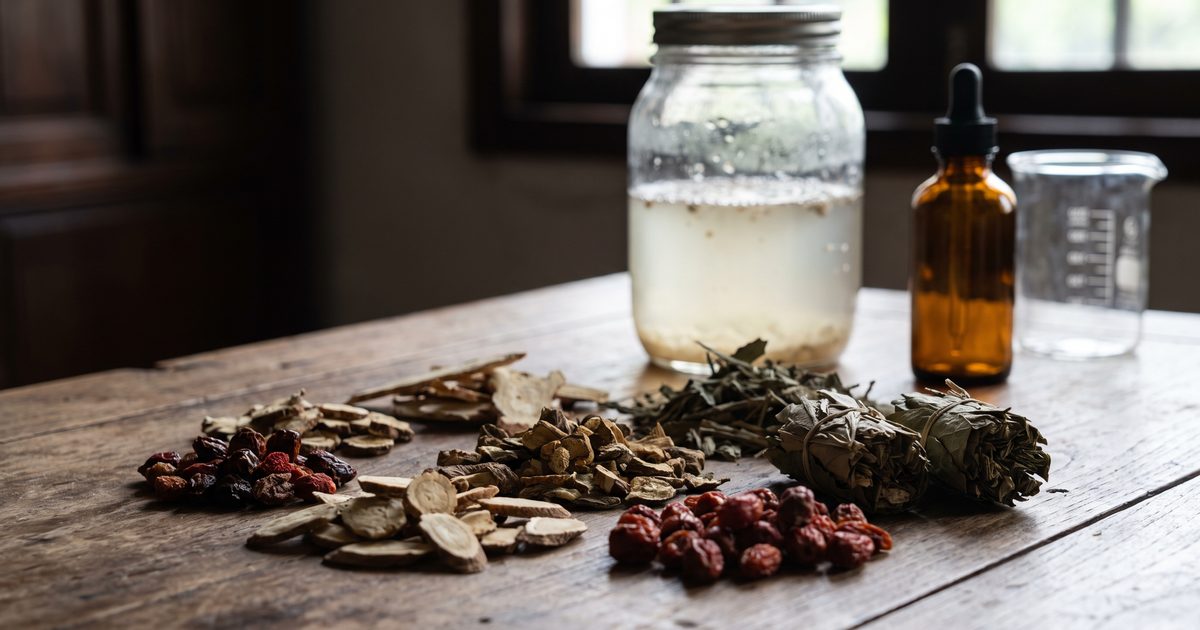
What is Furong Tongmai capsule? It is a traditional Chinese medicine formula previously reported to have lipid-lowering and anti-inflammatory effects, tested in this study for the first time against its effect on the gut microbiome and atherosclerosis in mice.
Does this study prove herbal supplements can treat heart disease in humans? No. This is early-stage, investigational animal research. Furong Tongmai has not been tested in a human clinical trial, and the study's authors say more work is needed before drawing conclusions about human relevance.
What are ApoE knockout mice, and why do researchers use them? They are mice genetically engineered to lack the ApoE gene, which is needed to clear cholesterol from the blood. Without it, mice develop atherosclerosis quickly on a high-fat diet, making them a standard model for testing anti-atherosclerosis treatments.
Why does a fecal transplant matter for proving cause and effect? Transplanting gut bacteria from a treated animal into an untreated one, and seeing some of the same benefit appear, is stronger evidence that the bacteria themselves contribute to the effect, rather than the bacteria simply changing alongside the disease for unrelated reasons.
Evidence Rating
INVESTIGATIONAL — 82/100
Caveats
- Mouse-only study (ApoE-/- model); no human trial of Furong Tongmai exists.
- The fecal microbiota transplant only partially reproduced the benefits, meaning non-microbiome mechanisms also likely contribute.
- Single mouse strain, single induced-disease model, no head-to-head comparison against a standard treatment like a statin.
- No specific numeric effect sizes (percentages, fold-changes) were reported in the available text, so none are cited here.
- Study authors themselves state further functional studies are needed to establish causality and translational relevance.
Animal-only mechanistic study in ApoE-/- (atherosclerosis-prone) mice. A traditional Chinese herbal formula (Furong Tongmai) improved lipids, reduced aortic plaque and inflammatory cytokines, and reshaped gut microbiota; arachidonic acid metabolism and a macrophage M1-to-M2 polarization shift were identified as mechanistic links. A fecal microbiota transplant from treated donor mice partially reproduced the anti-atherosclerotic and anti-inflammatory effects in untreated recipients, supporting (but not proving) a causal role for the gut microbiome. The study’s own authors state further functional studies are needed to establish causality and assess translational relevance; no human data exist.
References
- Shuquan Lv, Hanzhou Li, Yuming Wang, et al. (2026). Furong Tongmai Capsule Ameliorates Atherosclerosis in
ApoE −/− Mice by Modulating Gut Microbiota, Arachidonic Acid Metabolism and Macrophage Polarization. Journal of Cellular and Molecular Medicine. https://doi.org/10.1111/jcmm.71354 - Dezhi Zhang, Xiaoqing He, Yewei Shi, Xinyue Chen, Kai Yu, Shuang Wang (2025). Gut microbiota regulate atherosclerosis via the gut-vascular axis: a scoping review of mechanisms and therapeutic interventions. Frontiers in Microbiology. https://doi.org/10.3389/fmicb.2025.1606309
- Bei Wang, Lujin Wu, Jing Chen, et al. (2021). Metabolism pathways of arachidonic acids: mechanisms and potential therapeutic targets. Signal Transduction and Targeted Therapy. https://doi.org/10.1038/s41392-020-00443-w
- Jie Men, Hao Li, Chenglong Cui, et al. (2025). Fecal bacteria transplantation replicates aerobic exercise to reshape the gut microbiota in mice to inhibit high-fat diet-induced atherosclerosis. PLOS ONE. https://doi.org/10.1371/journal.pone.0314698
- The Metabolite Indole-3-Acetic Acid of Bacteroides Ovatus Improves Atherosclerosis by Restoring the Polarisation Balance of M1/M2 Macrophages. NIH. https://pmc.ncbi.nlm.nih.gov/articles/PMC11924036/