Gut Bacteria Produce Molecules That Quiet Anxiety Circuits in the Brain
Scientists at Duke-NUS Medical School have traced a molecular path from gut bacteria to anxiety circuits in the brain, and the key messenger is a class of compounds called indoles. The findings are preliminary but could reshape how researchers approach probiotic treatments for anxiety.

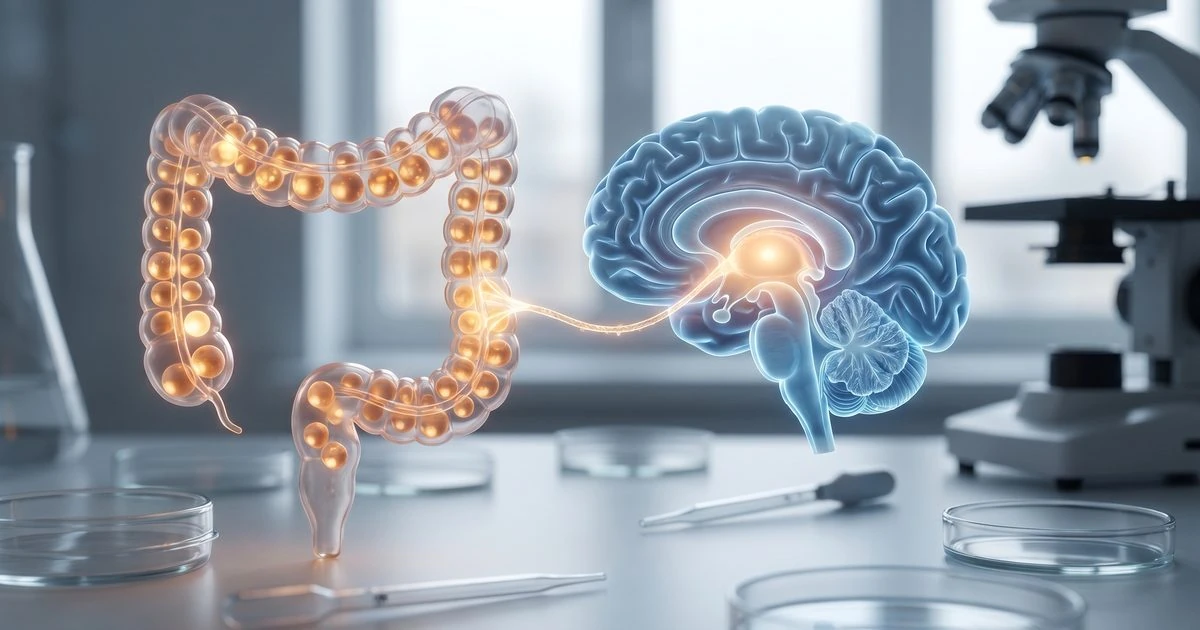
Anxiety disorders affect hundreds of millions of people worldwide, yet conventional medications leave a substantial share of patients without adequate relief. A new study from Duke-NUS Medical School and the National Neuroscience Institute of Singapore, published in EMBO Molecular Medicine, takes a close look at one underexplored piece of the puzzle: the molecular conversation between gut microbes and the brain regions that govern fear. The findings are early and come entirely from mouse models, but they expose a specific biological mechanism that researchers say could eventually point toward probiotic or indole-based treatments for anxiety.
Germ-Free Mice Show Heightened Amygdala Activity and Anxious Behavior
The experiment began with a stark comparison. Mice raised without any gut microbes, called germ-free mice, displayed significantly more anxiety-related behavior than mice with a normal microbial population. When researchers examined the brains of these germ-free animals, they found elevated activity in the basolateral amygdala (BLA), a region central to processing fear and threat. Specifically, neurons in the BLA showed reduced currents through small conductance calcium-activated potassium channels, known as SK channels. Those channels act, in the researchers' framing, like a clutch that prevents neurons from firing too rapidly. Without adequate SK channel activity, BLA neurons became hyperexcitable, a state associated with anxious behavior.
The gut-brain axis, the bidirectional communication network linking the intestinal environment to the central nervous system via the vagus nerve, neurotransmitters, and microbial metabolites, has been an active area of investigation for years. What this study adds is a specific cellular mechanism: a named channel type, in a named brain region, responding to named microbial compounds.
Restoring Microbes, or Just Their Metabolites, Reverses the Effect
When live microbes were reintroduced to germ-free mice, BLA activity normalized and anxious behavior declined. That result confirmed microbes were responsible for the shift. The more targeted finding came next: treating germ-free mice with indoles alone, metabolites produced when certain gut bacteria break down the amino acid tryptophan, was sufficient to restore normal SK channel activity in BLA pyramidal neurons and reduce anxiety-related behavior. No living microbes required.
That distinction matters. It suggests the relevant signal is a chemical product of microbial metabolism, not the bacteria themselves. Indoles are produced by species including members of the Lactobacillus and Bifidobacterium genera, some of which already appear in commercially available probiotic products, and by other tryptophan-metabolizing microbes. The researchers point to several possible therapeutic routes: dietary strategies that favor indole-producing bacteria, direct indole-based supplements, or probiotics designed to target psychiatric symptoms by colonizing the gut with indole-generating strains.
Why the Amygdala Finding Changes the Research Picture
Previous human studies on probiotics and anxiety have produced mixed but intriguing results. One multispecies probiotic trial found that participants reported reduced negative mood in daily assessments after roughly two weeks, a timeline similar to antidepressant onset, without a corresponding blunting of positive mood. However, subtle mood shifts are notoriously difficult to capture reliably, and a randomized controlled trial examining probiotic strains in adults with self-reported anxiety illustrates just how varied outcomes can be depending on which strains are used, which outcomes are measured, and how participants are selected.
The new Duke-NUS work does not resolve that variability, but it offers something the earlier human trials lacked: a plausible cellular mechanism. Identifying SK channels in the BLA as a target gives researchers a concrete hypothesis to test. If indoles upregulate SK channel currents, and if SK channel currents suppress pathological BLA hyperexcitability, then designing a therapeutic around that pathway becomes a tractable engineering problem rather than a trial-and-error search.
Key Limitations: Mice, Males, and the Translation Gap
The study's limitations are significant and the researchers acknowledge them. Every experiment was conducted in male mice of one inbred strain (C57BL/6J). Germ-free animals are extreme models; they differ from humans with merely depleted or imbalanced microbiomes in ways that are not fully understood. The leap from germ-free mouse BLA to anxious human brain is large.
The broader field of psychobiotics, a term for microorganisms or their metabolites used to support mental health, faces its own structural problems. As reviews of personalized psychobiotic research have noted, individual responses to probiotic interventions vary enormously because of differences in baseline microbiome composition, genetics, diet, and prior antibiotic exposure. There is no universal gut state to target. Indole production varies by species and strain; a probiotic product that does not reliably colonize the gut or produce indoles in meaningful quantities would be unlikely to replicate the effects seen here.
The COVID-19 pandemic added roughly 76.2 million additional anxiety disorder cases globally in 2020 alone, a 25.6% increase that underscores how urgently the field needs new treatment options. That pressure makes the promise of gut-targeted therapies feel timely, but it also raises the risk of overstating preliminary findings.
What Comes Next for Indole-Based Anxiety Therapies
The Duke-NUS team describes the longer-term goal as developing tailor-made therapies aligned with precision medicine, matching interventions to individuals based on their specific microbial and genetic profiles. That vision is still some distance from clinical reality. The immediate next steps involve validating the indole-SK channel mechanism in additional animal models, mapping which specific indole compounds are most active, and eventually designing early-phase human trials.
Future psychobiotic clinical work will need large-scale, double-blind trials with standardized dosages and longitudinal follow-up before any indole-based product could be considered for anxious patients. The mechanistic clarity this study provides is a useful foundation, but the distance between a mouse model result and a pharmacy shelf is long. For now, the finding belongs in the category of promising early science: specific enough to be scientifically meaningful, and preliminary enough to warrant caution before drawing practical conclusions.
Evidence rating
INVESTIGATIONAL — 75/100
Caveats:
- All findings are from germ-free mouse models only — no human trials have been conducted.
- Funding source was not disclosed in available materials.
- The specific probiotic strains or indole dosages that would translate to humans remain unknown.
- Findings have not yet been independently replicated in a separate animal or human population.
Preclinical study conducted entirely in germ-free male C57BL/6J mice. Demonstrates a step-by-step mechanistic pathway from gut microbial indoles to basolateral amygdala neuronal excitability and anxiety-related behavior, but cannot establish causation in humans. Findings are consistent with prior gut-brain axis research but have not been independently replicated or tested in clinical populations.