Scientists Restore a Missing Gut Bacteria Pathway, Ease Autism Signs in Mice
Children with autism have a weakened gut-bacterial pathway for making a calming tryptophan byproduct. Restoring it in autism-model mice improved social behavior and repaired brain synapses, with causal tests pinning the effect to one brain receptor, though the proof so far is in mice, not people.

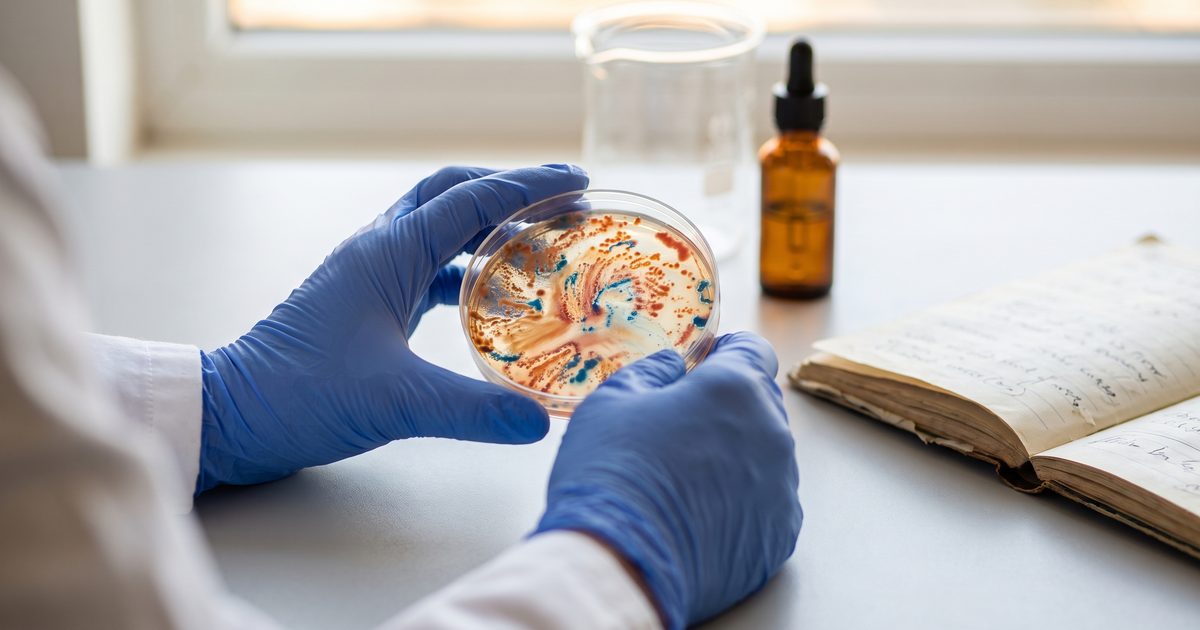
If you've ever wondered whether gut bacteria could reach all the way into a child's brain, a new study offers one of the clearest mechanistic threads yet. Researchers found that children with autism carry a gut microbiome that is missing part of a specific chemical assembly line, one that normally turns the amino acid tryptophan into a calming, brain-protective compound. When the team rebuilt that pathway in mice bred to show autism-like behavior, the animals became more social, groomed themselves less compulsively, and their brain synapses physically repaired. For anyone researching a possible gut-brain root to a child's diagnosis, this is a rare case where a lab traced the chain from bacteria all the way to synapse, though the strongest evidence for now is in mice, not people.
KEY TAKEAWAYS
- Children with autism had reduced gut-bacterial genes for making indole-3-acetic acid (IAA), a calming tryptophan byproduct, and lower blood IAA tracked with more severe symptoms in a separate group of 130 children.
- In mice bred to show autism-like behavior, restoring the missing bacterial pathway with a specific bacterial strain and fiber improved social behavior, reduced repetitive grooming, and repaired brain synapses.
- Blocking a specific brain receptor (AhR) erased the benefit, and giving IAA alone partly reproduced it, showing the mechanism runs through this one signaling route.
- The causal proof is entirely in mice; the human data is correlational, and the specific bacterial strain used has not been tested in autistic children.
Microbial Tryptophan Oxidative Pathway Was Weakened in Autism
Children with autism spectrum disorder (ASD) show a measurably weaker version of a specific gut-bacterial process called the microbial tryptophan oxidative pathway (MTOP), the chain of bacterial enzyme reactions that converts the amino acid tryptophan into indole-3-acetic acid (IAA), a compound that signals through the brain's aryl hydrocarbon receptor (AhR) to calm inflammation and support neurons. In a study published in the journal Advanced Science, a team led by researchers at Northwest A&F University reanalyzed stool metagenomes from 20 children with ASD and 18 typically developing peers and found significantly reduced activity of three enzymes the pathway depends on. To test whether rebuilding that pathway mattered, the researchers paired an IAA-producing bacterial strain, Lacticaseibacillus rhamnosus C502, with a prebiotic fiber called highland barley beta-glucan (a fermentable fiber that feeds the bacterium), then gave the combined "synbiotic" to mice engineered to show autism-like traits.
Gut Symptoms Affect Up to 90% of Children With Autism
Gastrointestinal problems are one of the most consistent, and most under-addressed, features of ASD, affecting an estimated 90% of diagnosed children, which is why a mechanism connecting gut chemistry to brain function carries real weight for families already managing both GI complaints and behavioral symptoms. The link is not unique to this one paper: a separate reanalysis of brain-imaging and gut-metabolite data also tied tryptophan-related gut metabolites to autism symptom severity, in a different cohort entirely. The mice modeling autism in this study, exposed prenatally to valproic acid (VPA, a drug known to raise autism risk when used in pregnancy and already shown to alter gut bacteria on its own), had their own gut problems: thinned intestinal lining, fewer mucus-producing goblet cells, and weakened tight junctions (the seals between gut-lining cells that keep bacteria and inflammatory triggers from leaking into the bloodstream). Restoring the tryptophan pathway repaired that lining and lowered the inflammatory signal IL-6, alongside the behavioral improvements, suggesting the gut and brain effects moved together rather than separately.
A VPA Mouse Model Paired With Two Independent Human Cohorts
The study combined a well-established mouse model of autism with two independently published human datasets. In mice, pregnant dams received a single dose of valproic acid, and only their male offspring, whose behavior reliably resembles ASD traits, went on to four weeks of daily synbiotic supplementation starting at weaning. The team then measured sociability and repetitive grooming, recorded real-time brain activity in a memory-related brain region (the hippocampus) during social encounters, and imaged synapses directly under an electron microscope. On the human side, the stool-metagenome comparison (20 ASD, 18 typically developing) was paired with a second, separate reanalysis of banked blood serum from 130 children with ASD and 92 typically developing peers, originally collected by a University of California, Davis-led research team, which let the researchers check whether low IAA also tracked with clinical severity scores.
What This Means If You're Researching a Gut-Brain Link
Nothing here supports adding a specific probiotic, supplement, or fiber to an autistic child's routine based on this study; the bacterial strain and dose used were experimental lab tools, not an approved or commercially tested product. What the findings do offer is a more concrete reason to raise gut symptoms with a doctor as part of an autism evaluation, since this study adds to evidence that gut chemistry and brain-relevant signaling can move together. If you're already tracking a child's GI issues alongside behavioral symptoms, that combination, not this specific bacterial strain, is the piece worth discussing with a clinician.
The Study's Central Limitation: Mice, Not People
Every causal experiment here, the part that shows restoring the pathway actually changes behavior and brain structure, was done in mice, not humans. The human evidence is associative: two separately collected cohorts, not matched for diet, geography, or testing platform, showing that gut-microbial and blood markers of this pathway are lower in children with ASD. Additionally, only male mice were tested, the intervention lasted four weeks with no data on whether benefits persist afterward, and the single VPA model does not capture every environmental or genetic route to autism. The researchers were explicit that this is associative support for the human relevance of a mechanism proven only in mice.
Researchers Are Now Pointing to Human-Relevant Follow-Up
The authors describe restoring this pathway as a candidate strategy for a metabolically defined subgroup of autism, those with confirmed low IAA and MTOP-pathway impairment, rather than a general therapy, and their framing fits a broader push described in a recent gut microbiota-tryptophan-brain axis review toward probiotic strategies matched to a person's own metabolic profile rather than one-size-fits-all supplementation. Next, they call for prospective studies that match clinical metadata across cohorts, profile each child's own microbiome and metabolome individually, and test fermentation responses at the individual rather than pooled level. No clinical trial of this synbiotic in humans has been announced, and the mouse strain and formulation used would still need safety and dosing studies before that could happen.
Common Questions
What is indole-3-acetic acid (IAA) and why does it matter here? IAA is a byproduct that certain gut bacteria make from tryptophan; it activates a receptor called AhR that calms inflammation and supports brain signaling, and lower blood IAA tracked with more severe autism symptom scores in the human data reanalyzed here.
Does this mean a probiotic could treat autism? Not based on this study. The bacterial strain and fiber combination were tested only in mice, using an experimental formulation and dose; no version of this has been tested in autistic children.
How do we know the gut bacteria pathway, and not something else, caused the improvement in mice? The researchers confirmed it three ways: wiping out the relevant gut bacteria with antibiotics erased the benefit, giving the byproduct IAA alone partly reproduced it, and blocking the brain receptor (AhR) it acts on eliminated the effect entirely.
Is this the same as other gut-autism studies I may have seen? Many studies have linked gut bacteria composition to autism in general terms; this one is more specific, tying a single metabolic pathway to autism-like behavior and backing it with three separate causal tests in mice, rather than relying on correlation alone.
Evidence Rating
INVESTIGATIONAL — 88/100
Caveats
- Core causal evidence (behavioral, synaptic, and neuronal rescue) comes entirely from a mouse model; the human data is metabolomic/metagenomic correlation, not an intervention trial.
- Only male mice were tested, in a single VPA-induced model, over a 4-week intervention window with no data on durability after stopping.
- The two human cohorts were independently collected and not matched for age, diet, geography, or analytical platform.
Mouse mechanistic study (VPA-induced autism model) combined with reanalysis of two independent human datasets (stool metagenomes, 20 ASD/18 TD; serum metabolomics, 130 ASD/92 TD). Causal chain established in mice via antibiotic depletion, direct IAA supplementation, and neuronal AhR knockdown; human data is correlational, not interventional.
References
- Rui Guo, Caian He, Xiao Xiao, et al. (2026). Targeted Restoration of the Microbial Tryptophan Oxidative Pathway Ameliorates Autism‐Like Behavioral and Synaptic Deficits. Advanced Science. https://doi.org/10.1002/advs.202522265
- Nargis Shaheen, Jiaxing Miao, Boyu Xia, Yutong Zhao, Jing Zhao (2025). Multifaceted Role of Microbiota‐Derived Indole‐3‐Acetic Acid in Human Diseases and Its Potential Clinical Application. The FASEB Journal. https://doi.org/10.1096/fj.202500295r
- Lisa Aziz-Zadeh, Sofronia M. Ringold, Aditya Jayashankar, et al. (2025). Relationships between brain activity, tryptophan-related gut metabolites, and autism symptomatology. Nature Communications. https://doi.org/10.1038/s41467-025-58459-1
- Fang Liu, Kayla Horton-Sparks, Vanessa Hull, Robert W. Li, Verónica Martínez-Cerdeño (2018). The valproic acid rat model of autism presents with gut bacterial dysbiosis similar to that in human autism. Molecular Autism. https://doi.org/10.1186/s13229-018-0251-3
- Yi Cheng, Liangyu Zhang, Yalin Li, Chunru Zheng, Teng Ma, Zhihong Sun (2026). The Gut Microbiota–Tryptophan–Brain Axis in Autism Spectrum Disorder: A New Frontier for Probiotic Intervention. Microorganisms. https://doi.org/10.3390/microorganisms14020312


