Scientists Map the Gut-Brain Circuit That Triggers Protein Cravings
When your body runs short on protein, your gut doesn't wait for your brain to figure it out. New research suggests a peptide called CNMa may be doing the heavy signaling work for it.

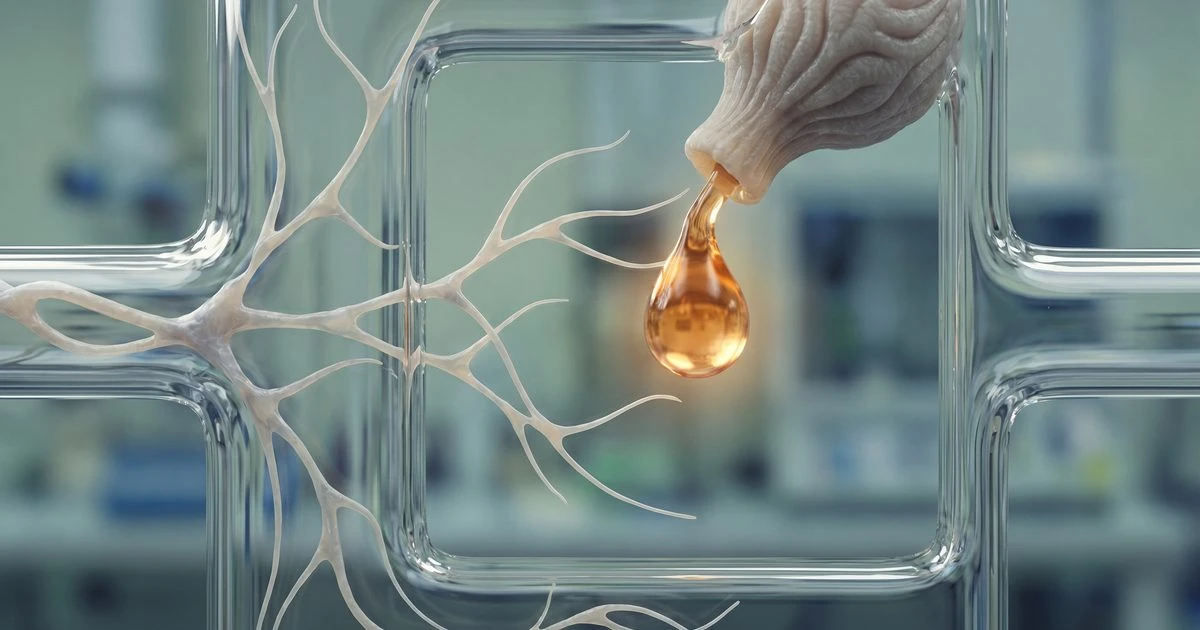
When a craving for meat, eggs, or cheese strikes without obvious cause, most people assume willpower is the variable. New research published in Science in May 2026 suggests the real driver may be a peptide hormone secreted by the gut wall, one that signals protein deficiency to the brain within seconds and actively dials down the desire for sugar at the same time. The work, led by Director Suh Seong-Bae of the Center for Microbiome-Body-Brain Physiology at South Korea's Institute for Basic Science (IBS), in collaboration with Seoul National University and Ewha Womans University, offers a detailed molecular map of how the gut senses and communicates amino acid deficits to the central nervous system.
CNMamide peptide links gut protein sensing to brain feeding behavior
The core finding centers on a peptide called CNMamide, abbreviated CNMa. When intestinal epithelial cells detect a shortage of essential amino acids, they secrete CNMa, which then sets off two parallel communication tracks. The fast route: CNMa activates enteric neurons connected to a specific cluster of brain cells, designated EB R3m, via acetylcholine signaling, with measurable effects appearing within 30 to 60 seconds. The slow route: CNMa enters the bloodstream as a circulating hormone, reaching the brain over a longer timeframe and sustaining the protein-preference signal. The dual-pathway design means the gut can both alert the brain rapidly and reinforce that alert over time, a redundancy that suggests the system carries real evolutionary weight.
Equally striking is what CNMa suppresses. The peptide physically restrains the activity of DH44 neurons, the brain cells that drive sugar-seeking behavior. Protein deficiency, in this model, does not just push the animal toward amino acids; it actively brakes the pull toward carbohydrates. As Director Suh put it, the gut "acts as an intelligent sensory system that continuously monitors nutritional state and directly guides behavioral decisions."
Why this matters for protein deficiency and modern metabolic disease
Subclinical protein malnutrition is more common than it sounds. Diets that are technically adequate in total calories can still fall short on essential amino acids, particularly in populations relying heavily on refined carbohydrates. Research on protein intake and satiety has long established that protein is the most satiating macronutrient, but the specific gut-to-brain mechanism behind that effect has remained murky. This study begins to fill that gap.
Professor Hyungjin Choi, one of the collaborators, noted that the findings are "directly linked to medical and nutritional applications for more balanced and healthy eating habits," citing sarcopenia, the age-related loss of muscle mass, as a condition where insufficient protein intake is already a documented health threat. If the CNMa pathway can be modulated pharmacologically, it could open new tools for appetite management that do not rely on blunt suppression of hunger, but instead tune the body's own macronutrient-preference signaling.
Fruit flies and mice: how the team built the evidence
The researchers induced protein-starved states in fruit flies by feeding them food devoid of essential amino acids and observed that the animals consistently prioritized amino acid sources over glucose. They then confirmed analogous protein-seeking behavior in mice, which matters because it suggests the pathway is conserved across species, not a quirk of insect physiology. Crucially, the IBS team demonstrated that this gut-brain circuit operates independently of FGF21, a liver hormone that had previously been the leading candidate for regulating protein appetite in mammals. CNMa appears to be a separate and previously unrecognized axis.
The gut microbiome also factors in. Fruit flies raised without their normal complement of gut bacteria showed aggressively heightened activation of the amino-acid-seeking brain neurons, implying that the microbiome ordinarily moderates this signaling. Dysbiosis, the disruption of normal microbial communities, could therefore amplify protein-craving signals in unpredictable ways.
Open questions about neural circuits and amino acid homeostasis
The study opens at least as many questions as it closes. Reviews of brain amino acid sensing gaps have noted that the specific neural circuits and molecular mechanisms maintaining amino acid homeostasis remain only partially characterized. This work identifies CNMa and the EB R3m neurons as key nodes, but the full downstream circuitry in mammals, including the precise receptor CNMa binds to in the mammalian brain, is not yet mapped. The fly and mouse models are powerful tools for initial discovery but cannot substitute for human trials when it comes to translational claims.
The microbiome's modulatory role is similarly underspecified. Which bacterial species, or metabolites, temper CNMa signaling? What happens to this system in individuals with inflammatory bowel disease or after antibiotic treatment? These are tractable questions, but they require follow-up work the current paper does not address.
What comes next for protein appetite research
The IBS team's immediate priority will likely involve identifying the mammalian receptor for CNMa and testing whether its activation or blockade shifts macronutrient preference in controlled feeding studies. If those results hold, CNMa receptor pharmacology could become a target for interventions in obesity and sarcopenia, two conditions where current appetite-modifying drugs either over-suppress hunger globally or carry significant side-effect profiles.
For now, the practical takeaway is narrower but still meaningful. The body has a precise, fast-acting system for detecting protein shortfalls and correcting for them through behavior. Dismissing a craving for protein-rich food as a lapse in discipline misreads the biology. The gut is running a continuous nutritional audit, and CNMa may be its most direct dispatch to the brain.
Evidence rating
INVESTIGATIONAL — 71/100
Caveats:
- Primary experiments were conducted in fruit flies (Drosophila), with limited corroboration in mice — direct human relevance is unconfirmed.
- This is a primary research article reported via a news aggregator; the original Science paper has not been independently replicated.
- Funding source was not disclosed in the available reporting, so potential conflicts of interest cannot be assessed.
- The microbiome findings are based on germ-free fruit fly models; whether the same modulation occurs in the human gut microbiome is speculative at this stage.
This research, published in Science (2026), primarily used Drosophila (fruit fly) models with some corroboration in mice to map a dual neural-hormonal gut-brain pathway driven by the peptide CNMamide in response to essential amino acid depletion. The animal-model basis means findings reflect association and mechanistic plausibility rather than demonstrated effects in humans, and the work has not yet been independently replicated. Extrapolation of the gut microbiome modulation findings to human physiology remains speculative.

