The Gut Chemicals Shaping Young Brains: Microbiome Metabolites and Neurodevelopmental Risk
Chemical signals produced by gut bacteria may play a larger role in shaping the developing brain than scientists once appreciated, with new evidence tying disrupted microbial metabolites to autism and ADHD.

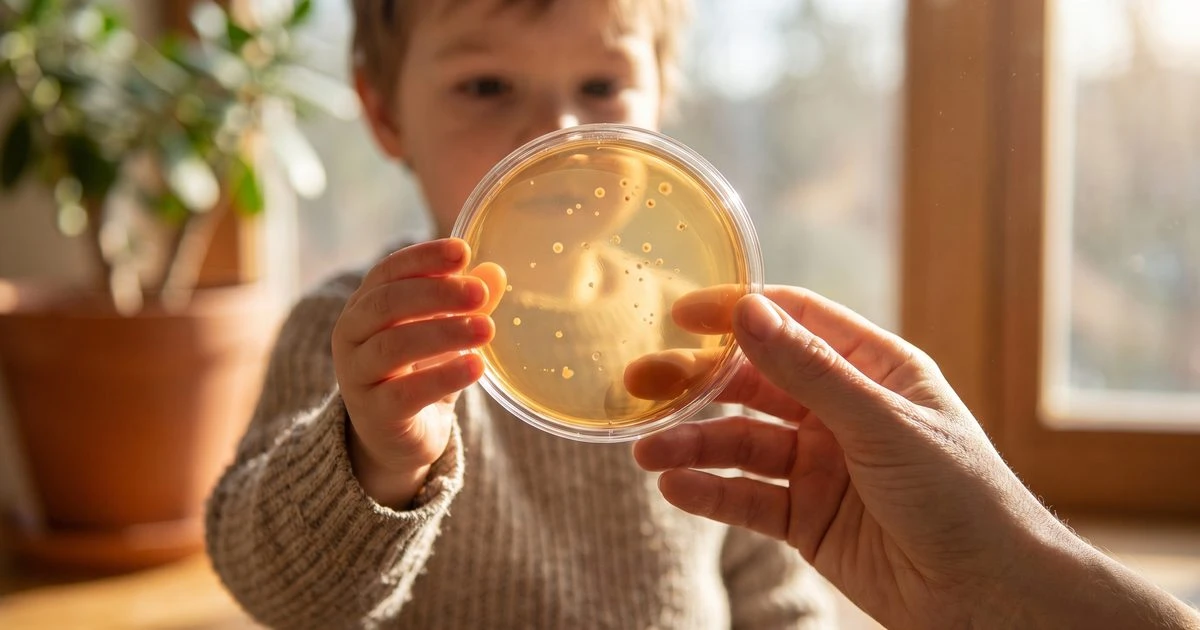
The bacteria living in a child's gut do far more than aid digestion. According to a review published in Frontiers in Nutrition by Lai, Zhang, Lang, and Tao, the small molecules these microbes produce, called metabolites, function as a kind of chemical postal service between the intestinal ecosystem and the developing brain. When that service breaks down, the consequences may include neurodevelopmental disorders like autism spectrum disorder (ASD) and attention-deficit/hyperactivity disorder (ADHD). The research is still emerging and causality in humans has not been firmly established, but the picture is becoming harder to ignore.
Short-Chain Fatty Acids, Tryptophan, and Para-Cresol in ASD and ADHD
The review, published June 14, 2026, identifies several recurring metabolic signatures across children with ASD and ADHD. Reduced production of short-chain fatty acids (SCFAs), a class of compounds generated when gut bacteria ferment dietary fiber, appears consistently in this population. SCFAs like butyrate and propionate are not inert byproducts; they cross the blood-brain barrier, modulate neuroinflammation, and influence epigenetic programming, the molecular switches that turn genes on or off during critical developmental windows.
Alongside reduced SCFAs, the review flags altered kynurenine pathway metabolites. Kynurenine is produced when gut bacteria and host enzymes break down tryptophan, the same amino acid that eventually becomes serotonin. Depending on which branch of the pathway is activated, tryptophan can yield neuroprotective compounds or neurotoxic ones. In children with ASD, the balance appears to shift in a less favorable direction.
Perhaps the most striking signal involves para-cresol (p-cresol), a phenolic compound produced by certain gut bacteria when they metabolize the amino acid tyrosine. Elevated urinary p-cresol is one of the more consistently replicated findings in ASD research, and the review frames its accumulation as a potential contributor to neurological symptoms rather than a mere bystander. Separately, prior research into propionic acid and ASD behavioral phenotypes has shown that intraventricular administration of this SCFA in rats induces repetitive behaviors and abnormal motor movements consistent with animal models of autism.
Why Neurodevelopmental Disorders May Have a Gut Component
ASD prevalence has roughly tripled over the last two decades, now affecting around 1 in 44 children in the United States, according to literature reviewing gut microbiota and ASD. That figure alone does not implicate the microbiome, but it has intensified the search for modifiable contributors beyond genetics. The review by Lai and colleagues argues that microbial metabolites deserve a prominent place in that search because they operate through multiple biological pathways simultaneously.
SCFAs influence the integrity of the blood-brain barrier, the selective membrane that controls what enters the brain from the bloodstream. Bile acids, another metabolite class the review examines, interact with receptors in the gut and the brain that regulate mood, cognition, and inflammation. Phenolic compounds like p-cresol can impair cellular energy metabolism. Together, these metabolites form an interlocking system: disruption in one pathway ripples into others, making it plausible that a dysbiotic gut, one with an abnormal microbial community, could send a sustained stream of faulty signals to a brain that is still wiring itself.
The microbiota-gut-brain axis in NDDs has attracted growing attention precisely because it offers a mechanistic bridge between the gut abnormalities commonly observed in children with ASD and ADHD and the neurological symptoms that define those diagnoses.
The Early-Life Window When the Microbiome Matters Most
The review gives particular weight to the first years of life, when the gut microbiome is assembling itself and the brain is undergoing its most rapid structural development. Maternal factors shape which bacteria a newborn acquires first: mode of delivery, breastfeeding versus formula, antibiotic exposure, and diet all influence the composition of the infant microbiome. Those early microbial communities then produce the metabolites that bathe developing neural tissue.
Research tracking the microbiome from birth to age three has demonstrated, partly through germ-free animal models, that gut microbes influence both the structural and behavioral aspects of brain development. Remove the microbiome entirely, and animals show striking changes in brain chemistry and behavior. This experimental approach has helped researchers identify which metabolite pathways are most sensitive to microbial input, even though the direct translation to human neurodevelopment remains an open question.
The practical implication is that interventions during this window, targeting maternal diet, infant nutrition, or antibiotic stewardship, could have outsized effects on long-term neurodevelopmental outcomes. That hypothesis remains to be tested rigorously in humans.
Open Questions and the Limits of Current Evidence
The review is candid about what the field does not yet know. Nearly all the human evidence linking microbial metabolites to ASD and ADHD is associative: children with these diagnoses have different metabolite profiles, but whether those differences cause the disorder, result from it, or are driven by a third factor such as diet or medication is not resolved. Substantial heterogeneity across studies, in population, sample type, and measurement method, makes it difficult to compare findings or draw firm conclusions.
Mechanistic work in animal models is more controlled but faces its own limits. Rodent neurodevelopment does not map cleanly onto human neurodevelopment, and doses of metabolites used in animal studies sometimes far exceed what the human gut produces. Unanswered questions about how microbiota affect CNS function at a mechanistic level remain a central challenge for the field. The review calls explicitly for a shift from descriptive, associative research toward causal studies, including controlled dietary interventions and well-designed clinical trials of probiotic and fecal microbiota transplantation approaches.
Probiotics, Diet, and Metabolite-Based Therapies on the Horizon
Despite those caveats, the review identifies several intervention strategies worth watching. Probiotics targeting SCFA-producing bacteria, dietary substrates that feed beneficial microbial communities (prebiotics), and fecal microbiota transplantation are all under active investigation. Metabolite-based therapies, delivering specific compounds like butyrate directly rather than trying to manipulate the microbiome as a whole, represent a more targeted angle that could eventually complement behavioral and pharmacological treatments for ASD and ADHD.
The authors also propose that microbial metabolites could serve as early biomarkers, measurable in urine or stool long before behavioral symptoms solidify into a clinical diagnosis. If that proves out, the gut microbiome might one day inform early screening programs for neurodevelopmental risk. For now, the science supports cautious optimism: the signals are real, the mechanisms are plausible, and the critical question of whether reshaping a child's microbiome can meaningfully shift neurodevelopmental trajectories is finally being asked in earnest.
Evidence rating
EMERGING — 71/100
Caveats:
- This is a narrative review, not a new clinical study — it synthesizes existing research rather than generating original data.
- Most human evidence in this area is associative; causal relationships between specific microbial metabolites and neurodevelopmental disorders have not been established in controlled human trials.
- Significant heterogeneity exists across the underlying studies, and findings may not generalize across populations or NDD subtypes.
- Funding source was not disclosed by the authors.
Narrative review synthesizing human multi-omics studies and preclinical models; no original data are presented. The underlying evidence base is largely associative, and the authors themselves note that causal human evidence remains limited and heterogeneous across studies. Not yet replicated as a unified causal framework in independent prospective or interventional cohorts.
References
- Y Lai, M Zhang, D Lang, E Tao (2026). Microbial Metabolites at the Nexus of GUT-BRAIN Communication and Neurodevelopmental Disorders. Frontiers in Nutrition. https://doi.org/10.3389/fnut.2026.1836981
- Derrick F. MacFabe (2012). Short-chain fatty acid fermentation products of the gut microbiome: implications in autism spectrum disorders. Microbial Ecology in Health & Disease. https://doi.org/10.3402/mehd.v23i0.19260
- Piotr P. Lagod, Saleh A. Naser (2023). The Role of Short-Chain Fatty Acids and Altered Microbiota Composition in Autism Spectrum Disorder: A Comprehensive Literature Review. International Journal of Molecular Sciences. https://doi.org/10.3390/ijms242417432
- The microbiota–gut–brain axis and neurodevelopmental disorders – PMC. NIH. https://www.ncbi.nlm.nih.gov/pmc/articles/PMC10156942/
- Hannah E. Laue, Modupe O. Coker, Juliette C. Madan (2022). The Developing Microbiome From Birth to 3 Years: The Gut-Brain Axis and Neurodevelopmental Outcomes. Frontiers in Pediatrics. https://doi.org/10.3389/fped.2022.815885
- Exploring the Gut-brain Axis in Neurodevelopmental Disorders: Microbiome Insights and Therapy Advancements – Frontiers. frontiersin.org. https://www.frontiersin.org/articles/10.3389/fnins.2023.1316527/full