Gut Bacteria Change in Step With Alzheimer’s Progression, Mouse Study Finds
Early research suggests the gut microbiome does not stay static as Alzheimer's disease progresses, it shifts in patterns that differ by genetic model and age, pointing toward a measurable biological signal researchers hope to one day target.

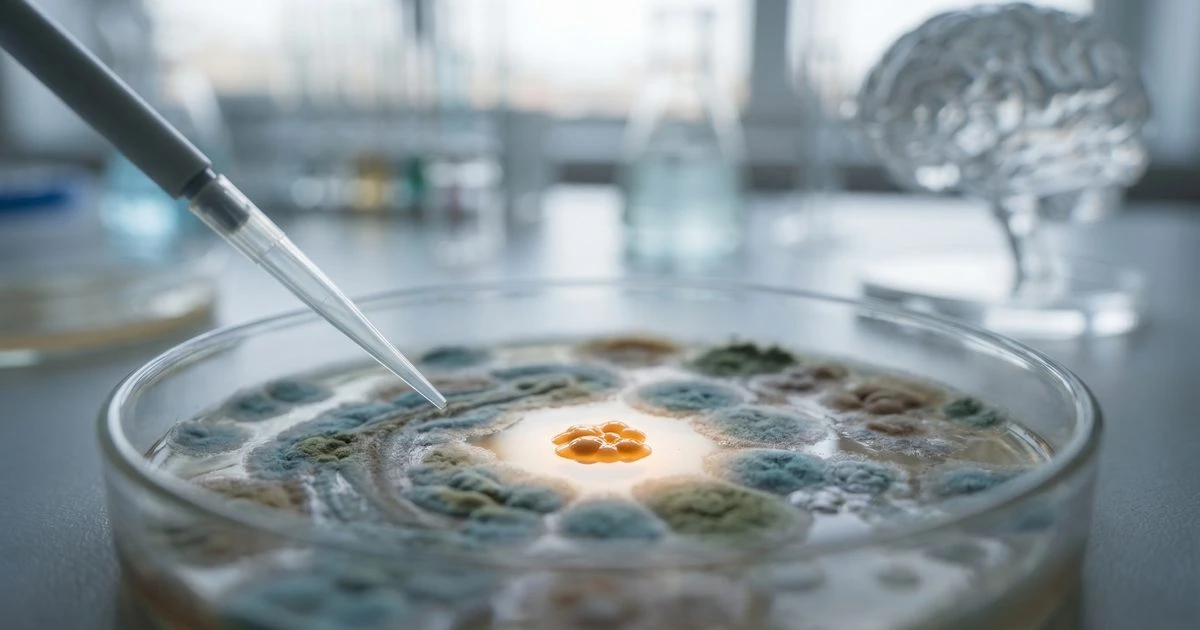
Alzheimer's disease affects roughly 55 million people worldwide, yet the biological mechanisms driving it remain stubbornly incomplete. A growing body of research has turned attention to the gut, specifically to the trillions of microbes living there and how they communicate with the brain. A new study published in Frontiers in Neuroscience by Zou, Liu, Lei, Jian, and Li takes an early but systematic look at how gut bacterial communities change as Alzheimer's pathology advances, tracking three different mouse models from youth into middle age. The results are preliminary, but they reveal patterns specific enough to suggest the gut microbiome is doing something meaningful during disease progression, not just reacting to it.
Gut Microbiota Composition Shifts Across Three AD Mouse Models
The study examined three of the most widely used transgenic Alzheimer's mouse models: APP/PS1, 3xTg, and 5xFAD. Each carries different combinations of human genetic mutations associated with Alzheimer's, and each develops amyloid plaques, tau tangles, and cognitive decline on its own timeline. The researchers collected fecal samples from these animals at 2, 4, 6, and 8 months of age, providing a longitudinal snapshot of microbial communities as pathology deepened. What they found was not a single, uniform microbiome signature for Alzheimer's, but rather distinct, model-dependent alterations in bacterial community structure. Three phyla stood out consistently: Verrucomicrobiota, Proteobacteria, and Actinobacteriota all showed dynamic changes during aging across the AD models. Research linking gut bacteria directly to amyloid pathology has been building for years, with one 2017 study showing that the absence of gut microbiota in APP transgenic mice significantly reduced cerebral amyloid burden. The new findings add a temporal dimension to that picture, showing that microbial communities are not static even within a single model.
Why Model-Specific Bacterial Signatures Matter for Alzheimer's Research
The fact that each mouse model produced its own microbiome trajectory is more than a technical footnote. APP/PS1, 3xTg, and 5xFAD differ in which mutations they carry and how aggressively pathology develops. If gut microbiota composition tracked those differences in consistent, reproducible ways, it would suggest the gut is responding to, or possibly contributing to, the specific molecular cascade each model drives. The mechanisms by which gut microbiota influence Alzheimer's development are thought to include accelerating neuroinflammation, promoting amyloid plaque formation, and altering neurotransmitter production. Identifying which bacterial taxa shift in which models, and when, could help researchers isolate which microbial changes are downstream consequences of brain pathology and which might be upstream contributors worth targeting.
16S rRNA Sequencing and Longitudinal Sampling Across Four Age Points
To characterize microbial communities, the team used 16S rRNA gene sequencing, the standard method for identifying and comparing bacterial populations without culturing them individually. They applied beta-diversity analysis to assess how community structure differed between groups, used Linear Discriminant Analysis Effect Size (LEfSe) to identify which specific bacterial taxa were most responsible for the differences, and built correlation network analyses to examine how microbial communities were organized internally. Sampling at 2, 4, 6, and 8 months allowed the researchers to distinguish age-related microbial changes from disease-related ones by comparing AD mice against wild-type controls at each point. This design is recognized as a meaningful methodological step: transgenic mouse models have been validated as tools for studying the gut-brain axis in Alzheimer's research, and longitudinal collection adds resolution that a single-timepoint study cannot provide.
Open Questions About Causality and Relevance to Human Disease
The study is explicit that its findings are foundational, meaning they describe patterns without yet explaining them. Correlation between microbiome shifts and disease progression does not establish that the microbiome is driving pathology, or that manipulating it would slow Alzheimer's in a meaningful way. Mouse models, while useful, differ from human disease in important respects: the genetic mutations involved are artificial, the timeline is compressed, and the gut environments of laboratory mice are shaped by controlled, uniform diets that bear little resemblance to human dietary diversity. As the National Institute on Aging has noted, researchers are still working out precisely how the gut microbiome influences brain health and whether harmful microbiome changes can be reversed to prevent or slow Alzheimer's. The microbial phyla identified here, Verrucomicrobiota, Proteobacteria, and Actinobacteriota, are broad categories; narrowing to specific species and understanding what they produce metabolically will take additional work.
Microbiome-Targeted Therapies for Alzheimer's Could Benefit From This Baseline
Despite these limits, establishing a baseline of how gut bacteria shift across multiple models and age points is a necessary step toward therapeutic applications. Modulation of the gut microbiota through probiotics, prebiotics, and fecal microbiota transplantation is an active area of Alzheimer's research, with preclinical and early clinical trials underway. Knowing which bacterial taxa change at which disease stages could help researchers design more targeted interventions and measure whether a treatment is actually shifting the microbiome in the intended direction. Other early work has found that propionate, a short-chain fatty acid produced by certain gut bacteria, may reduce amyloid plaques in Alzheimer's mouse models, hinting at specific metabolic pathways worth pursuing. The current study adds to that foundation by charting the broader microbial landscape across disease progression. What it offers is not a treatment lead, but a map. For a disease where 55 million people are affected and no disease-modifying therapy yet exists, a more detailed map of the gut-brain axis still counts as meaningful progress.
Evidence rating
INVESTIGATIONAL — 65/100
Caveats:
- All data come from transgenic mouse models — findings have not been validated in human populations.
- The study identifies associations between gut microbiota composition and disease progression; it does not establish causation or a mechanistic pathway.
- Funding was not disclosed, so independent replication cannot be assumed.
- Results vary by mouse model, limiting generalizability even within animal research.
Longitudinal observational study using three transgenic Alzheimer's disease mouse models (APP/PS1, 3xTg, 5xFAD), with fecal microbiota profiled via 16S rRNA sequencing at four age points. The study demonstrates association between gut microbiota compositional shifts and disease progression stages but does not establish causation or propose an explicit mechanistic pathway. Findings are animal-model-specific and have not been replicated in human cohorts.