Your Mouth and Gut May Both Be Driving Your Osteoarthritis, New Study Suggests
Osteoarthritis has long been written off as simple wear and tear on joints, but a new multiomics study points somewhere surprising: the bacteria living in your gut and mouth may be actively shaping how your cartilage breaks down.

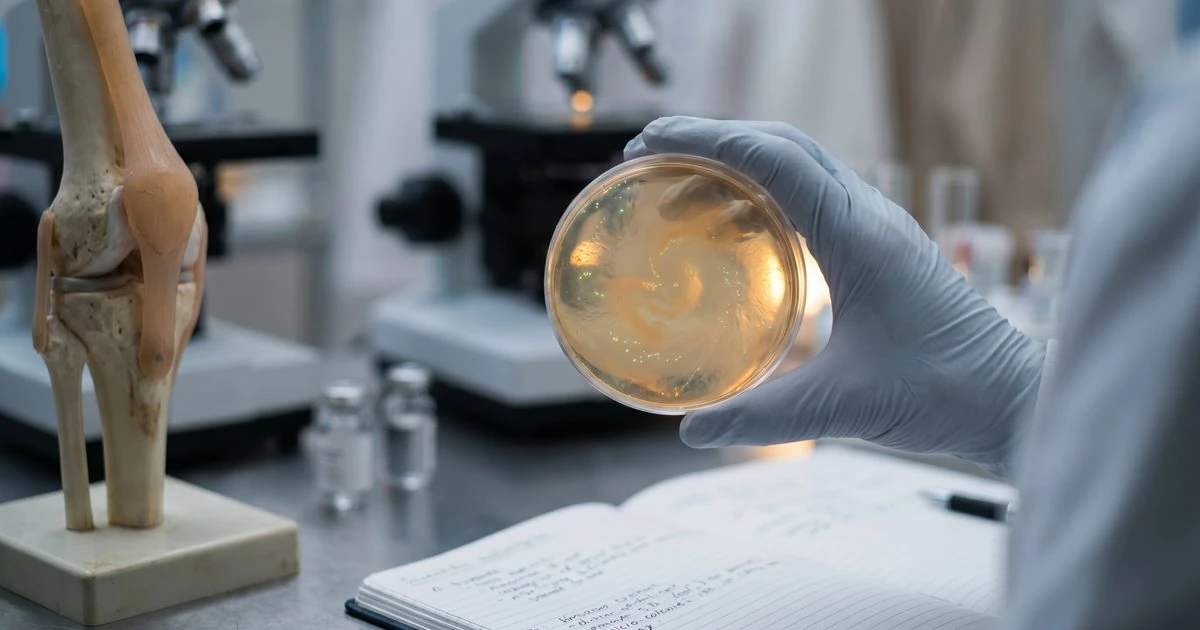
Osteoarthritis has long been treated as a local mechanical problem, cartilage wears down, bone thickens, joints ache. But a new multiomics case-control study published in Frontiers in Cellular and Infection Microbiology suggests the disease has a systemic dimension that researchers are only beginning to map: specific bacterial communities in both the gut and the mouth appear to connect, through measurable molecular pathways, to the inflammatory processes that destroy cartilage.
Distinct microbial signatures found in OA patients' gut and mouth
Liu, Gong, Zhang, Wang, and Feng recruited 25 osteoarthritis patients and 20 healthy controls, collecting fecal samples and oropharyngeal swabs from each. Using 16S rDNA gene amplicon sequencing, they profiled the microbial communities at both sites simultaneously, something earlier work on the oral and gut microbiota alterations in arthritis had rarely attempted in tandem.
The gut microbiota of OA patients showed significantly increased alpha-diversity compared to controls (P<0.05), with notable enrichment of two bacterial families: Ruminococcaceae and Subdoligranulum. The oral microbiome also displayed elevated diversity in OA patients, along with activation of the lipopolysaccharide biosynthesis pathway, a route that produces bacterial compounds known to trigger immune responses. These patterns align with a broader body of work finding that microbiome changes and OA development track together across multiple tissue sites, though the direction of causality remains unresolved.
Why cartilage-linked genes are the key connection
The study's most mechanistically specific contribution came from integrating the microbial data with transcriptomic and proteomic analyses of cartilage tissue from the same patients. The researchers identified two cross-omics correlation modules that tied particular gut bacteria to particular molecular activity in cartilage.
The first module linked gut microbes from the families Lachnospiraceae and Muribaculaceae to four cartilage inflammatory genes: MAPK11, ITGB3, CD55, and ANGPT2. These genes are involved in cellular stress signaling, cell adhesion, complement regulation, and blood vessel formation, processes that collectively contribute to cartilage matrix breakdown and synovial inflammation. The second module connected three other gut genera, Helicobacter, Pseudomonas, and Phocea, to CXCL14 and GNGT2, proteins with roles in immune cell trafficking and G-protein signaling.
The oral microbiome's activation of lipopolysaccharide biosynthesis adds another layer: lipopolysaccharides shed from gram-negative bacteria can enter circulation through a compromised gut lining, potentially driving the systemic, low-grade inflammation that OA patients commonly exhibit. This so-called leaky gut mechanism has been proposed as one route through which microbial products reach joint tissue.
How multiomics integration sharpened the picture
Studies that measure only one biological layer, say, gut bacteria alone, can identify associations but struggle to explain them. This team combined 16S sequencing of two body sites with cartilage transcriptomics and proteomics in the same individuals, then applied cross-omics correlation analysis to look for coordinated patterns. Multi-omic data integration of this kind, spanning genomic, transcriptomic, and proteomic layers, is increasingly seen as necessary for untangling complex host-microbe interactions because it lets researchers ask which microbial shifts co-occur with which molecular changes in target tissues.
The two modules the researchers built did exactly that: rather than reporting a list of bacteria that differ between groups, they showed which microbial communities correlate with which inflammatory programs in cartilage, providing a more actionable map for future intervention design.
Important caveats about this small, cross-sectional study
The findings are associative, not causal. With 25 OA patients and 20 healthy controls in a cross-sectional design, the study cannot determine whether microbial dysbiosis contributes to cartilage degeneration, whether joint disease alters the microbiome, or whether both changes share a common upstream driver such as diet, age, or systemic inflammation. Osteoarthritis affects roughly 595 million people worldwide, accounting for 7.6 percent of the global population, and prevalence is projected to climb sharply by 2050; a disease at that scale demands robust mechanistic evidence before clinical translation.
The sample size is also small enough that the specific bacterial families and genes implicated here, Lachnospiraceae, MAPK11, ITGB3, and the rest, should be treated as hypotheses to test rather than confirmed drivers. Larger cohort studies that include longitudinal follow-up and diverse populations will be needed to confirm whether these microbial signatures precede joint deterioration or simply accompany it.
Microbiome-targeted therapies for osteoarthritis as a future direction
Despite those limitations, the study adds detail to a fast-moving area. Gut microbiota interventions for osteoarthritis, from dietary modification to targeted probiotics, are already under active investigation, and a clearer molecular map of which bacterial communities link to which cartilage pathways could help focus those efforts. Short-chain fatty acids produced by gut bacteria such as those in the Lachnospiraceae family, for instance, are known to support bone homeostasis and dampen systemic inflammation, suggesting that interventions to restore these communities might reduce inflammatory load at the joint.
The authors call for future work integrating multi-omics approaches with clinical trials and broader geographic sampling. If the oral-gut-joint axis holds up under larger and more rigorous scrutiny, it could shift how clinicians think about osteoarthritis management: not just as a question of protecting cartilage locally, but of maintaining microbial balance across two body sites that may be quietly shaping joint health from a distance.

