Moringa Leaf Polysaccharides Calmed Gut Inflammation in Mice. Here’s How.
Acidic polysaccharides pulled from Moringa leaves reversed hallmarks of colitis in mice, from collapsing barrier proteins to a bloom of harmful bacteria. The findings, while early, hint at a new dietary route into one of medicine's most stubborn inflammatory diseases.

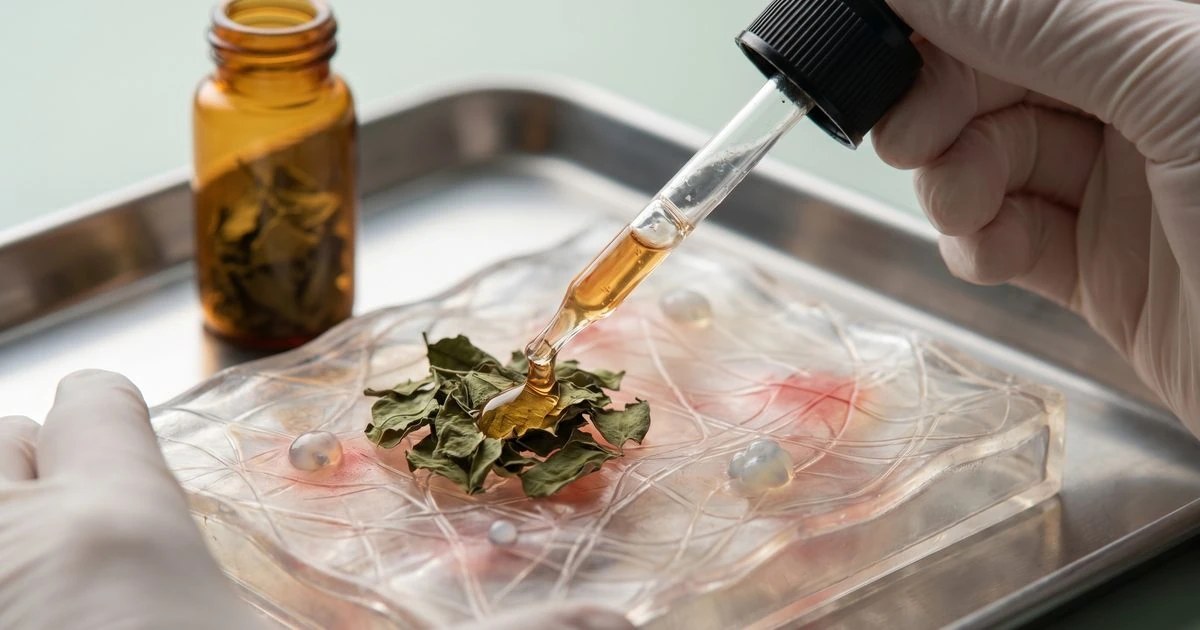
Ulcerative colitis has no cure. The chronic inflammatory bowel disease affects the colon and rectum, cycling through flares that erode quality of life, and current therapies ranging from anti-inflammatory drugs to biologics often fall short of lasting remission. A study published in Food Research International by W. Lang, X. Qin, Y. Dou, and colleagues now points to an unlikely candidate from the plant world: acidic polysaccharides extracted from Moringa oleifera leaves. In mice with chemically induced colitis, these compounds reduced inflammation, shored up the intestinal barrier, and reshaped the gut microbial community. The results are preliminary, but they add meaningful detail to a growing picture of Moringa as more than a nutritional curiosity.
Moringa Leaf Polysaccharides Reduced Colitis Symptoms Dose-Dependently
The researchers isolated acidic polysaccharides from Moringa leaves, a fraction they call MOLP, using water extraction followed by ethanol precipitation. The resulting material has an average molecular weight of 182,989 kDa and is built from a complex mix of sugars: fucose, arabinose, rhamnose, galactose, glucose, xylose, mannose, and several uronic acids. When administered daily to colitic mice at doses of 25, 50, and 100 mg per kilogram of body weight, MOLP reduced both weight loss and the disease activity index in a dose-dependent pattern. Colonic tissue samples showed less pathological damage at the higher doses. The 100 mg/kg dose also suppressed myeloperoxidase activity in colonic tissues, a marker of neutrophil-driven inflammation, and cut circulating lipopolysaccharide levels in the blood, suggesting less bacterial toxin was leaking from a compromised gut wall. Earlier cell-culture work on Moringa leaf polysaccharides' anti-inflammatory effects on intestinal epithelial cells had hinted at this mechanism; the new mouse data put it in a living system.
Why Ulcerative Colitis Patients Need Better Options
For the roughly 5 million people worldwide living with inflammatory bowel disease, current treatment challenges remain substantial: standard-of-care options like 5-aminosalicylates, immunosuppressants, and biologics control symptoms for many patients but carry significant side-effect burdens, lose efficacy over time, and sometimes leave surgery as the only remaining option. Dietary or plant-derived interventions that could complement existing therapies without added toxicity are genuinely attractive, which is why polysaccharide research has accelerated. Moringa's broader pharmacological profile, spanning antibacterial, antioxidant, and now anti-colitis properties, makes it a plausible candidate for functional food development. Separate work on Moringa peptides remodeling the gut mucosal barrier in colitis suggests that multiple bioactive fractions of the plant may converge on similar intestinal targets through different mechanisms.
How the DSS Mouse Model Tested MOLP's Protective Effects
The team induced colitis by giving mice 4% dextran sulfate sodium (DSS) in their drinking water for seven days, a protocol that damages the intestinal epithelium and triggers robust inflammatory signaling. The DSS-induced colitis model is a widely reproducible tool for IBD research whose pathological features closely mirror human ulcerative colitis, which is part of why it dominates preclinical gut inflammation studies. MOLP was given orally (intragastrically) during the experiment, mimicking a dietary delivery route. The team then measured tight junction proteins ZO-1 and occludin in the mucosal layer, quantified pro-inflammatory cytokines TNF-alpha, IL-1beta, and IL-6 in colonic tissue, assessed anti-inflammatory IL-10 and the nuclear receptor PPAR-gamma, and profiled gut bacteria from fecal samples using 16S rDNA high-throughput sequencing. MOLP treatment preserved ZO-1 and occludin expression, which the DSS protocol had degraded, and simultaneously downregulated the TLR4/MyD88/NF-kappaB signaling cascade that drives inflammatory gene transcription. IL-10, the body's primary anti-inflammatory brake in the gut, was upregulated at the higher MOLP doses.
MOLP Shifted Gut Microbiota Composition Toward Beneficial Species
One of the more striking results involves the gut microbiome. DSS treatment collapsed microbial diversity in the mice, reducing Shannon and Simpson diversity indices and observed species counts. MOLP reversed this pattern, restoring diversity in a dose-dependent manner. At the genus level, treatment enriched Lachnospiraceae_NK4A136, Intestinimonas, and Bifidobacterium, all groups associated with short-chain fatty acid production and intestinal immune regulation. At the same time, the relative abundance of Helicobacter, a genus with pathogenic members implicated in mucosal inflammation, declined. The data suggest MOLP acts as a prebiotic, selectively nourishing bacteria that produce metabolites capable of calming the immune response. Pathway analysis pointed to modulation of polyunsaturated fatty acid metabolism and PPAR, TLR, and TNF signaling, consistent with the cytokine and tight-junction findings.
Open Questions Before MOLP Could Reach Human Use
This research is squarely investigational, and the path from mouse colon to human patient is long. The DSS model, for all its reproducibility, cannot always be directly translated to human disease; the chemical trigger is an acute insult rather than the complex, multifactorial disease process in people. Oral bioavailability of high-molecular-weight polysaccharides in humans is poorly characterized, and whether the gut microbiota shifts seen in inbred mice under controlled housing would replicate in the diverse microbial ecosystems of human patients is an open question. Beyond MOLP specifically, translating natural product research into clinical trials faces recurring hurdles: bioavailability, dose standardization, and identifying which patients are most likely to respond. The authors themselves frame MOLP as a candidate for functional food or dietary supplement development rather than a drug, which sets a lower regulatory bar but also a lower bar for evidence. Human trials will be necessary to establish whether the anti-inflammatory and microbiome-modulating effects observed here translate to genuine symptom relief in ulcerative colitis patients.
Evidence rating
INVESTIGATIONAL — 75/100
Caveats:
- This study was conducted entirely in mice — no human trials have been performed.
- Funding was not disclosed, so independent verification of results has not occurred.
- Results have not been replicated in an independent study population.
- Animal models of colitis do not always translate to human disease outcomes.
Mouse-only preclinical study using a DSS-induced colitis model. Demonstrates dose-dependent associations between Moringa leaf polysaccharide administration and reduced inflammatory markers, improved gut microbial diversity, and restored intestinal barrier proteins, but cannot establish causation in humans. Results have not been independently replicated.

