Probiotics Ease Gut Symptoms in Autism, Study Finds
A new meta-analysis of 6 trials and 348 autistic children found probiotics raised the odds of clinically meaningful GI symptom relief by 28% and modestly improved clinician-rated behavior scores, but the benefit did not show up on every measure, and the evidence base is still thin.

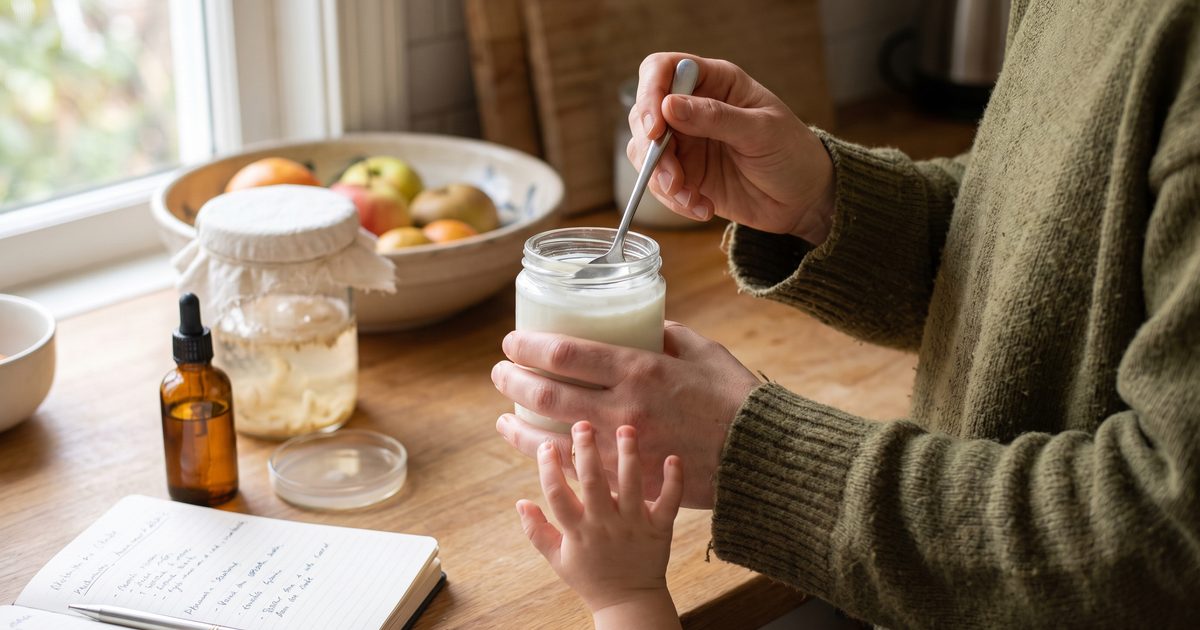
If you're a parent of an autistic child who also deals with chronic constipation, bloating, or stomach pain, you've probably wondered whether calming the gut could calm the behavior too. A new meta-analysis pooling six clinical trials and 348 children with autism spectrum disorder (ASD) offers a cautious, mixed answer: probiotics (supplements of live, beneficial bacteria) modestly raised the odds of meaningful gastrointestinal (GI) improvement and were tied to a small gain on one clinician-rated behavior scale, but the effect did not show up consistently across every way researchers measured it, and the evidence base is still thin.
Key Takeaways
- Children with autism who took probiotics were 28% more likely to see clinically meaningful GI symptom improvement than those on placebo, but average GI severity scores did not differ significantly between groups.
- Probiotics were linked to a small, statistically significant improvement on a clinician-observed autism severity scale (ADOS-CSS), but not on a parent-reported behavior scale (SRS-2).
- The analysis pooled just six trials and 348 children, and only one of those six trials was rated low risk of bias, so the authors call the findings "preliminary" and "hypothesis-generating," not proof.
- No specific probiotic strain, dose, or brand can be recommended from this data; the studies used very different formulations.
Probiotics Raise Odds of GI Symptom Relief by 28 Percent
Children with autism who took a probiotic supplement were 28% more likely to achieve a clinically meaningful improvement in their gastrointestinal symptoms than children given a placebo, according to a meta-analysis published in the International Journal for Vitamin and Nutrition Research by researchers at Zhejiang Rehabilitation Medical Center in China. That figure comes from pooling two trials that measured "responders," meaning the share of children who crossed a predefined threshold of improvement on a GI severity scale (relative risk 1.28, 95% confidence interval 1.02 to 1.60, p = 0.03). But when GI symptoms were instead measured as a continuous severity score, rather than a yes-or-no threshold, probiotics showed no significant advantage over placebo (standardized mean difference of -0.09, 95% CI -0.46 to 0.29). In plain terms, probiotics appeared to push more children over a real-world "meaningfully better" line, without necessarily shifting the average severity score by much.
Why Gut Symptoms Matter So Much in Autism
GI symptoms are not a footnote in autism. Research summarized by the National Institutes of Health estimates that GI distress affects up to 70% of people with ASD, and symptom severity often tracks with the severity of core autism traits like irritability and social withdrawal, a relationship researchers explain through the gut-brain axis (the network of nerve, immune, and hormonal signals connecting the gut and the brain). Autism itself is not rare: the CDC's most recent estimate puts prevalence at 1 in 31 8-year-old children in the United States. In this meta-analysis, five of the six included trials specifically enrolled children who already had baseline GI symptoms, including one trial where 62.5% of participants met criteria for irritable bowel syndrome (IBS) at the start. That makes this evidence most relevant to families already managing a child's chronic stomach pain, constipation, diarrhea, or bloating alongside an autism diagnosis, not to autistic children without GI complaints.
A PROSPERO-Registered, PRISMA-Guided Review of 348 Children
This is not a single small trial; it is a systematic review that was prospectively registered with PROSPERO before the analysis began and followed the PRISMA 2020 reporting standard, both steps meant to reduce cherry-picking of results. The researchers searched PubMed, Embase, Cochrane CENTRAL, and Web of Science through February 2026, screening 2,030 records down to 6 eligible trials: 4 randomized controlled trials and 2 randomized crossover trials, together covering 348 children aged 18 or younger. Only two to three of those trials contributed data to any single pooled outcome (the SRS-2 behavior result rests on just one study), and a formal quality check using the Cochrane Risk of Bias tool found only one trial at low risk, one at high risk, and four with "some concerns." That is a real evidence base, but a narrow one, a point the authors themselves stress repeatedly.
What This Means If You're Considering Probiotics for a Child With Autism
Nothing here supports treating probiotics as a proven fix for autism's core symptoms. The one behavioral improvement that reached statistical significance showed up only on the Autism Diagnostic Observation Schedule-Calibrated Severity Score (ADOS-CSS), a scale scored by a trained clinician watching the child directly, not on the Social Responsiveness Scale-2 (SRS-2), the parent-reported questionnaire (SMD -0.24, 95% CI -0.54 to 0.05, p = 0.11). That mismatch matters practically: a family might not notice any behavioral difference day to day even if a clinician would score it slightly better in a formal assessment. On the GI side, the trials used wildly different products, from an 8-strain formulation called De Simone Formulation to a single-strain Bifidobacterium longum subspecies infantis supplement to a 12-strain patented blend, at doses ranging from 100 million to 10 billion colony-forming units per day, for anywhere from 5 weeks to 6 months. Because no two trials used the same product, the researchers are explicit that they cannot recommend any specific strain, brand, or dose. If a child already has GI symptoms alongside autism, this is a reasonable topic to raise with a pediatrician or gastroenterologist, not a reason to start supplementing without medical input.
The Study's Own Caveats: Small, Inconsistent, and Hard to Compare
The authors are unusually direct about their study's limits. With only six trials total and as few as two per pooled outcome, the statistical estimates are imprecise and vulnerable to being skewed by any single study. The trials also differed enormously in probiotic strains, doses, and treatment duration, which the authors say means the pooled results should not be read as evidence that "probiotics" work as one uniform therapeutic class. Because fewer than ten studies fed into any outcome, the team could not run standard tests for publication bias (the tendency for positive results to get published more often than null ones), so they cannot rule out that the true effect is smaller than what shows up here. A prior meta-analysis on the same general question, published in Nutrients in 2023, likewise found mixed results across probiotic trials in autism, underscoring that this field has not yet converged on a consistent answer.
What Comes Next for Probiotic Research in Autism
The study authors are calling for larger, better-designed randomized controlled trials that use standardized outcome measures across GI and behavioral domains, so future results can be pooled more reliably. They also want future work to incorporate biological markers, such as inflammatory proteins, gut microbiota composition, and metabolic byproducts, to figure out which children are most likely to respond and why, plus head-to-head trials comparing specific probiotic strains rather than lumping different formulations together. No timeline for such trials was given in the paper.
Common Questions
Do probiotics cure autism or its core symptoms? No. This meta-analysis found no evidence that probiotics treat the core social or communication features of autism as a category; the one significant behavioral result was limited to a single clinician-scored severity measure, not autism broadly.
Which probiotic strain works best for GI symptoms in autism? The researchers say this cannot be determined from current evidence. The included trials used different single-strain and multi-strain products at different doses, and no head-to-head comparison exists.
Should probiotics be considered for an autistic child without GI symptoms? This evidence mostly does not apply to that situation. Five of the six trials specifically enrolled children who already had gastrointestinal symptoms at baseline, so the findings are most relevant to that subgroup.
How strong is this evidence overall? Moderate at best. It is a registered, PRISMA-guided meta-analysis of randomized trials, which is a stronger design than a single study, but it draws on only six trials and 348 children, and the authors themselves describe the findings as preliminary and hypothesis-generating rather than definitive.
Evidence Rating
EMERGING — 84/100
Caveats
- Only 6 trials and 348 children total; just 2-3 studies contributed data to any single pooled outcome, and the SRS-2 result rests on a single study.
- Only 1 of 6 included trials was rated low risk of bias; 1 was high risk and 4 had some concerns.
- Probiotic strains, doses (100 million to 10 billion CFU/day), and durations (5 weeks to 6 months) varied widely across trials, so no specific strain or product can be recommended.
- 5 of 6 trials enrolled children who already had baseline GI symptoms, so findings may not generalize to autistic children without GI complaints.
- Publication bias could not be formally tested because fewer than 10 studies fed into any outcome.
- The significant behavior result appeared only on a clinician-scored measure (ADOS-CSS), not on the parent-reported SRS-2 scale.
Registered PROSPERO/PRISMA meta-analysis of 6 RCTs and 348 children with autism found probiotics raised odds of clinically meaningful GI improvement (RR 1.28, p=0.03) and modestly improved one clinician-rated behavior scale (ADOS-CSS, p=0.03), but showed no significant effect on continuous GI severity scores or parent-reported behavior (SRS-2). Only 1 of 6 trials was low risk of bias.
References
- C Fan, W Qi, Y Shi (2026). Efficacy of Probiotic Supplementation on Gastrointestinal and Behavioral Outcomes in Children with Autism Spectrum Disorder: a META-ANALYSIS. International Journal for Vitamin and Nutrition. https://doi.org/10.31083/ijvnr52932
- Zhiqiang Zhang, Wenkai Kang, Yu Mi, Xin Zhong, Yulong He (2025). The Microbiota–Gut–Brain Axis in Autism: Associations, Causal Inference, and Interventions—A Narrative Review. Pathogens. https://doi.org/10.3390/pathogens14111145
- Xiao He, Wenxi Liu, Fengrao Tang, Xin Chen, Guirong Song (2023). Effects of Probiotics on Autism Spectrum Disorder in Children: A Systematic Review and Meta-Analysis of Clinical Trials. Nutrients. https://doi.org/10.3390/nu15061415