A Rare Blood Fungus Looks Alarmingly Similar to Candida auris
A little-known environmental fungus has turned up in patient bloodstreams, resisted nearly every available drug, and left researchers drawing uncomfortable parallels to Candida auris. The warning signs are early but hard to ignore.

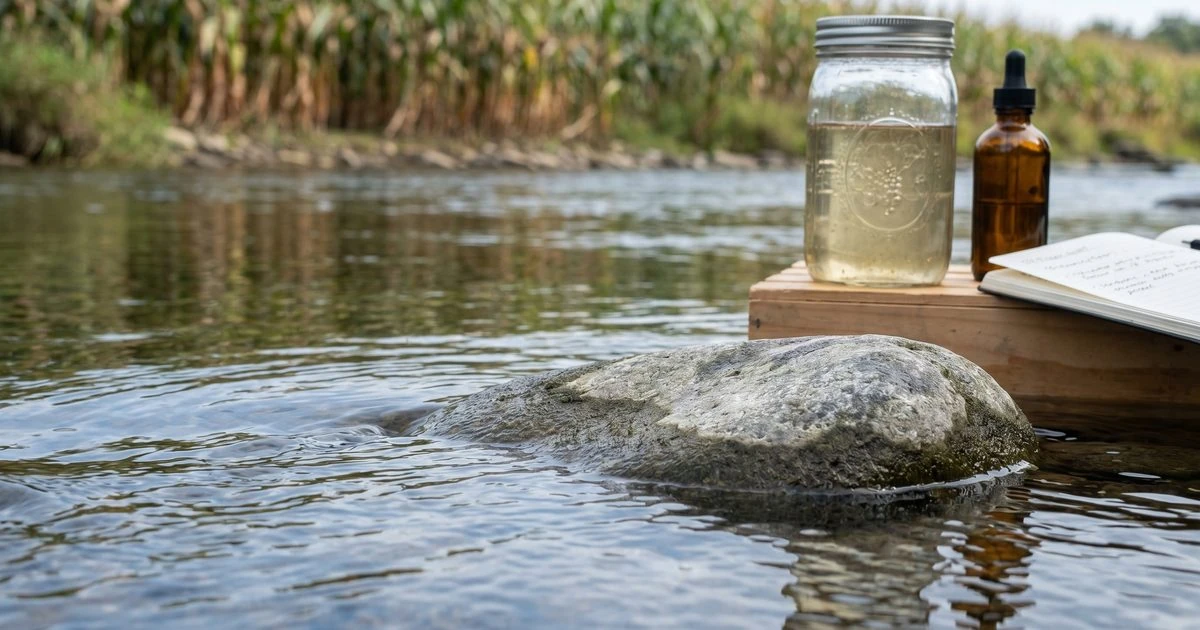
Two patients died. Both had severe underlying illnesses, and both were infected with a fungus so rarely seen in clinical settings that most hospital labs would struggle to name it. The culprit, Rhodosporidiobolus fluvialis, had spent decades quietly inhabiting river water, marine sponges, and corn plant surfaces before showing up in human blood. A new analysis in PLOS Pathogens argues that its profile, thermotolerant, multidrug resistant, and environmentally adapted, echoes the early story of Candida auris, the pathogen that blindsided hospitals worldwide. This is still early, investigational research, but the parallels are striking enough to warrant a close look.
Rhodosporidiobolus fluvialis Matches Key Candida auris Traits
R. fluvialis was first isolated in 1972 from a Miami River water sample and has since been found in marine sponges and agricultural plant surfaces. For decades it was filed away as a curiosity. What changed is that the two clinical cases, both fatal, revealed it can colonize warm-blooded hosts, tolerate the 37 degrees Celsius of the human body, and withstand the drugs clinicians would normally reach for first.
The parallels with C. auris are specific. C. auris thrives at 42 degrees Celsius, a thermal range that sets it apart from almost every other Candida species, and that heat tolerance is widely credited with enabling its spread across human skin and healthcare surfaces. R. fluvialis is similarly thermotolerant, unlike other members of its genus. In a murine infection model, R. fluvialis produced high fungal burdens in multiple organs, and mice that developed pseudohyphal forms, a structural shift linked to deeper tissue invasion, fared worse. When C. auris first emerged, it too was underestimated partly because it looked unremarkable in the lab; its danger only became clear at scale.
Why Drug-Resistant Fungi Carry Outsized Stakes
C. auris has already demonstrated what happens when a thermotolerant, drug-resistant fungus enters healthcare settings. The CDC recorded 6,304 clinical C. auris cases in the United States in 2024, concentrated in hospitals and long-term care facilities where already vulnerable patients have the least capacity to fight off infection. Globally, C. auris mortality rates run between 30 and 60 percent, figures that reflect both the severity of infection and the narrowing window of effective treatment.
R. fluvialis appears to be heading toward a similar therapeutic wall. Roughly 87 to 100 percent of C. auris isolates are resistant to fluconazole, and R. fluvialis already shows potential resistance to fluconazole and echinocandins. The two fungi share at least one probable resistance mechanism: duplication and overexpression of ERG11 genes, which reduce the effectiveness of azole drugs. R. fluvialis can also rapidly develop resistance to 5-fluorocytosine despite starting out sensitive to it, and carotenoid production may independently blunt the impact of caspofungin. Amphotericin B looks like the most viable initial treatment option, but incubation at 37 degrees Celsius, ordinary body temperature, can induce amphotericin B-resistant mutants in Rhodosporidiobolus species, closing even that door.
How Researchers Assembled the Evidence on R. fluvialis
The analysis in PLOS Pathogens is not a clinical trial; it is a structured comparison drawing on published literature, surveillance data, and the two reported fatal cases. The authors catalogued R. fluvialis's morphology, noting its light scarlet-orange, smooth, glistening colonies and the small proportion of isolates that form pseudohyphae. They mapped its known resistance mechanisms against those of C. auris, examined what mouse infection models revealed about organ colonization, and reviewed the stress-adaptation pathways likely involved in thermotolerance, including heat shock proteins, trehalose accumulation, and the calcineurin-Crz1 signaling pathway, which is critical for virulence in several fungal pathogens.
Identification poses its own problem. ITS gene sequencing can distinguish R. fluvialis at the species level, but it is too slow for timely clinical decisions. Commercial MALDI-TOF mass spectrometry systems, the rapid-identification tools now standard in many hospital labs, do not yet include R. fluvialis in their reference databases. C. auris faced exactly this bottleneck at the start of its spread, and the CDC still recommends confirmatory diagnostics beyond standard biochemical platforms for suspected novel fungi, citing persistent misclassification risks.
Critical Unknowns That Make R. fluvialis Hard to Assess
The honest answer to most questions about R. fluvialis is that nobody yet knows. Researchers do not know whether it can form biofilms, and C. auris biofilm formation is a major driver of its persistence on catheters and hospital surfaces, sometimes for weeks despite standard disinfection. It is unknown whether R. fluvialis colonizes human skin and persists in the environment with anything like C. auris's tenacity, or whether it can spread between patients in healthcare settings. The exact molecular mechanism behind its thermotolerance has not been worked out. And with only two documented human cases, statistical conclusions about virulence, transmission, or treatment response are essentially impossible.
The rarity is itself a complication. If identification tools cannot catch it, cases will be missed or misattributed, which means the true clinical footprint could be larger than the two deaths on record.
What Needs to Happen Before R. fluvialis Becomes the Next Crisis
The PLOS Pathogens authors frame their report explicitly as a warning while C. auris's trajectory remains visible in the rearview mirror. The lesson from C. auris is that the window for getting ahead of an emerging fungal pathogen is narrow, and the cost of missing it is steep. Infection control strategies effective against C. auris, rigorous hand hygiene, enhanced environmental cleaning, and careful antifungal stewardship, would form a reasonable baseline for any newly identified multidrug-resistant fungus, but those measures require knowing the pathogen is present in the first place.
The immediate priorities are clear even if the timeline is not: add R. fluvialis to MALDI-TOF reference databases, define its biofilm and surface-persistence capacity, characterize thermotolerance mechanisms at the molecular level, and establish an optimal treatment protocol before clinicians are forced to improvise at the bedside. Climate change and shifts in the human immunocompromised population are expanding the conditions under which environmental fungi can find new hosts. R. fluvialis may turn out to be a rare oddity. But the two patients who died suggest it is worth treating seriously now, not after the next outbreak provides a harder lesson.
Evidence rating
INVESTIGATIONAL — 51/100
Caveats:
- This is a narrative review based on only two reported clinical cases; no controlled studies exist.
- Causal mechanisms for thermotolerance and resistance in R. fluvialis remain speculative and extrapolated from other species.
- No funding source was disclosed by the authors.
Narrative review synthesizing data from two clinical case reports and prior literature on Candida auris. No original clinical trial or cohort study is presented, so no causal conclusions can be drawn. Findings about R. fluvialis are highly preliminary and have not been independently replicated.
References
- Yeseul Choi, Joseph Heitman, Eun Jeong Won (2026). Emerging fungal threats from the environment—a lesson from Candida auris and a warning about a second candidate, Rhodosporidiobolus fluvialis. PLOS Pathogens. https://doi.org/10.1371/journal.ppat.1014356
- Tracking C. auris | Candida auris (C. auris) – CDC. cdc.gov. https://www.cdc.gov/fungal/candida-auris/tracking-c-auris.html
- (2024). Correction to: Candida albicans—A systematic review to inform the World Health Organization Fungal Priority Pathogens List. Medical Mycology. https://doi.org/10.1093/mmy/myae074
- C. auris Research: Needs and CDC Resources | Candida auris (C. auris) – CDC. cdc.gov. https://www.cdc.gov/fungal/candida-auris/research.html
- Hao Li, Yuqi Wang, Jingwu Jiang, et al. (2019). A Novel Human Microbe-Disease Association Prediction Method Based on the Bidirectional Weighted Network. Frontiers in Microbiology. https://doi.org/10.3389/fmicb.2019.00676
- Weiming Zhang, Xiaoli Cao, Chang Liu, Shuo Gao (2025). The rising challenge of Candida auris: insights into its transmission, drug resistance, and infection control strategies. Frontiers in Microbiology. https://doi.org/10.3389/fmicb.2025.1694108