Ancient Kampo Medicine Rikkunshito Tackles IBS Through Multiple Gut Pathways
A traditional Japanese herbal formula used for centuries to settle the stomach may work against irritable bowel syndrome through a surprisingly sophisticated set of molecular targets.

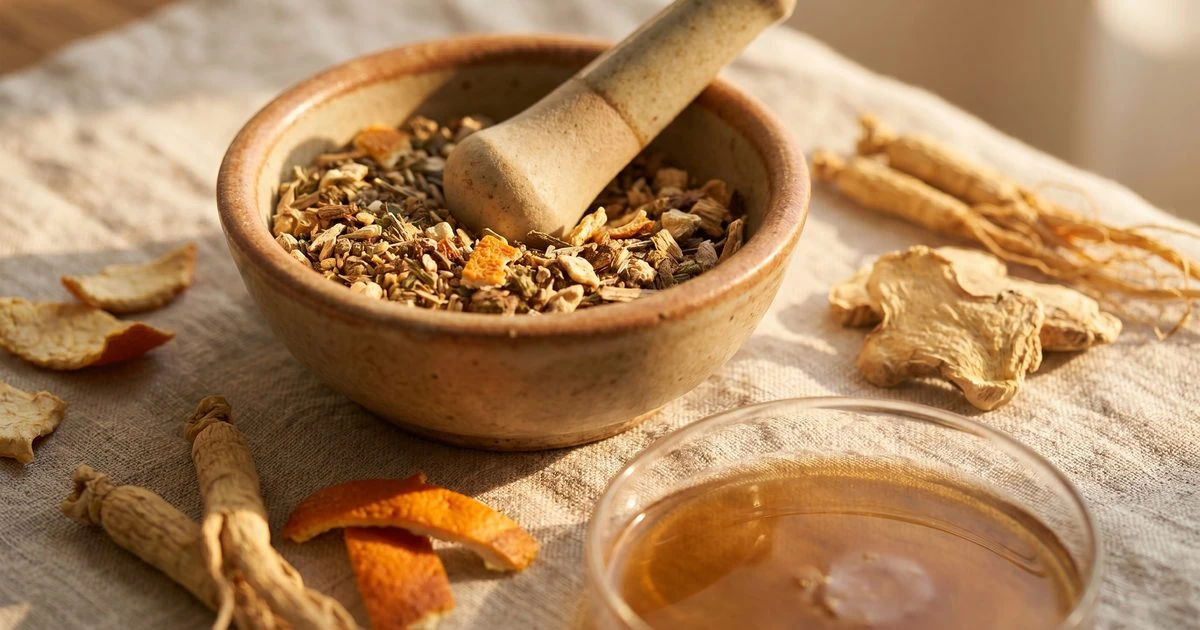
A traditional eight-herb Japanese Kampo medicine called Rikkunshito reduced colonic inflammation, restored gut hormone balance, and selectively modulated pain-sensing ion channels in a new mouse study published in Frontiers in Pharmacology. The findings are preliminary, drawn from animal experiments rather than clinical trials, but they sketch a detailed mechanistic picture of how the formula might address the tangled biology of irritable bowel syndrome.
Rikkunshito Reduced Colon Damage and Pain Behaviors in IBS Mice
Researchers at a South Korean laboratory induced an IBS-like state in male C57BL/6 mice by delivering intrarectal zymosan solution over three days, a method that mimics the low-grade colonic inflammation, impaired motility, and heightened visceral sensitivity that characterize the human disorder. IBS affects roughly 10% of the U.S. general population and consistently ranks among the conditions most damaging to health-related quality of life, which makes any new mechanistic insight worth following.
Mice treated with Rikkunshito at 100, 250, and 500 mg per kilogram showed significantly lower fecal water content, restored colon length and weight, and improved stool scores compared with untreated zymosan mice. Histopathological analysis showed reduced wall thickening, and TNF-alpha mRNA levels in colonic tissue were measurably lower. Pain-related behaviors tracked over 12 days were attenuated by Rikkunshito at a level comparable to two positive-control drugs: sulfasalazine, a standard anti-inflammatory, and amitriptyline, a tricyclic used in IBS management. Body weight loss was also prevented, though food intake was unchanged.
Gut Hormone Profiles and Epithelial Barrier Genes Were Selectively Restored
IBS disrupts the neuroendocrine signaling that coordinates gut motility. In the zymosan mice, plasma levels of vasoactive intestinal peptide (VIP), a neuropeptide that relaxes smooth muscle, were abnormally elevated, while neuropeptide Y (NPY), which tends to slow transit and dampen pain, was reduced. Rikkunshito normalized both: it brought VIP back toward naive-mouse levels and raised NPY. Levels of serotonin (5-HT) showed a decreasing trend with treatment but did not reach statistical significance.
At the epithelial barrier, zymosan suppressed the genes encoding three aquaporin water channels (Aqp3, Aqp4, Aqp8) and three tight-junction proteins (ZO1, Claudin1, Occludin). Rikkunshito restored expression of all six, suggesting it supports the structural integrity of the colonic lining that IBS is thought to compromise. A leaky epithelial barrier is one of the mechanisms believed to sustain low-grade inflammation in these patients, so restoring tight-junction gene expression is a finding worth watching in follow-up work.
Ghrelin Receptor Signaling Drives Effects on Pacemaker Cells
The colon's rhythmic contractions depend on interstitial cells of Cajal (ICCs), electrical pacemaker cells that set the timing of smooth muscle activity. Using whole-cell patch-clamp recordings on isolated colonic ICCs from mice, the team showed that Rikkunshito caused a concentration-dependent depolarization of resting membrane potential and suppressed pacemaker potential amplitude. These effects were blocked by two ghrelin receptor antagonists, GSK1614343 and (D-Lys3)-GHRP-6, as well as by intracellular GDP-beta-S, confirming G-protein dependence.
Further dissection placed the signaling downstream through the PLC-IP3-Ca2+ pathway: removing extracellular calcium, blocking the IP3 receptor with xestospongin C, depleting intracellular stores with thapsigargin, and inhibiting PLC with U-73122 all abolished the Rikkunshito-induced depolarization. PKC and PKA inhibitors had no significant effect, but three MAPK inhibitors (PD98059, SB203580, and SP600125, targeting ERK, p38, and JNK respectively) did significantly attenuate the depolarization. This pattern of results places Rikkunshito's pacemaker-cell effects squarely within ghrelin receptor-coupled, MAPK-dependent calcium signaling, consistent with earlier evidence that Rikkunshito stimulates ghrelin pathways to improve gastric motility.
Selective Modulation of TRPV1, TRPV4, and TRPA1 Pain Channels
Transient receptor potential (TRP) channels are non-selective cation channels on sensory neurons and GI tissues that mediate pain, mechanosensation, and chemosensation. They are strongly implicated in the visceral hypersensitivity that makes IBS so disabling. To probe whether Rikkunshito acts directly on these channels, the team expressed TRPV1, TRPV4, and TRPA1 individually in HEK293T cells and recorded whole-cell currents.
The results were channel-specific. Rikkunshito inhibited capsaicin-activated TRPV1 currents in a dose-dependent manner, an effect that could reduce the heat and acid pain signaling prominent in inflamed gut tissue. It produced a non-significant trend toward potentiation of TRPV4, the channel linked to osmotic and mechanical sensing. Most strikingly, it enhanced allyl isothiocyanate (AITC)-activated TRPA1 currents, an effect fully blocked by the selective TRPA1 inhibitor A967079. TRPA1 activation can stimulate gut secretion and motility, so potentiating it may complement the hormone-balancing effects observed in the animal model. These HEK293T findings are exploratory: as the authors note, they need validation in native GI tissues and sensory neurons such as dorsal root ganglion cells before their physiological relevance can be confirmed.
What Needs to Happen Before This Matters Clinically
Several limitations constrain the conclusions. The TRP channel experiments used overexpression in a kidney cell line, not gut or neuronal tissue. Relatively high concentrations of Rikkunshito were needed to depolarize isolated ICCs, and the authors acknowledge that non-specific membrane effects at those concentrations cannot be excluded. The study did not identify which of the 13 quantified plant metabolites (including ginsenoside Rg1, 6-gingerol, liquiritin, and naringin, among others) drive any specific pharmacological effect. Effects on many inflammatory mediators and neuropeptides beyond those measured remain unknown.
Animal models of IBS, while invaluable for mechanistic work, do not fully recapitulate the multifactorial complexity of the human condition, and translating rodent pharmacology to human patients has a poor track record in GI research. Plant-derived medicines for IBS have shown promising results in some clinical trials, but integration into international treatment guidelines remains limited and uneven. For Rikkunshito specifically, the path from this mechanistic mouse study to a validated clinical use in IBS will require carefully designed human trials, ideally with biomarker endpoints that can track the TRP channel and ICC pathways identified here. The study's value lies in generating testable hypotheses, not in establishing a treatment. Patients with IBS should not interpret these results as evidence that Rikkunshito is ready for clinical use.
Evidence rating
INVESTIGATIONAL — 78/100
Caveats:
- All in vivo data come from mice; effects in humans are unknown and may not translate.
- TRP channel findings are from overexpressing HEK293T cells, not native gut or sensory tissue.
- The study identifies mechanistic pathways but cannot establish causation in humans.
- No funding source was disclosed by the authors.
Preclinical study combining a zymosan-induced mouse IBS model with patch-clamp electrophysiology in isolated colonic interstitial cells of Cajal and TRP-overexpressing HEK293T cells. Findings show association-level in vivo effects alongside a proposed step-by-step mechanistic chain, but all data are animal- or cell-based, so causal conclusions for humans cannot be drawn. The mechanistic pathways described have not been independently replicated in human tissue or clinical populations.
References
- Woo-Gyun Choi, Na Ri Choi, Daehwa Jung, Sang Chan Kim, Joo Han Woo, Byung Joo Kim (2026). Rikkunshito ameliorates colonic dysfunction and hormonal imbalance in an IBS mouse model with modulation of transient receptor potential channel activity. Frontiers in Pharmacology. https://doi.org/10.3389/fphar.2026.1813619
- Impact of irritable bowel syndrome: prevalence and effect on health-related quality of life. NIH. https://www.ncbi.nlm.nih.gov/pmc/articles/PMC2801646/
- Chihiro Yamada, Tomohisa Hattori, Shunsuke Ohnishi, Hiroshi Takeda (2021). Ghrelin Enhancer, the Latest Evidence of Rikkunshito. Frontiers in Nutrition. https://doi.org/10.3389/fnut.2021.761631
- Anthony C. Johnson, Adam D. Farmer, Timothy J. Ness, Beverley Greenwood‐Van Meerveld (2019). Critical evaluation of animal models of visceral pain for therapeutics development: A focus on irritable bowel syndrome. Neurogastroenterology & Motility. https://doi.org/10.1111/nmo.13776
- Ploutarchos Pastras, Ioanna Aggeletopoulou, Maria Bali, Christos Triantos (2026). Plant-Derived Treatments for IBS: Clinical Outcomes, Mechanistic Insights, and Their Position in International Guidelines. Nutrients. https://doi.org/10.3390/nu18020183