This Gut Microbe Ferments Fiber Into a Powerful Anti-Inflammatory Shield
One bacterium that makes up nearly a quarter of a healthy colon's microbial population quietly converts dietary fiber into a compound that feeds your gut lining, calms inflammation, and may influence conditions from colitis to Parkinson's disease.

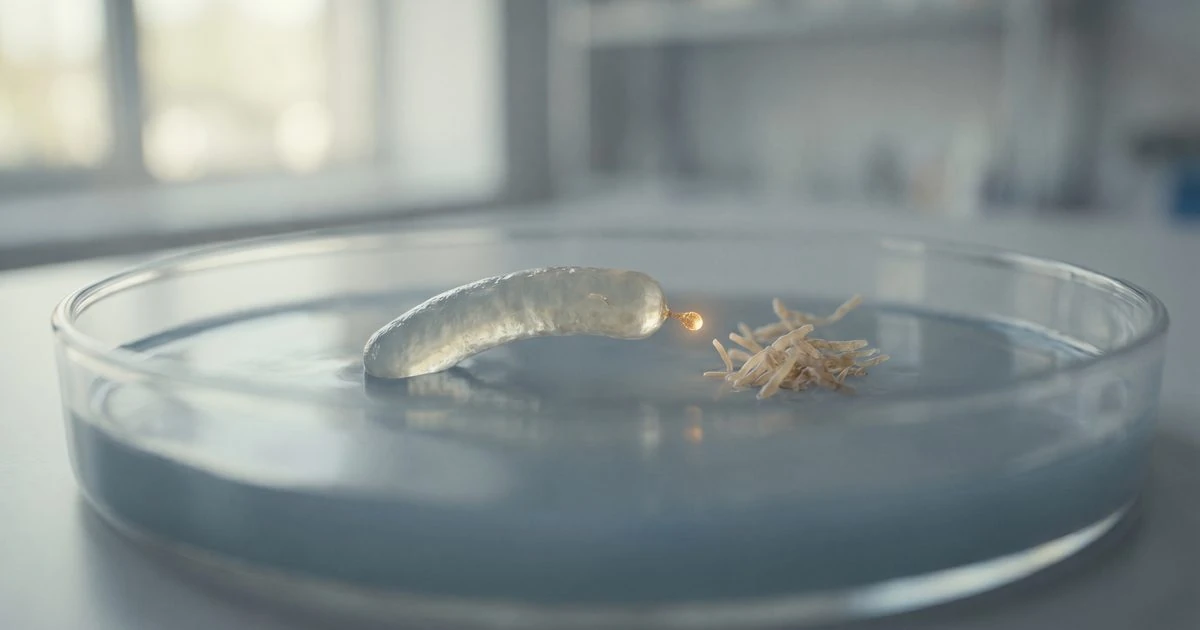
One group of gut bacteria accounts for somewhere between 7% and 24% of the total microbial population in a healthy human colon, yet most people have never heard its name. Roseburia hominis, a curved, motile, anaerobic rod classified in the family Lachnospiraceae, sits at the intersection of diet, immunity, and metabolic health. A growing body of evidence suggests its signature metabolite, butyrate, is doing far more than keeping the colon fed. The associations now stretch from inflammatory bowel disease to Parkinson's disease to obesity, and researchers are beginning to ask whether restoring Roseburia levels could be a meaningful therapeutic lever.
Roseburia hominis converts dietary fiber into colonocyte fuel
The core job of Roseburia species is fermentation. They break down dietary fibers including resistant starch, inulin, fructooligosaccharides, arabinoxylans, and beta-glucans into short-chain fatty acids, with butyrate as the primary product. Butyrate serves as the main energy source for colonocytes, the cells that line the colon wall. Beyond fueling those cells, butyrate acts as a histone deacetylase inhibitor, meaning it can switch gene expression patterns in host cells, and it suppresses pro-inflammatory cytokines including TNF-alpha and IL-6. The result is a molecule that feeds the gut lining and simultaneously dials down inflammatory signaling.
R. hominis has a particular structural advantage over some of its relatives: it can penetrate the mucus layer and adhere directly to intestinal epithelial cells. Research published in PMC suggests that R. hominis triggers specific gene expression changes in host cells, strengthening barrier function and expanding regulatory T cell populations. A related mechanism involves flagellin signaling through Toll-like receptor 5 (TLR5), a pathway through which R. hominis may reinforce the intestinal barrier and promote immune tolerance. These are not fully characterized mechanisms in humans yet, and most of the mechanistic work comes from cell and animal models, but they help explain why changes in Roseburia abundance correlate so consistently with inflammatory conditions.
Reduced Roseburia levels link to colitis, metabolic disease, and neurological risk
The disease associations are wide-ranging. Lower abundance of Roseburia species shows up in patients with inflammatory bowel disease and ulcerative colitis, with a landmark study finding significant reductions in both Roseburia hominis and Faecalibacterium prausnitzii in UC patients compared to healthy controls, defining that reduction as a marker of dysbiosis. In irritable bowel syndrome, reduced Roseburia levels are associated with slowed intestinal motility and decreased intestinal melatonin. Type 2 diabetes and obesity show similar patterns of lower Roseburia representation.
The metabolic picture extends further than the gut itself. Animal model data indicates that administering live R. hominis reduced body weight gain, improved glucose and lipid metabolism, and decreased hepatic steatosis in mice fed a high-fat diet. Elevated Roseburia levels in human cohorts are also associated with a lower incidence of Parkinson's disease, and butyrate and propionate produced by R. hominis have shown neuroinflammation-reducing effects in animal models. These are associations, not proven causal pathways, and the review's authors are careful to note that causation still requires further clarification.
How diet shapes Roseburia abundance in the colon
Roseburia species do not thrive in a vacuum. Their growth is directly tied to substrate availability, meaning the fibers you eat determine whether they flourish or decline. Resistant starch, inulin, and fructooligosaccharides all stimulate Roseburia proliferation. Human milk oligosaccharides serve as a nutrient source for specific species, which may partly explain colonization patterns in early life. Cross-feeding relationships with Bifidobacteria also support Roseburia, since Bifidobacteria partially break down complex fibers into products that Roseburia can then ferment further.
Several common factors suppress Roseburia levels. Aging, high intestinal pH, antibiotic use, influenza infection, high animal protein intake, and gluten-free diets are all associated with reduced abundance. Antibiotic use is particularly acute: broad-spectrum courses can sharply deplete Roseburia populations, and recovery timing varies by individual. These findings position dietary fiber intake not just as general nutrition advice but as a fairly direct intervention for maintaining one of the colon's most productive microbial workers.
Open questions about causality and individual variation
The central caveat running through this research is the familiar one in microbiome science: association is not causation. Studies consistently find lower Roseburia levels in disease states, but whether that depletion contributes to disease onset or results from it remains mostly unresolved. A review in Gut notes that our understanding of Roseburia hominis in immunity and inflammation is still limited, with some studies showing conflicting data on its dysbiosis patterns in ulcerative colitis patients. Microbiome measurements also capture a snapshot in time, not a fixed biological trait, so a single test result reflects current conditions rather than a stable characteristic.
Individual variation adds another layer of complexity. Optimal Roseburia levels differ across people depending on diet, geography, age, and probably dozens of other factors not yet well characterized. R. intestinalis is already discussed as a candidate for next-generation probiotics, and R. hominis is not far behind given its mucus-penetrating adhesion properties, but translating animal model findings into human clinical applications requires considerably more work.
What boosting Roseburia might look like in practice
The practical takeaway from the current evidence is fairly consistent: dietary fiber variety supports Roseburia species, and disruptions such as antibiotics or very low-fiber diets predictably reduce them. For researchers, R. hominis and R. intestinalis are increasingly being evaluated as live biotherapeutic candidates, given that they can be cultured and that their butyrate output is measurable. Roseburia species may also function as biomarkers for conditions as varied as gallstone formation and metabolic syndrome, suggesting a potential future role in microbiome-based diagnostics.
The genus was named in the 1980s after microbiologist Theodor Rosebury, and it has taken decades for the tools to catch up to the biology. The picture emerging now is one of a versatile, diet-dependent organism that bridges fiber fermentation, gut barrier integrity, and systemic immune signaling. How much clinical leverage it ultimately offers will depend on whether the causal arrows can finally be established.
Evidence rating
EMERGING — 71/100
Caveats:
- This is a narrative review article, not a new clinical trial — it summarizes existing literature rather than generating original experimental data.
- Most associations between Roseburia levels and disease are observational; causation has not been established.
- No funding source was disclosed by the authors.
- Optimal Roseburia levels vary by individual diet, geography, and age, so population-level associations may not apply universally.
Narrative review synthesizing published literature on Roseburia species; no original experimental data are presented. Reported associations between Roseburia abundance and metabolic or inflammatory conditions are observational and do not establish causation. Mechanistic claims are supported by cited studies but have not been independently replicated within this article itself.

