Rome’s Most Prized Herb Went Extinct 2,000 Years Ago. Scientists Think They’ve Found Its Descendant.
Julius Caesar stockpiled 1,500 pounds of it in the Roman treasury. Emperor Nero reportedly owned the last stalk. Silphium, the ancient world's most coveted herb, disappeared two millennia ago, and scientists are only now closing in on what it actually was.

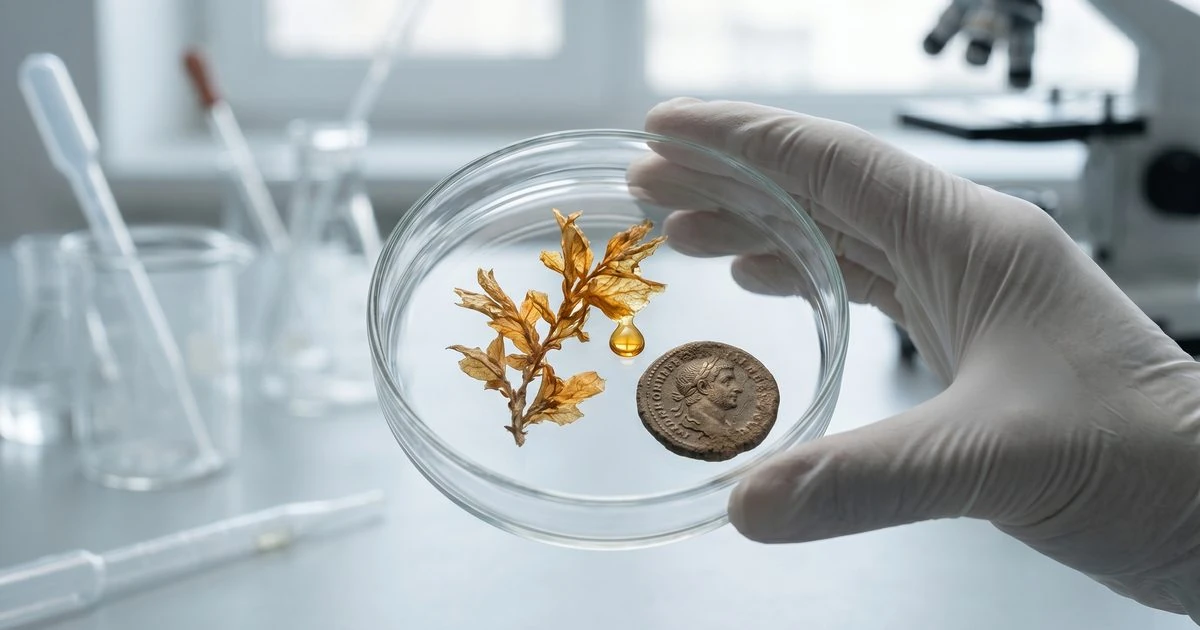
Julius Caesar reportedly kept 1,500 pounds of silphium resin locked in the Roman treasury. Emperor Nero, according to Pliny the Elder, personally consumed what may have been the last surviving stalk of the plant sometime in the 1st century CE. For a herb, that is a remarkable biography, and its sudden disappearance from the historical record is one of antiquity's more tantalizing botanical mysteries. A published analysis of ancient texts, coins, and medical treatises now puts the story of silphium's extinction and possible survival into sharper focus.
Silphium's role as Rome's most valuable medicinal plant
Silphium was endemic to a narrow steppe region in Cyrenaica, the part of Libya that hugs the Mediterranean coast. The Greeks of Cyrene obtained it as tribute from indigenous Libyan tribes who controlled the harvesting knowledge, and it quickly became the economic backbone of the entire region: coins from Cyrene depicted the plant's distinctive heart-shaped seedpod, a design some historians argue is the true origin of the modern heart symbol.
The plant's resin, which Romans called "laser" or "laserpicium," commanded prices that put it in the same category as silver by weight. That value reflected an extraordinary range of uses. Ancient authors attributed to silphium uses spanning contraception, abortifacient properties, treatment for coughs, sore throats, fevers, indigestion, and seizures, as well as wart removal, hair restoration, and clearing afterbirth. Pliny the Elder added leprosy treatment and antidote properties to the list. It also flavored food, improved livestock quality, and its relative galbanum resin scented perfume.
Soranus of Ephesus, writing a gynecology text around the 1st to 2nd century CE, described herbs including silphium mixed with wine as oral contraceptives, though he noted they frequently caused upset stomachs. He also recommended cervical suppositories combining olive oil, honey, and various resins as physical barriers or spermicides. Whether silphium actually worked as a contraceptive or abortifacient cannot be tested without a living specimen.
Why silphium could not survive Roman demand
The herb's central problem was that it could not be cultivated. Silphium grew only wild, in a strip of southern steppe roughly defined by particular soil and climate conditions that no Roman agronomist managed to replicate. The plant may have been a sterile hybrid that reproduced asexually, which would explain both its resistance to deliberate cultivation and its vulnerability to disruption.
Demand was relentless. Overharvesting by traders, overgrazing by livestock that competed for the same terrain, and gradual desertification of the North African interior all pressed against a population that could not replenish itself through cultivation. Roman annexation of Cyrene in 96 BCE handed control to private contractors called publicani, whose incentive was extraction rather than stewardship. The combination likely accelerated a decline that was already underway. Some sources suggest local use may have persisted into the 5th century CE, but the mainstream Roman record treats silphium as effectively gone by the 1st century.
Recent scholarship has pushed the extinction explanation in a more specific direction. Research reassessing silphium's extinction through climate change argues that human-induced climate change and habitat disturbance, not just over-exploitation, may have been primary drivers, making silphium potentially the first documented climate-change-induced extinction of a plant species. That framing is contested, but it reflects how seriously researchers now take the question.
How Ferula drudeana emerged as a candidate descendant
Identifying silphium's closest living relative requires working backward from ancient descriptions. Theophrastus described the plant with thick black-barked roots, a hollow fennel-like stalk approximately 30 centimeters tall, and golden celery-like leaves. Coins from Cyrene show the heart-shaped seedpod in enough detail to narrow the candidates to the genus Ferula, the giant fennels.
In 2021, field researchers studying an area of former Greek settlement in Anatolia, Turkey, identified Ferula drudeana as a strong morphological match. The plant shares the thick branching roots and celery-like leaves that appear in ancient depictions. Laboratory analysis found that F. drudeana contains anticancer compounds and exhibits anti-inflammatory properties, consistent with silphium's documented medical applications.
Studies of Ferula drudeana as a potential silphium relative note that the species is rare and endemic to Central Anatolia, a geographic puzzle given that silphium was definitively Libyan. Proponents suggest the plant may have expanded or contracted its range over two millennia, or that silphium itself was a closely related species within the same lineage rather than a direct ancestor.
Open questions about the Ferula drudeana hypothesis
The case for F. drudeana is suggestive, not settled. No scholarly consensus has formed around a single living plant as silphium's confirmed descendant. The most direct test, matching ancient silphium seeds recovered from archaeological deposits against F. drudeana's genetics, has not yet been done. The geographic mismatch between Cyrenaica and the Caspian-adjacent region where F. drudeana grows remains unexplained.
There is also a conservation irony embedded in this research. Several modern Ferula species are currently threatened by overharvesting, driven partly by misinformation that attributes aphrodisiac qualities to them. The same dynamic of demand outpacing sustainable supply that apparently destroyed silphium is now pressing its possible relatives. Researchers studying these plants have flagged the parallel explicitly.
What finding a silphium descendant would mean for medicine
The interest in silphium's pharmacology is not purely antiquarian. If F. drudeana or another Ferula species genuinely descends from silphium, the anticancer and anti-inflammatory compounds already detected in living specimens provide a testable starting point. Ancient medicine was not always wrong: compounds like artemisinin, derived from a plant used in traditional Chinese medicine for centuries, turned out to be a genuine antimalarial.
Silphium's contraceptive claims are harder to evaluate. The absence of a specimen means any pharmacological testing would apply to a candidate relative, not the plant itself. Researchers are careful to frame F. drudeana findings as preliminary. What the accumulating evidence does suggest is that a plant the ancient world valued enough to drive to extinction probably contained something chemically real, and the search to find out what that was is now an active scientific question rather than a historical footnote.
Evidence rating
INVESTIGATIONAL — 47/100
Historical and archaeobotanical review drawing on ancient texts, numismatic evidence, and modern botanical field surveys. No controlled study design, no quantitative data, and no experimental testing of any claimed biological effect. The central hypothesis linking Ferula drudeana to ancient Silphium remains unconfirmed pending archaeological seed evidence.