Spruce fiber prebiotic calmed inflamed mouse guts but inflamed healthy ones, study finds
A forestry byproduct pitched as a circular-economy prebiotic turned out to be a double-edged sword: it quieted inflammation markers in mice with induced colitis, but nudged healthy mouse guts toward the opposite state.


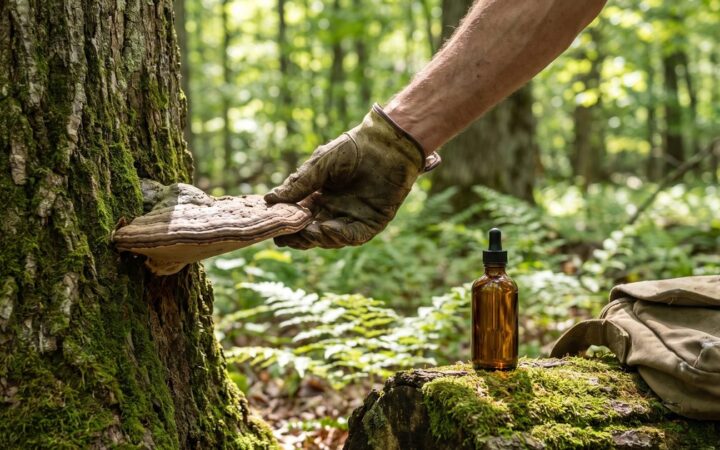
A byproduct of the sawmill, the leftover sawdust from Norway spruce trees, is being explored as a sustainable source of a fiber called galactoglucomannan (GGM, a hemicellulose sugar chain that makes up 10 to 30 percent of spruce wood by weight). Researchers wanted to know whether feeding this extract to mice could calm intestinal inflammation. What they found instead was a split personality: the same daily dose helped a damaged gut at the molecular level while nudging a healthy one toward low-grade inflammation, a pattern the study, published in the International Journal of Biological Macromolecules, calls a "double-edged sword."
Key takeaways:
- A Norway spruce wood extract (NSBE) given to mice at 400 mg/kg/day for 21 days reduced inflammatory cytokines and normalized oxidative stress markers in mice with chemically induced colitis, but had zero effect on the disease's actual clinical symptoms.
- In healthy mice given the identical dose, the extract raised inflammatory cytokines, worsened oxidative stress, and increased bacterial leakage into lymph tissue, all without visible tissue damage.
- This is one dose in mice over three weeks; nothing here identifies a safe human amount or a threshold where benefit tips into harm.
Norway Spruce Extract Shows Context-Dependent Effects in Mouse Colitis
A team from the Federal University of Alfenas in Brazil, working with Finland's government forestry research institute Natural Resources Institute Finland (Luke), tested a Norway spruce byproduct extract (NSBE, a GGM-rich fraction pulled from spruce sawdust using pressurized hot water) in C57BL/6 mice. Some mice had healthy guts; others had colitis chemically induced with dextran sulfate sodium (DSS, a compound that erodes the colon lining to mimic ulcerative-colitis-like damage). All mice that received NSBE got the same dose, 400 milligrams per kilogram of body weight, by daily gavage for 21 days. The result depended entirely on which gut the extract landed in, not on how much was given, since only a single dose was tested.
Why This Matters for People Managing Inflammatory Bowel Disease
Ulcerative colitis, a form of inflammatory bowel disease (IBD) marked by chronic inflammation and ulcers along the colon lining, affected an estimated 5 million people worldwide as of 2023, and its prevalence is rising fastest in newly industrialized regions. Anyone managing IBD or a sensitive gut has likely encountered fiber supplements, prebiotics, or "gut healing" extracts marketed as gentle, plant-based alternatives to pharmaceuticals. This study is a reminder that a compound's effect on the gut is not fixed. The same GGM-rich extract behaved as a mild anti-inflammatory in a damaged colon and as a mild pro-inflammatory irritant in an undamaged one. That is a genuinely useful, if inconvenient, finding for anyone assuming "natural" or "prebiotic" automatically means "safe regardless of condition."
What Happened Inside the Colitis Mice
In mice with DSS-induced colitis, NSBE reduced the inflammatory signaling molecules TNF-alpha and IL-6 in both the colon and the liver, normalized a marker of oxidative cell damage called malondialdehyde (MDA) back to healthy-mouse levels in the colon, and restored the total output of short-chain fatty acids (SCFAs, beneficial byproducts of fiber fermentation by gut bacteria) in the feces, particularly acetic acid. The gut bacteria shifted too: the beneficial phylum Bacteroidetes returned to control-group levels, while Gammaproteobacteria, a class linked to gut dysbiosis, declined. Immune cells taken from the spleen and stimulated in a dish produced less of the inflammatory signals IFN-gamma and IL-17A and more of the calming signal IL-10. NSBE also rescued weight gain in colitic mice, who gained 3.1 grams over three weeks versus 2.0 grams for untreated colitis mice and 3.7 grams for healthy controls.
None of that translated into visibly less sick animals. Disease activity scores (based on weight loss, stool consistency, and bleeding), colon shortening, and intestinal permeability, measured by how much a fluorescent tracer leaked from the gut into the bloodstream, were unchanged by NSBE. Under the microscope, mucus-producing goblet cells and crypt structure in the colon lining showed the same depletion whether or not mice got the extract. The ratio of two major bacterial phyla, Firmicutes and Bacteroidetes, a common marker of dysbiosis, stayed roughly 50 percent below healthy levels even with treatment, and Gammaproteobacteria still turned up in the mesenteric lymph nodes, evidence that some gut bacteria were still crossing into tissue where they do not belong. The researchers describe this as "a dissociation between molecular modulation and overall clinical improvement," meaning the extract changed what was happening at the level of genes, cytokines, and bacteria without changing how sick the animal actually was.
The Surprise: What Happened in Healthy Mice
This is the part of the study that complicates any straightforward "spruce fiber is good for gut inflammation" takeaway. In mice that never had colitis, the same 400 mg/kg/day dose of NSBE pushed TNF-alpha and IL-6 upward in both colon and liver tissue, compared to untreated healthy mice. A cellular antioxidant ratio called the GSH/GSSG ratio, a marker of how well a tissue is buffering oxidative stress, dropped in both organs. Bacteroidetes bacteria showed increased translocation into the mesenteric lymph nodes even though the intestinal barrier itself, tested directly with a fluorescent tracer, remained intact. Fecal acetic acid, the SCFA most associated with gut benefit, actually decreased. None of this produced visible tissue damage on histology; the changes were subclinical, showing up in molecular and microbial data rather than in the animals' health or behavior.
What This Doesn't Tell Us Yet
Several limits matter here. This was acute, chemically induced colitis lasting five days of DSS exposure inside a 21-day experiment, which does not model the relapsing-remitting course of human ulcerative colitis, something the study authors flag themselves. Bacterial groups were measured only at the broad phylum or class level (Firmicutes, Bacteroidetes, Gammaproteobacteria) using targeted PCR, not the more detailed 16S rRNA sequencing that would show species-level shifts or diversity changes. Cytokine changes were measured as gene activity (mRNA), not confirmed at the protein level, which the authors list as a next step. And critically, only one dose was tested in the animals, so this study cannot say whether a lower dose would avoid the healthy-mouse effects, or whether a higher one would worsen them. There is no dose-response curve here, only a single data point that came out differently depending on the starting gut state.
What Comes Next
The researchers are calling for chronic colitis models that better mimic the flare-and-remission pattern of human IBD, deeper microbiota sequencing, protein-level confirmation of the cytokine changes, and testing in additional human intestinal cell models before NSBE could be considered a serious nutraceutical candidate. There is no human trial timeline mentioned, and no indication anyone is currently testing this extract in people. The funding came entirely from Brazilian public science agencies (CAPES, FAPEMIG, and CNPq), and the authors report no competing financial interests. The separate lab work with human colon cells did find that NSBE selectively killed lab-grown Caco-2 colon cancer cells at low concentrations, an early and unrelated finding worth watching, but it is dish-based and far from clinical relevance.
Common Questions
Does this mean spruce fiber is bad for gut health? Not exactly. It means the effect was not uniformly good or bad. In mice with colitis it changed inflammation markers and gut bacteria for the better without changing how sick the mice actually were; in healthy mice, the same dose nudged inflammation markers in the wrong direction without causing tissue damage. Both effects were mild and neither is directly applicable to people yet.
Is galactoglucomannan the same as common fiber supplements like psyllium or inulin? No. GGM is a wood-derived hemicellulose specific to spruce and other conifers, chemically distinct from the fibers in most commercial prebiotic supplements. Prior lab work has shown some GGM extracts can support beneficial bacteria like bifidobacteria and other wood-derived fibers have shown gut-microbiota effects in earlier research, but that is a different question from whether it helps or harms an inflamed gut.
Could this extract eventually become a treatment for ulcerative colitis? That is what the researchers are investigating, but this study alone does not establish that. The extract did not improve any clinical or histological measure of colitis severity in mice, only certain molecular and bacterial markers. The authors themselves call for further safety testing before considering it a therapeutic candidate.
Evidence Rating
INVESTIGATIONAL — 80/100
Caveats
- Acute, 5-day DSS-induced colitis in mice does not model the relapsing-remitting course of human ulcerative colitis; the authors flag this limitation themselves.
- Only a single in-vivo dose (400 mg/kg/day) was tested, so nothing in this study identifies a threshold dose where benefit turns to harm, or a human-equivalent safe dose.
- Microbiota was measured only at the phylum/class level by targeted qPCR (Firmicutes, Bacteroidetes, Gammaproteobacteria), not by 16S rRNA sequencing or metagenomics, so there is no species-level or diversity data.
- Cytokine changes were measured as mRNA (gene expression), not confirmed at the protein level; the authors list protein-level validation as future work.
- In colitic mice, the benefits were entirely molecular and microbial; every clinical and histological measure of disease severity (disease activity index, colon length, permeability, mucin/goblet cells, crypt structure, splenomegaly) was unchanged.
- This is an animal study; no human trial has been conducted or announced.
Controlled mouse study (C57BL/6, n=8/group) testing one dose (400 mg/kg/day, 21-day gavage) of a Norway spruce byproduct extract in both healthy and DSS-induced colitis conditions, with complementary in vitro work in Caco-2 and CCD-18Co cell lines. Findings are internally consistent and mechanistically detailed (cytokines, oxidative stress, microbiota, SCFAs, translocation) but represent a single acute-colitis animal model with no human data, no dose-response testing, and phylum-level (not species-level) microbiota resolution.
References
- Thaise Caputo Silva, Amanda dos Santos Lima, Fernando Vitor Vieira, et al. (2026). The double-edged sword effect of galactoglucomannan-rich Norway spruce (Picea abies) byproduct extract in mice with induced colitis. International Journal of Biological Macromolecules. https://doi.org/10.1016/j.ijbiomac.2026.154082
- Ulcerative colitis (The Lancet, PubMed record). NIH. https://pubmed.ncbi.nlm.nih.gov/37573077/