Fecal Transplants From Stressed Mice Passed On Anxiety-Like Behavior
In a new mouse study, transplanting gut bacteria from chronically stressed donors into healthy, unstressed mice was enough to shift their behavior and alter gene activity in the brain's prefrontal cortex.

If you've ever wondered whether gut health has anything to do with mood on a bad week, a new mouse study offers one of the more direct experimental hints yet. Researchers took gut bacteria from mice that had spent 28 days under chronic stress and transplanted it into calm, healthy mice that had never been stressed at all. The recipients did not just pick up a few stray microbes, they started acting anxious and withdrawn, and specific genes in their brains shifted to resemble the stressed donors'. The study, published in Neurobiology of Stress, is mouse-only, but it adds to a small and growing body of work asking how directly gut bacteria can shape behavior, not just correlate with it.
Key takeaways
- Fecal transplants (FMT, the transfer of stool, and the bacteria in it, from one animal to another) from chronically stressed mice made previously healthy, unstressed mice show more depression- and anxiety-like behavior.
- Two genes tied to brain-cell communication and insulation, Syn1 and Olig1, dropped in the stressed donors' prefrontal cortex, and a similar drop showed up, at least partially, in the recipient mice.
- The stressed donors' gut bacteria shifted toward more Lachnospiraceae (a common gut bacterial family) and less of a group the researchers describe as Lachnobacillus-type taxa, pointing to the microbiome as the likely transfer vehicle.
- This is mouse-only work; whether stress-altered gut bacteria can do anything similar in humans is untested here and remains unknown.
Fecal Transplants From Stressed Mice Transferred Anxiety-Like Behavior

Gut bacteria from mice exposed to chronic stress can transfer anxiety- and depression-like behavior to unstressed mice through fecal microbiota transplantation, according to the new study. The researchers ran three groups: healthy controls, mice put through 28 days of chronic unpredictable stress (CUS, a standard lab protocol that mimics accumulating everyday hassles rather than one big trauma), and a third group of healthy mice that received fecal transplants from the stressed donors (CUS-FMT). The stressed donors developed a textbook depression- and anxiety-like profile: more immobility during a tail-suspension test (a standard rodent measure of behavioral despair, p=0.0078), less spontaneous movement (p=0.0152), and reduced food intake (p=0.0023) compared with controls. The mice that only received the stressed donors' gut bacteria, and were never stressed themselves, showed that same rise in tail-suspension immobility (p=0.0082), along with other behavioral shifts that echoed their donors. This is not the first time researchers have moved stress-like behavior between mice with a fecal transplant: a 2019 study in the journal Stress found that microbiota from chronically stressed mouse donors could shift anxiety- and depression-like behavior in recipients through a gut microbiota-inflammation-brain axis, and the new work extends that finding down to specific brain genes.
Depression and Anxiety Research Could Gain a New Angle From the Gut
For the many people living with depression or anxiety, and for the clinicians and researchers trying to treat them, findings like this matter because they test whether the gut-brain connection is a two-way street rather than just a correlation seen in blood or stool samples. Human studies have already established that people with depression tend to have a different mix of gut bacteria than people without it, and that the gut and brain are in constant two-way contact through the vagus nerve, immune signaling, and microbial byproducts, a relationship laid out in a widely cited review of the brain-gut-microbiome axis. What this new mouse study adds is a cleaner test of direction: because the recipient mice were never stressed themselves, any behavioral or brain changes they picked up had to travel through the transplanted bacteria, not through their own life experience.
Three Mouse Groups Over 28 Days Made the Transfer Testable
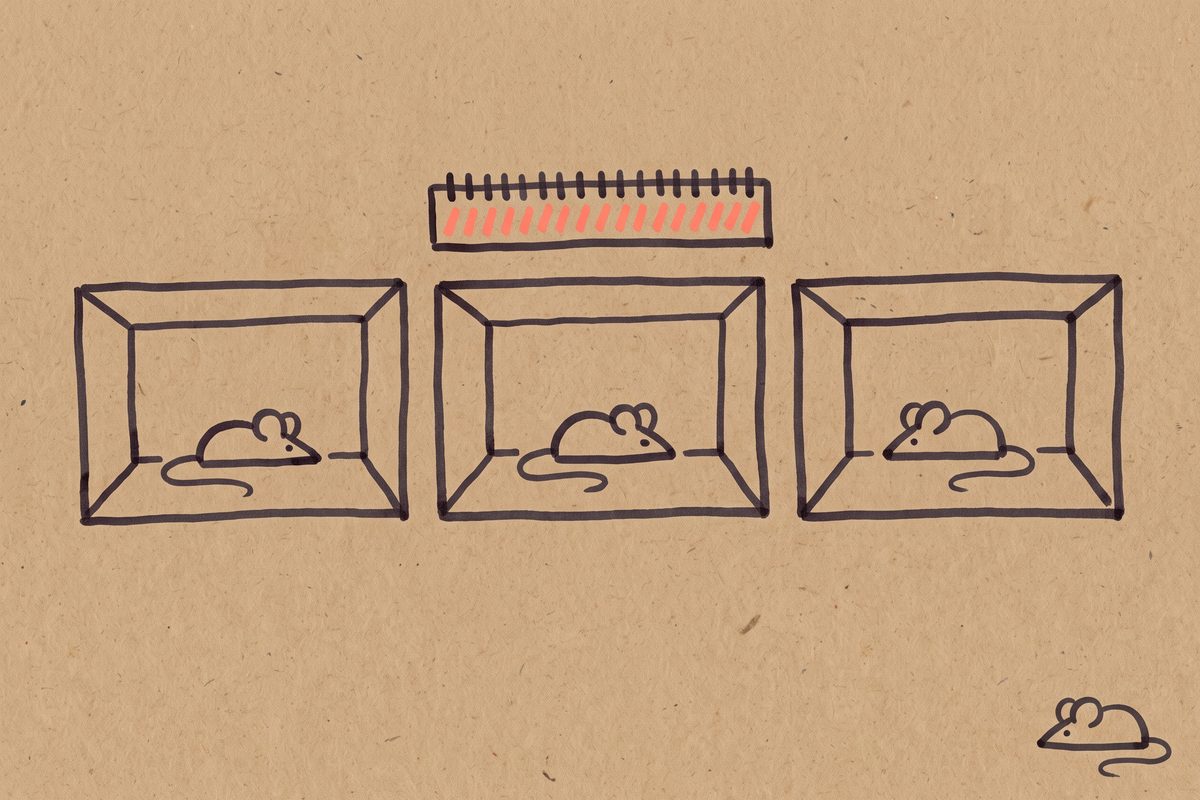
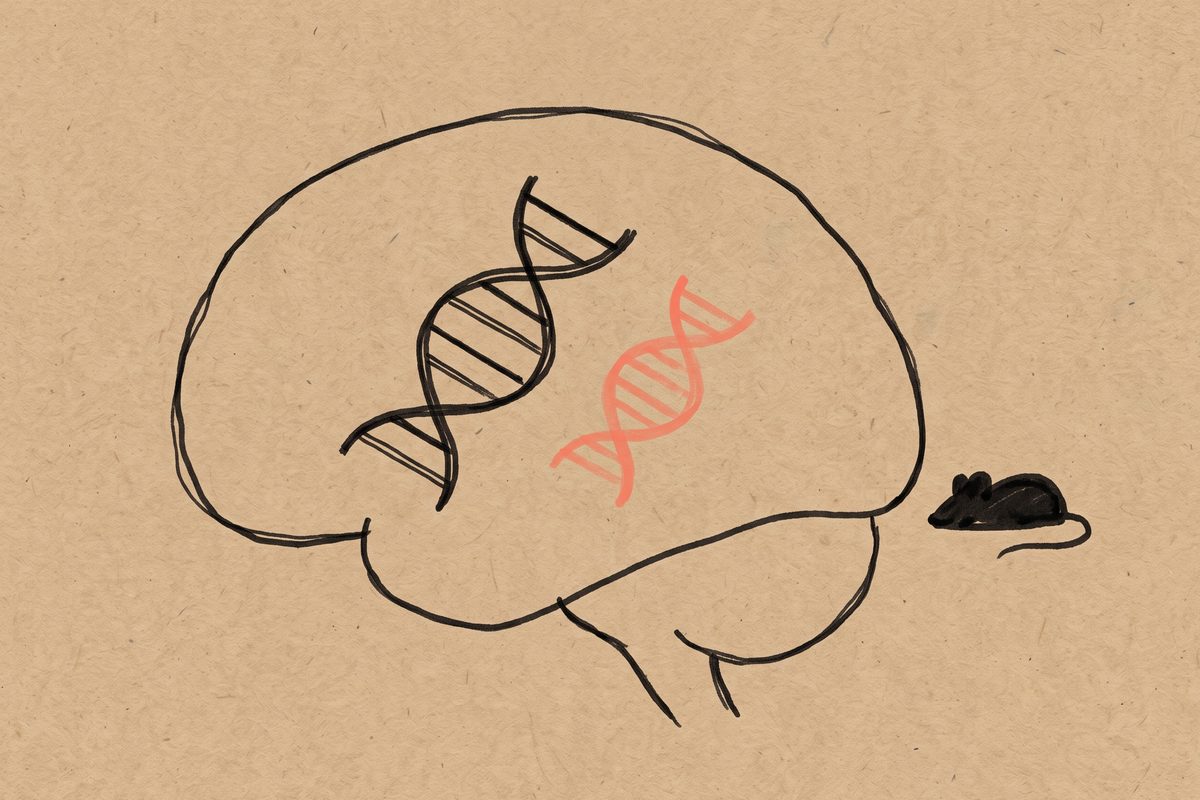
The study used a controlled three-arm design that let the researchers separate "being stressed" from "receiving a stressed animal's bacteria." Mice were 6 weeks old at the start of the protocol and 8 weeks old when the main study began, and the chronic unpredictable stress protocol ran for 28 days in the donor group. After establishing the stressed and control donor groups, researchers transplanted fecal material from the stressed donors into a separate cohort of healthy mice (the CUS-FMT group) and then ran the same behavioral battery on all three groups, alongside gene-expression analysis of the prefrontal cortex (the front part of the brain involved in mood regulation and decision-making). In the donors, chronic stress reduced expression of two genes: Syn1 (synapsin 1, which helps nerve cells release the chemical messengers they use to communicate, p=0.0047) and Olig1 (involved in maintaining the fatty insulation, or myelin, around nerve fibers, p=0.0325). The recipient mice showed at least a partial version of that same gene-expression shift. A related 2024 study using fecal transplants in anxiety-like mice similarly found that transplanted microbiota could shift prefrontal cortex gene activity, lending independent support to the idea that gut bacteria can reach that specific brain region's gene expression.
What This Means (and Does Not Mean Yet) for Your Own Gut and Mood
It is tempting to read a study like this and wonder whether a rough patch, or a change in diet or gut symptoms, could be quietly reshaping mood by way of the microbiome. The honest answer, right now, is that this specific experiment was done entirely in mice, and nothing here shows that human fecal transplants change mood or that a person's gut bacteria can be "read" for stress levels. What it does support, alongside a larger body of animal and human work, is that the gut-brain relationship runs in both directions: chronic stress can reshape gut bacteria, and reviews on stress and the gut-brain axis describe how those bacterial shifts can, at least in animals, feed back into inflammation and brain function. If you are someone managing depression, anxiety, or a gut condition like IBS or IBD and have noticed your mood and gut symptoms seem to move together, that pattern has legitimate biological backing, but it is not yet a basis for using probiotics, fecal transplants, or specific diets as a treatment for mood on their own.
Open Questions: Sample Size, Mechanism, and a Single Lab's Data
The published materials available for this study do not specify the exact number of mice per group, which makes it hard to judge how statistically robust the smaller effects are, even though several of the reported p-values are well under the conventional 0.05 threshold. The work also comes from a single lab using a single stress protocol, so it has not yet been independently repeated. No conflict-of-interest information was available in the materials reviewed.
What Comes Next for Stress-Linked Gut Bacteria Research
The logical next steps are independent replication in other labs, larger sample sizes with disclosed group sizes, and a closer look at which specific bacterial species or their byproducts are doing the work, since "Lachnospiraceae increased" describes a broad bacterial family rather than a single organism. Longer term, researchers in this field are working toward identifying whether specific microbial metabolites, rather than whole communities of bacteria, are responsible for effects like these, which would be a needed step before any of this could inform human treatment research, including the existing but still early work on fecal transplants for depression in humans.
Common Questions
Can fecal transplants cause anxiety in humans? This has not been tested in humans and this study offers no direct evidence either way; the finding here is limited to mice.
What are Syn1 and Olig1? Syn1 (synapsin 1) helps nerve cells release chemical messengers, and Olig1 supports the fatty insulation (myelin) around nerve fibers; both dropped in the brains of chronically stressed mice and, partially, in mice that received their gut bacteria.
What gut bacteria changed in the stressed mice? The stressed donor mice had more Lachnospiraceae, a common gut bacterial family, and less of a group the study describes as Lachnobacillus-type taxa, compared with unstressed controls.
Is fecal microbiota transplantation already used to treat depression or anxiety in people? Not as an established treatment; it remains an active area of early human research, separate from this mouse study.
Evidence Rating
INVESTIGATIONAL — 78/100
Caveats
- Mouse-only, human relevance unknown
- Exact group sizes not specified in available materials
- Single-lab, single stress-protocol design
This is a preclinical mouse study; behavior and brain gene-expression changes "transferred" via fecal transplant have not been shown in humans.
References
- Lucas Hassib, Raphael de Andrade Morraye, Wilson Araújo Silva, Francisco Silveira Guimarães, Frederico Rogério Ferreira (2026). Fecal Microbiota from Chronically Stressed Donors Transfers Behavioral and Prefrontal Cortex Gene Expression Alterations to Healthy Recipient Mice. Neurobiology of Stress. https://doi.org/10.1016/j.ynstr.2026.100843
- Nannan Li, Qi Wang, Yan Wang, et al. (2019). Fecal microbiota transplantation from chronic unpredictable mild stress mice donors affects anxiety-like and depression-like behavior in recipient mice via the gut microbiota-inflammation-brain axis. Stress. https://doi.org/10.1080/10253890.2019.1617267
- The Brain-Gut-Microbiome Axis. NIH. https://pmc.ncbi.nlm.nih.gov/articles/PMC6047317/
- Simin Chen, Mengjia Li, Changqing Tong, et al. (2024). Regulation of miRNA expression in the prefrontal cortex by fecal microbiota transplantation in anxiety-like mice. Frontiers in Psychiatry. https://doi.org/10.3389/fpsyt.2024.1323801
- Julia Morys, Andrzej Małecki, Marta Nowacka-Chmielewska (2024). Stress and the gut-brain axis: an inflammatory perspective. Frontiers in Molecular Neuroscience. https://doi.org/10.3389/fnmol.2024.1415567
- Qi Zhang, Yajun Bi, Boyu Zhang, et al. (2024). Current landscape of fecal microbiota transplantation in treating depression. Frontiers in Immunology. https://doi.org/10.3389/fimmu.2024.1416961