How a Parasitic Worm Recruits Gut Bacteria to Calm Colitis in Mice
A new mouse study traces a full chain from parasitic worm infection to a gut bacterium to a bile acid to an immune receptor, all working together to calm colitis.

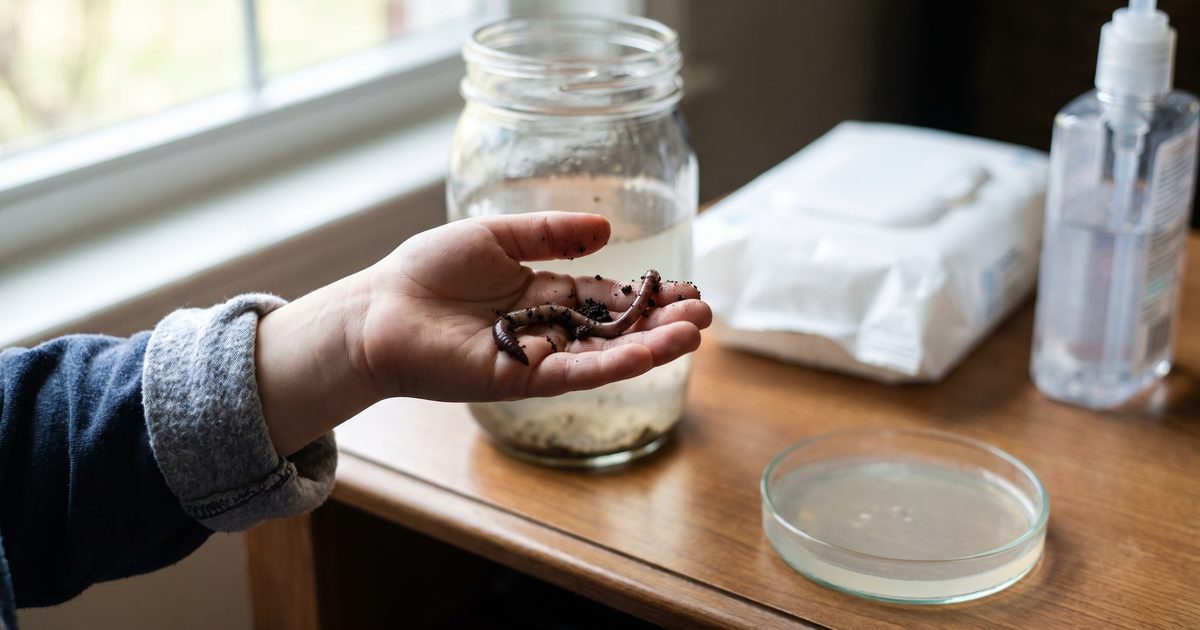
For decades, doctors have noticed something strange: in parts of the world where parasitic worm infections are common, rates of inflammatory bowel disease and other autoimmune conditions tend to be lower, an observation sometimes called the hygiene hypothesis. Nobody has fully explained why. A new mouse study preprint now traces a complete, step by step chain of events, from a parasitic worm, to a specific gut bacterium, to a calming bile acid, to an immune receptor, that together dial down colitis (inflammation of the colon).
Key takeaways
- In mice, infection with the parasitic worm Trichinella spiralis reduced colitis triggered by a chemical irritant, and this protection disappeared completely when the mice's gut bacteria were wiped out with antibiotics.
- The protective effect could be transferred to other colitic mice through a fecal transplant from infected donors, and was traced to a gut bacterium that produces the bile acid ursodeoxycholic acid (UDCA), which calmed inflammatory immune cells through a receptor called TGR5.
- This is a preprint, done entirely in mice with small group sizes, and has not been tested in people; nobody should read it as a case for seeking out parasitic infections.
Worm Infection Eases Colitis Symptoms in Mice
Researchers infected mice with Trichinella spiralis, a parasitic roundworm that can infect the intestines, and then exposed them to a chemical called TNBS, which is commonly used in lab studies to trigger colitis and model inflammatory bowel disease in animals. Mice that were already infected with the worm developed noticeably milder colitis than mice that received the same chemical irritant without a prior worm infection.
Gut Bacteria Turn Out to Be the Missing Link
To find out whether the worm itself, or something it changed in the gut, was responsible for that protection, the researchers wiped out the mice's gut bacteria with antibiotics. Once gut bacteria were gone, the worm's protective effect against colitis disappeared entirely, pointing to gut microbes, not the worm's direct effect on the immune system, as the real driver. To confirm this further, the team performed a fecal microbiota transplant (FMT, transferring gut bacteria from one animal into another), taking stool from worm infected mice and giving it to separate colitic mice that had never been exposed to the parasite. Those recipient mice also developed calmer colitis, direct evidence that the protective effect lives in the transplanted bacteria rather than in the worm itself.
Bacteroides Acidifaciens Makes the Bile Acid That Calms Inflammation
Using metagenomic sequencing (reading the genetic material of an entire bacterial community) and metabolomics (measuring the small molecules those bacteria produce) on the transplant recipient mice, the researchers found the protective effect tracked closely with an enrichment of the bacterium Bacteroides acidifaciens and elevated levels of a secondary bile acid called ursodeoxycholic acid (UDCA), a molecule already used as a prescription drug for certain liver conditions in humans. Using a genetically engineered strain of E. coli built to express the bacterial enzyme bile salt hydrolase (BSH), the team showed that B. acidifaciens can convert a related bile compound, tauro-UDCA, into UDCA using that same enzyme, directly tying the bacterium to the bile acid's production. From there, UDCA suppressed activation of the NLRP3 inflammasome (a cluster of immune proteins that triggers inflammation once activated) inside macrophages and dendritic cells, two types of immune cells, and it did so by acting through a bile acid receptor called TGR5. When the researchers repeated the experiment in mice genetically engineered to lack TGR5, the worm infection's protective effect against colitis disappeared entirely, confirming that this single receptor sits at the center of the entire chain.
What a Worm-to-Bile-Acid Pathway Could Mean, With Real Caveats
This finding lands in the middle of an old, unresolved debate about helminth therapy, the idea of deliberately using parasitic worms or worm products to treat inflammatory conditions. Small human trials of purified worm eggs, such as Trichuris suis ova, have tested this idea directly in a randomized controlled trial for active ulcerative colitis, with results across different trials that have been mixed rather than consistently positive. What this new mouse study adds is a specific, testable biological explanation, worm to bacterium to bile acid to receptor, for why worm exposure might calm gut inflammation in some circumstances. It is not, however, an invitation to try worm infections or bile acid supplements at home. Deliberately infecting yourself with a parasite carries real health risks, and UDCA's effects on gut immune signaling are still being mapped even in more established research on bile acids in inflammatory bowel disease.
This Work Is a Mouse-Only Preprint With Small Sample Sizes
This study has not yet been peer reviewed. It was conducted entirely in mice, and none of the mechanisms described here, from the worm infection itself to the bacterium, the bile acid, or the TGR5 receptor pathway, have been confirmed in humans. The reported experiments also used small group sizes, on the order of five animals per group, which limits how confidently the results can be generalized even within the mouse model. Chains of causation this long need independent replication before they are treated as established biology.
Next Steps: From Mouse Bile Acids to Possible Human Relevance
The logical next experiments would test whether Bacteroides acidifaciens alone, or purified UDCA alone, can reproduce the protective effect without a live worm infection at all, which would be a meaningful step toward any future human application. That kind of work would also need to reckon with decades of mixed results from direct helminth therapy trials in people, and with the fact that bile acid signaling through receptors like TGR5 affects far more than just gut inflammation.
Common Questions
Could deliberately getting a parasitic worm infection treat colitis in people? No. This study was done entirely in mice, and infecting yourself with a parasite carries real health risks; it is not a recommended or tested treatment approach in humans.
What is ursodeoxycholic acid (UDCA)? UDCA is a bile acid that is also used as a prescription medication for certain liver conditions in humans. In this mouse study, a specific gut bacterium was shown to produce UDCA from a related bile compound.
Does this apply to people with ulcerative colitis or Crohn's disease? Not directly, not yet. Past human trials of worm-based therapies for these conditions have had mixed results, and the specific bacterium-to-bile-acid-to-receptor pathway described here has only been demonstrated in mice.
Evidence Rating
INVESTIGATIONAL — 82/100
Caveats
- This is a preprint that has not yet been peer reviewed.
- The work was done in mice, not humans, and direct extrapolation to human helminth therapy has not been tested.
- Group sizes were small (n=5 per group in the reported experiments).
Trichinella spiralis (parasitic worm) infection alleviated TNBS-induced colitis in mice; protection was lost with antibiotic-induced microbiota depletion and was transferable via fecal microbiota transplant (FMT) from infected donors to colitic recipients, establishing gut-microbiota dependence. Metagenomics/metabolomics after FMT showed enrichment of Bacteroides acidifaciens and the secondary bile acid ursodeoxycholic acid (UDCA). B. acidifaciens converts tauro-UDCA into UDCA via bile salt hydrolase (confirmed with a BSH-expressing E. coli construct). UDCA suppressed NLRP3 inflammasome activation in macrophages/dendritic cells via the TGR5 receptor; TGR5-knockout mice lost the protective effect. Full causal chain: helminth to gut bacterium to bile-acid metabolite to immune receptor to colitis protection.
References
- Ying Xue, Hongye Li, Minghan Li, et al. (2026). Trichinella spiralis infection-induced ursodeoxycholic acid ameliorates colitis by regulating dendritic cells and macrophages via NLRP3 inflammasome signaling pathway. https://doi.org/10.21203/rs.3.rs-10229723/v1
- CDC – DPDx – Trichinellosis. cdc.gov. https://www.cdc.gov/dpdx/trichinellosis/index.html
- Samantha H. Bai, Arun Chandnani, Siyan Cao (2024). Bile Acids in Inflammatory Bowel Disease: From Pathophysiology to Treatment. Biomedicines. https://doi.org/10.3390/biomedicines12122910