Pomegranate Compound Urolithin A Triggers a Hidden Gut Defense Against IBD
A compound your gut bacteria make from pomegranates and walnuts may hold an unexpected key to calming the chronic intestinal damage of inflammatory bowel disease. Early research from the University of Louisville reveals a surprisingly protective molecular circuit.

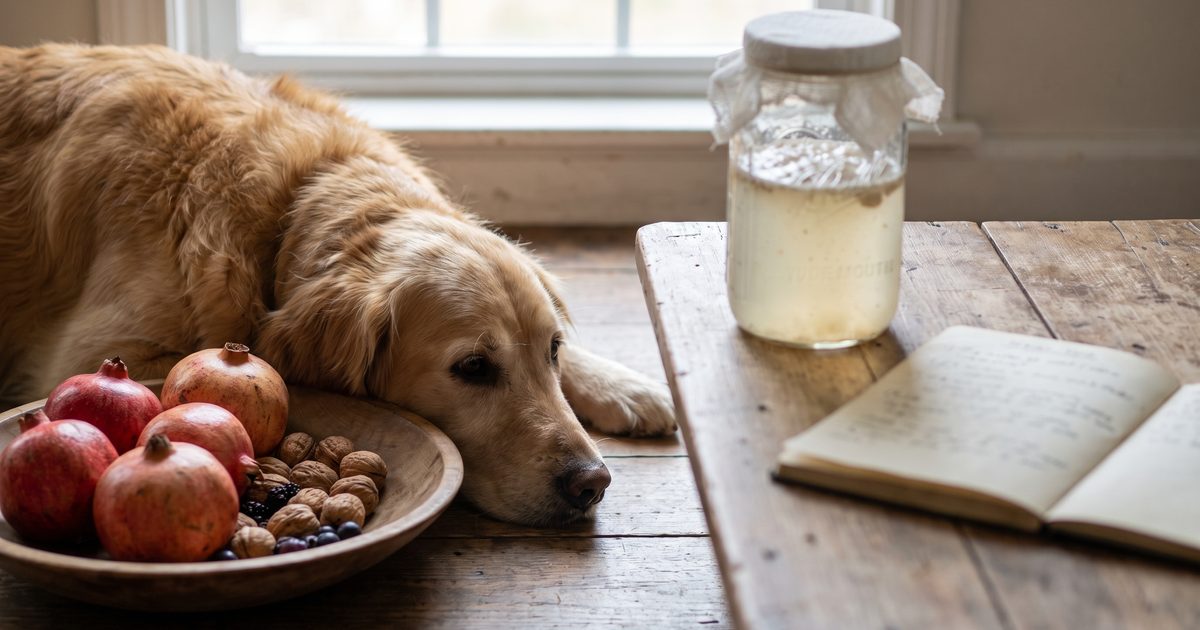
A metabolite produced when gut bacteria break down pomegranates, walnuts, and berries has turned up an unexpected mechanism for protecting the intestinal lining, and it involves a molecular player researchers had long associated mainly with harm. University of Louisville scientists report that Urolithin A (UroA) activates a protective intestinal pathway that strengthens the gut barrier, boosts mucus production, and dials up antimicrobial defenses, without triggering the runaway inflammation that characterizes conditions like Crohn's disease and ulcerative colitis. The team describes the findings as the first demonstration of this specific mechanism for a natural microbial product.
Urolithin A Selectively Activates AHR to Shield Intestinal Epithelial Cells
The core finding centers on a precise molecular sequence. UroA selectively activates a receptor called AHR, short for aryl hydrocarbon receptor, inside intestinal epithelial cells, the thin layer of tissue that forms the gut's first line of defense. That AHR activation then triggers the NLRP6 inflammasome, a protein complex inside cells. Inflammasomes are typically associated with promoting inflammation; that is why this result caught attention. In this context, however, NLRP6 releases molecules that maintain normal intestinal function and help repair the gut lining rather than setting off a damaging immune cascade.
Venkatakrishna Rao Jala, associate professor at the University of Louisville and lead researcher on the project, describes the finding as a demonstration that the body's inflammatory machinery is more context-dependent than previously understood. The UroA-activated NLRP6 inflammasome, the team reports, does not promote inflammation. That distinction matters enormously when the goal is to treat a disease defined by excess inflammation.
Prior work had already shown that UroA strengthens the gut barrier by increasing mucus layer thickness and MUC2 protein levels in colonic epithelial cells through AhR and Nrf2 pathways in mouse models. The new Louisville research adds a mechanistic layer to that picture by identifying the NLRP6 inflammasome as a key downstream actor in the protective circuit.
Why IBD Patients Have So Much to Gain From a Barrier-First Strategy
Inflammatory bowel disease affected approximately 3.8 million people globally in 2021, with incidence rates continuing to rise. IBD is an umbrella term covering Crohn's disease and ulcerative colitis, both of which involve chronic inflammation and progressive damage to the intestinal lining. A weakened gut barrier is central to the disease process: when the barrier fails, harmful bacteria and other molecules leak from the intestine into surrounding tissue, triggering more inflammation, pain, and long-term complications including heightened colorectal cancer risk.
Current treatments focus primarily on suppressing the immune response, which can leave patients vulnerable to infection and does not address the underlying barrier dysfunction. A compound that works by strengthening the barrier directly, and that is derived from foods people already eat, would represent a meaningfully different therapeutic angle. Because UroA is a naturally occurring microbial metabolite rather than a synthetic drug, the path to dietary or supplementation-based interventions may be shorter than for novel pharmaceutical compounds.
How the Louisville Team Investigated UroA in Intestinal Cells
The University of Louisville researchers studied the effects of UroA in intestinal epithelial cells, tracing how the compound moves through the AHR-NLRP6 axis to produce its protective effects. The work focused on identifying the molecular and cellular processes UroA coordinates during intestinal injury, characterizing what the team describes as a complex interplay between the compound and the body's own repair systems.
The study adds to a growing body of preclinical work on UroA, but it is worth flagging that research on gut microbiota mechanisms faces real translation challenges. Reproducibility concerns in animal models are well-documented in the microbiome field, and findings in intestinal epithelial cell systems do not always map cleanly to the complexity of human gut biology. The Louisville team has not yet published results from human subjects.
Open Questions About NLRP6, Clinical Dosing, and Patient Variability
Several important questions remain before this mechanism can inform treatment. First, the NLRP6 inflammasome's protective behavior in the UroA context needs validation across broader experimental systems. Second, the amount of UroA a person actually produces depends heavily on which gut bacteria they harbor; two people eating identical diets can generate very different UroA levels, which complicates dosing strategies for any supplement or therapeutic formulation.
Translating gut microbiota findings into clinical interventions is also complicated by the heterogeneity of microbial data across populations and the need for large multicenter cohorts to account for confounding variables. The researchers acknowledge that initial findings of this kind require substantial follow-up work before clinical application becomes practical.
What Comes Next for Microbiome-Based IBD Therapies
The UroA research feeds into a broader push to develop microbiome-based IBD treatments that go beyond immunosuppression. Future IBD strategies increasingly involve precision approaches, including next-generation live biotherapeutic products and integrated microbiome modulation designed to personalize treatment based on a patient's specific microbial profile. UroA, if its protective mechanism holds up in human tissue and clinical trials, could eventually serve as a component of such personalized approaches, either through dietary intervention, supplementation, or engineered microbial consortia designed to produce the compound in situ.
For now, the University of Louisville team's work offers a genuinely novel piece of mechanistic understanding: a naturally occurring compound, made by gut bacteria from everyday foods, that appears to flip a molecular switch in intestinal cells from inflammatory to protective. That is preliminary, not proven therapy. But in a disease that affects millions and responds inconsistently to existing drugs, preliminary findings with a clean mechanistic story are exactly what the field needs to pursue.
Evidence rating
INVESTIGATIONAL — 69/100
Caveats:
- This research was conducted in intestinal epithelial cells (in vitro), not in human patients — results may not translate to clinical outcomes.
- Described as the first demonstration of this specific mechanism; it has not yet been independently replicated.
- No clinical trial or animal study data are reported; human relevance remains unestablished.
This is a cell-based mechanistic study examining the effects of urolithin A on intestinal epithelial cells, with no animal or human trial data reported. It identifies a novel AHR–NLRP6 signaling pathway but cannot establish causation or clinical relevance at this stage. The authors describe it as a first demonstration of this mechanism, and it has not yet been independently replicated.
References
- (2026). Natural microbial compound helps protect the gut from chronic inflammation – News-Medical.Net. https://www.news-medical.net/news/20260624/Natural-microbial-compound-helps-protect-the-gut-from-chronic-inflammation.aspx
- Takeshi Yasuda, Tomohisa Takagi, Kohei Asaeda, et al. (2024). Urolithin A-mediated augmentation of intestinal barrier function through elevated secretory mucin synthesis. Scientific Reports. https://doi.org/10.1038/s41598-024-65791-x
- Gechong Ruan, Yinghao Sun, Ziqing Yu, Xiaoyin Bai, Hong Yang, Jiaming Qian (2025). Global, regional, and national burden of inflammatory bowel disease from 1990 to 2021: findings from the Global Burden of Disease 2021. Gastroenterology Report. https://doi.org/10.1093/gastro/goaf082
- Patricia V. Turner (2018). The role of the gut microbiota on animal model reproducibility. Animal Models and Experimental Medicine. https://doi.org/10.1002/ame2.12022
- Yongpeng Shi, Zeran Chen, Tingyu Fang, et al. (2024). Gut microbiota in treating inflammatory digestive diseases: Current challenges and therapeutic opportunities. iMeta. https://doi.org/10.1002/imt2.265
- Walaa K. Mousa, Aya Al Ali (2024). The Gut Microbiome Advances Precision Medicine and Diagnostics for Inflammatory Bowel Diseases. International Journal of Molecular Sciences. https://doi.org/10.3390/ijms252011259