One Month of Vegan Eating Rewires Your Aging Clock, Study Finds
A small randomized trial found that just one month of vegan eating shifted DNA methylation markers tied to inflammation and biological aging, though the effect hasn't been shown to translate into real health outcomes yet.


If you've spent any time researching how diet affects inflammation, you've probably run into claims that food can "change your genes." Most of these claims oversell shaky science. But a new one-month randomized trial found that switching to a vegan diet measurably shifted DNA methylation, a chemical tag attached to DNA that turns genes up or down without altering the genetic code itself, at sites tied to inflammation and biological aging in healthy adults. For anyone managing a chronic inflammatory condition, or just weighing whether a diet change is worth the effort, that's a real signal, even if it's an early one.
Key takeaways
- In a one-month randomized trial, people eating a vegan diet showed DNA methylation shifts linked to lower inflammation and slower biological aging compared to people eating a calorie-matched meat-rich diet.
- The changes included fewer inflammatory immune cells, plus methylation shifts in genes tied to insulin signaling and DNA repair, changes that two separate epigenetic aging clocks read as a deceleration in biological age.
- The catch: only 48 people, only one month, and no proof yet that these methylation shifts actually reduce disease risk or extend lifespan.
Vegan Diet Alters DNA Methylation Tied to Aging
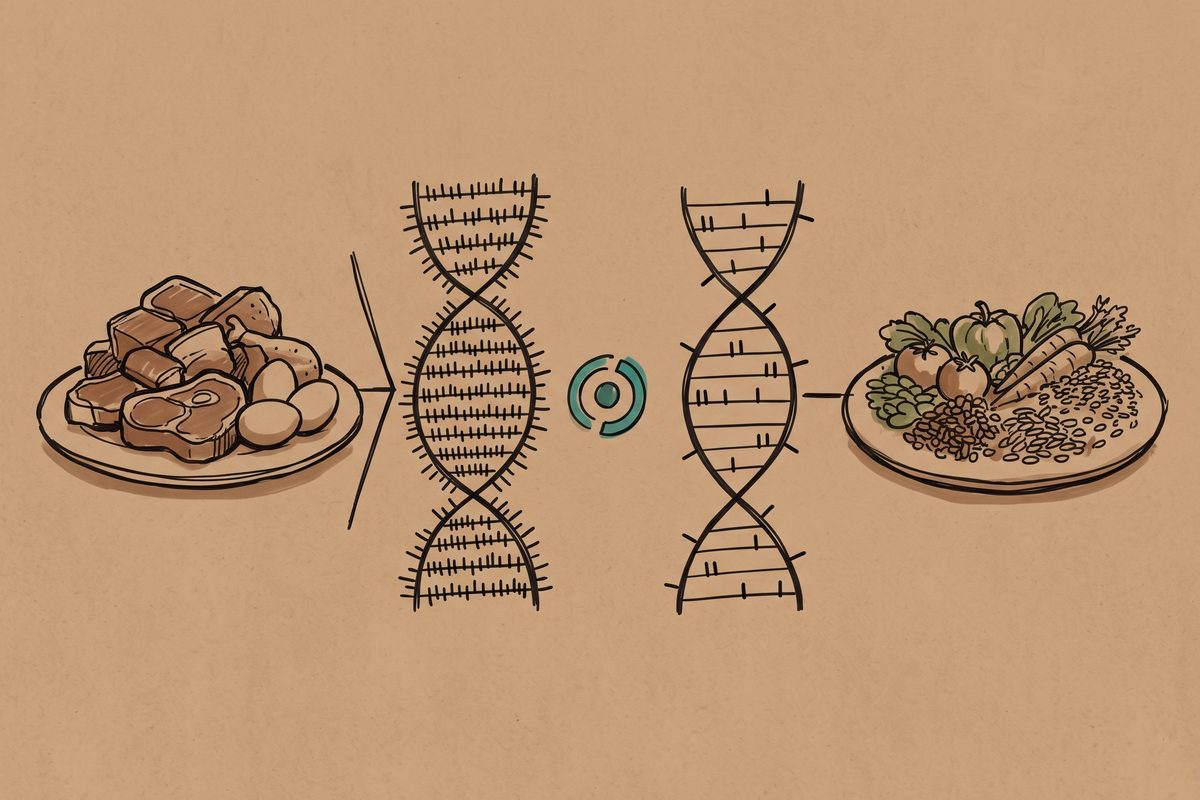
A one-month vegan diet altered genome-wide DNA methylation at sites tied to inflammation and biological aging, according to a trial published in the journal MedComm in 2026, publicized via a University of California San Diego press release. The study, led by researcher Karbacher and colleagues, recruited 48 healthy adults, put everyone on an identical baseline diet for a week to level the playing field, then randomly assigned each person to one month of either an isocaloric (calorie-matched, so neither group simply ate less overall) vegan diet or a meat-rich diet. Before and after that month, the researchers scanned blood samples for methylation status at more than 800,000 sites across the genome, one of the largest-resolution designs this kind of short diet trial has used.
Why Inflammation and Aging Markers Matter
Chronic low-grade inflammation runs through conditions from cardiovascular disease and type 2 diabetes to autoimmune disorders, so a diet that can measurably dial it down within weeks matters to anyone managing, or trying to prevent, one of those conditions. The vegan-diet group's methylation patterns predicted a shift in blood immune cell makeup: fewer neutrophils (a first-responder immune cell that drives acute inflammation) and more CD4 T cells (an immune cell type that helps regulate and calm immune responses). Importantly, the researchers didn't just trust the DNA prediction, they checked it against participants' actual blood cell counts, and the two matched, a step that lends real weight to a shift toward a less inflammatory immune profile.
How Researchers Verified the Diet's Effects

What separates this trial from a typical diet-and-blood-test study is the layered verification. Beyond confirming predicted immune cell shifts against real blood counts, the researchers also ran two independent epigenetic aging clocks (statistical models that estimate biological age, distinct from chronological age, from methylation patterns) rather than relying on just one. Both clocks pointed the same direction: a deceleration in biological aging over the one-month vegan arm relative to the meat-rich arm. The isocaloric design, matching calories between the two diets, also rules out the simpler explanation that the effect came from eating less food overall rather than eating differently.
What the Findings Mean for Your Diet Choices
This study is not evidence that going vegan reverses aging or should replace medical advice, no diet has been shown to reverse biological aging in a way that changes actual disease outcomes. What it does suggest is that plant-forward eating can produce measurable, biologically plausible shifts within a month, changes consistent enough to show up on two separate methylation-based clocks and to be confirmed with real blood counts rather than model predictions alone. Beyond the aging clocks, the vegan group also showed increased methylation in promoter regions (the on/off switches sitting just upstream of a gene) tied to cell-growth and cancer-related pathways, reduced activity in lipid-metabolism pathways, and increased methylation in genes tied to insulin signaling and DNA repair. None of that has been shown to translate into a documented drop in disease risk yet, so anyone considering a bigger dietary change for inflammation or metabolic health should treat this as one data point worth raising with a doctor or dietitian, not a green light to self-treat a chronic condition.
Why This Result Still Needs More Testing

The researchers themselves flagged the study's limits: only 48 participants, an intervention lasting just one month, and methylation shifts that were modest and diffuse, spread across hundreds of thousands of individual sites rather than concentrated in a few dramatic changes. Critically, the study measured molecular markers, not health outcomes, no participant was tracked for whether they later developed fewer inflammatory conditions or lived longer, so the "aging clock" shift is a plausible biological signal, not proof of a health benefit. It's also a single study that hasn't yet been independently replicated. The study reported no conflicts of interest; one researcher's position was funded by a German state science ministry, with the rest of the work covered by institutional resources.
What Comes Next for This Research
The study authors are calling for larger, longer trials to confirm whether these methylation shifts persist over months or years rather than weeks, and whether they eventually correspond to measurable differences in inflammatory disease rates, metabolic health, or lifespan. Given how much cheaper genome-wide methylation sequencing has become, a realistic next step would be follow-up studies tracking participants for six months to a year rather than four weeks, though no specific follow-up trial has been announced yet.
Common Questions
What is DNA methylation, in simple terms? DNA methylation is a chemical tag attached to DNA that turns genes up or down without changing the underlying genetic code. It's one of several ways the body adjusts gene activity in response to environment, diet, and age.
Does this mean a vegan diet reverses aging? No. The study found methylation changes that two epigenetic clocks associate with slower biological aging, but it didn't track any actual disease or longevity outcomes, so "reversing aging" overstates what was shown.
How long would someone need to eat vegan to see these effects? This trial only tested a one-month intervention, so it's unknown whether shorter or longer periods produce similar, larger, or smaller changes. The researchers haven't established a minimum effective duration.
Is this study peer reviewed? Yes, it was published in the peer-reviewed journal MedComm in 2026, though peer review doesn't eliminate the limitations of a small, one-month sample size.
Evidence Rating
EMERGING — 71/100
Caveats
- Small sample (n=48)
- Short 1-month intervention
- Single study, not yet replicated
- Methylation changes modest/diffuse; no demonstrated disease-prevention or aging-reversal outcome
Findings come from a single small (n=48), one-month randomized trial measuring blood DNA-methylation markers, not clinical health outcomes; larger, longer studies are needed to confirm any real anti-aging or anti-inflammatory benefit.
References
- (2026). Short-Term Vegan Diet Linked to Lower Inflammation and Aging – HealthDay. https://www.healthday.com/health-news/nutrition/short-term-vegan-diet-linked-to-lower-inflammation-and-aging
- L. Karbacher, Jerome Mertens, S. Kowarschik, et al. (2026). A Vegan Diet Epigenetically Modulates Inflammatory Pathways and Biological Aging: Genome‐Wide DNA Methylation Analysis of a One‐Month Isocaloric Vegan Versus Meat‐Rich Dietary Intervention. MedComm. https://doi.org/10.1002/mco2.70899
- NIH National Institute on Aging, epigenetics of aging explainer. NIH. https://www.nia.nih.gov/news/epigenetics-aging-what-bodys-hands-time-tell-us