Corn Cobs and Sugarcane Could Fuel the Next Generation of Gut Prebiotics
A new review makes the case that xylooligosaccharides, extracted from agricultural leftovers like corn cobs and sugarcane bagasse, could displace costlier gut prebiotics without sacrificing effectiveness.


Prebiotics do not feed you directly; they feed the bacteria that keep you healthy. Most commercially available options, including galactooligosaccharides and fructooligosaccharides, come from relatively niche or expensive sources. A comprehensive review published in Food, Nutrition and Health by Xinge Hu and colleagues now argues that xylooligosaccharides (XOS), xylose-based sugar chains derived from the most abundant non-food parts of crops, could be a cheaper, more sustainable alternative. The science is still emerging, but the early picture is compelling.
XOS from Corn Cobs and Crop Residues Offer a Low-Cost Prebiotic Source
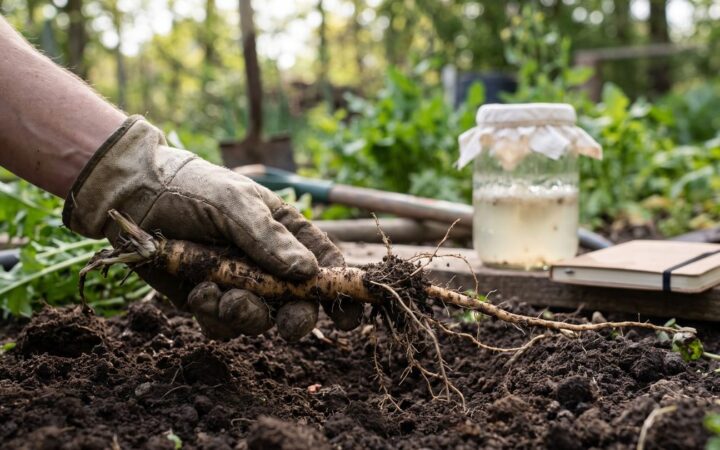
XOS are short chains of xylose units connected by β-(1→4) glycosidic bonds, and they come from xylan, the dominant hemicellulose in plant cell walls. Nearly every type of agricultural residue contains it: corn cobs carry roughly 30 percent xylan by weight, making them a primary feedstock. Sugarcane bagasse, cereal brans, hardwood and softwood pulps, and fruit pomaces are also viable sources. Because these are all byproducts of existing industries, the raw material is abundant and inexpensive in ways that traditional prebiotic feedstocks are not.
Producing pure XOS from that biomass is where the complexity starts. Three extraction routes exist: acid hydrolysis, which is fast and simple but generates unwanted byproducts; autohydrolysis, which uses hot water under pressure and produces cleaner hydrolysates; and enzymatic hydrolysis, which is highly specific and mild but expensive. The review identifies autohydrolysis followed by enzymatic polishing as an effective combination for high-purity output. After extraction, purification removes monosaccharides and, critically, furfural, a compound that inhibits the very gut bacteria XOS is meant to support.
The resulting XOS range from short-chain (degree of polymerization 2 to 4) to long-chain (DP 8 to 10 or more) and often carry side-chain substituents including arabinose, glucuronic acid, acetyl groups, and ferulic acid esters. Chain length and branching are not incidental details: shorter XOS ferment quickly across a wider range of microflora, while longer chains ferment more slowly and selectively. Ferulic acid released during bacterial processing of arabinose side chains can also act as an antioxidant, an added benefit the article highlights.
XOS Selectively Boost Bifidobacterium in the Human Gut
The clearest human benefit documented so far is selectivity. At doses ranging from 1.2 grams to 5 grams per day in clinical trials, XOS consistently increased populations of Bifidobacterium and Lactobacillus, two genera broadly associated with gut barrier integrity and immune function. A double-blind, randomized, placebo-controlled study involving 32 healthy adults found that XOS supplementation significantly raised Bifidobacterium counts in the colon without notable gastrointestinal side effects. Research on prebiotic effects in individuals with metabolic abnormalities also points to immune-modulating and potentially anticancer downstream effects, though those links remain preliminary.
Some trials extend beyond microbiome composition. Participants in constipation studies reported meaningful symptom improvements. In rodent models, XOS reduced epididymal fat index, serum triglycerides, and cholesterol while improving liver function through activation of the AMPK metabolic pathway. Whether those metabolic effects translate cleanly to humans is not yet established, but the biological plausibility is clear: XOS feeds bacteria that produce short-chain fatty acids, which in turn signal to metabolism, immune cells, and the gut lining.
In livestock and companion animals, XOS has shown similarly promising results. Piglets given XOS gained more body weight, improved feed efficiency, and developed taller intestinal villi compared to controls, structural changes that suggest better nutrient absorption. The review frames these findings as support for XOS as a non-antibiotic feed additive, a commercially and ecologically important application given global pressure to reduce antibiotic use in agriculture.
How Gut Bacteria Actually Break Down XOS
Not every bacterium in the gut can use XOS; the selectivity comes from the specific molecular toolkit required. Species including Bifidobacterium longum, B. adolescentis, Lactobacillus plantarum, and Bacteroides thetaiotaomicron can import XOS via two transport mechanisms: high-affinity ATP-binding cassette transporters and phosphoenolpyruvate-dependent sugar phosphotransferase systems, which also phosphorylate the sugar during import for immediate metabolic use. Once inside the cell, β-D-xylosidase enzymes cleave the chains stepwise from the ends, releasing xylose monosaccharides for energy.
Side-chain substituents add another layer of specificity. Human digestive enzymes cannot remove arabinose or glucuronic acid branches; only bacteria possessing the relevant accessory enzymes can. That means XOS structural complexity functions as a kind of molecular key: different bacterial species have different keys, and the composition of your gut community shapes which XOS structures get fermented and on what timeline.
Open Questions About XOS Standardization and Mechanisms
Despite the promising signals, the review is candid about where the science remains thin. Research on XOS utilization extends mostly to Bifidobacterium and Lactobacillus; the broader landscape of XOS-fermenting bacteria is poorly characterized. The underlying mechanisms by which specific XOS-utilizing microorganisms confer their benefits, beyond short-chain fatty acid production, are still unclear. And most human studies to date have been short-term, limiting conclusions about sustained effects.
Production poses challenges too. As noted in a review of cereal biomass-derived oligosaccharides, maximizing yield of high-purity XOS while controlling costs and overcoming biomass recalcitrance remains an unsolved engineering problem. Structural heterogeneity, variations in DP, branching, and substitution patterns across batches, complicates both standardization and mechanistic research. Without consistent XOS preparations, it is difficult to run studies that cleanly attribute effects to a specific structural feature.
Synbiotics and Precision Formulation as the Next Step
The most forward-looking section of the review concerns synbiotics: combinations of XOS with probiotic strains specifically chosen for their XOS-metabolizing capabilities. The logic is straightforward but demanding in practice. A synbiotic only works well if the probiotic strain has the enzymatic machinery to use the particular XOS structure in the formulation. Matching chain length and substitution pattern to a strain's metabolic preferences, and then to the desired health outcome, requires a level of characterization that most current products do not achieve.
A randomized pilot study in healthy and prediabetic adults already hints at what targeted XOS application might accomplish, observing reductions in bacterial taxa associated with prediabetes after XOS supplementation. Whether precision synbiotic formulations can replicate and amplify those effects at scale is among the most interesting open questions in the field. For now, XOS sits at the intersection of agricultural sustainability and gut health science: a molecule with real promise, an industrial-scale feedstock, and enough remaining uncertainty to keep researchers busy for years.
Evidence rating
EMERGING — 80/100
Caveats:
- This is a narrative review, not a new clinical trial — it synthesizes existing studies of varying quality and does not generate new experimental data.
- Most mechanistic data come from rodent and in vitro studies; human trials are small and limited in number.
- XOS structural heterogeneity (chain length, branching) varies across products, making it difficult to generalize findings to any single commercial supplement.
- Funding was not disclosed by the authors, so independent verification of financial conflicts cannot be confirmed.
Narrative review synthesizing human trial data (doses 1.2–5 g/day), rodent studies, and in vitro mechanistic work on xylooligosaccharide (XOS) metabolism. Human evidence is limited to small trials; most mechanistic findings derive from animal or cell-based models, establishing association and partial causal chains rather than confirmed causation. Independent replication of specific claims is inconsistent across the reviewed literature, and structural heterogeneity of XOS products complicates cross-study comparisons.
References
- Xinge Hu, Farhan Anwar Khan, Tom Tabler, Nicole Labbé, Jun Lin (2026). The prebiotic potential of xylooligosaccharides: status, challenges, and future prospects. Food, Nutrition and Health. https://doi.org/10.1007/s44403-026-00064-1
- Sydney M. Finegold, Zhaoping Li, Paula H. Summanen, et al. (2014). Xylooligosaccharide increases bifidobacteria but not lactobacilli in human gut microbiota. Food & Function. https://doi.org/10.1039/c3fo60348b
- Vishal Kumar, Ashutosh Bahuguna, Subhash Kumar, Myunghee Kim (2025). Xylooligosaccharides mediated gut microbiome modulation: prebiotics to postbiotics. Critical Reviews in Biotechnology. https://doi.org/10.1080/07388551.2025.2460852
- Anel Kostanova, Yuliya Shamsiyeva, Azamat Yermukhanov, Assel Kiribayeva (2026). Cereal biomass-derived xylo- and malto-oligosaccharides as next-generation prebiotics: a comprehensive review of sustainable production and translational benefits for human and animal gut microbiota. Frontiers in Microbiology. https://doi.org/10.3389/fmicb.2026.1803157
- Jieping Yang, Paula H. Summanen, Susanne M. Henning, et al. (2015). Xylooligosaccharide supplementation alters gut bacteria in both healthy and prediabetic adults: a pilot study. Frontiers in Physiology. https://doi.org/10.3389/fphys.2015.00216